
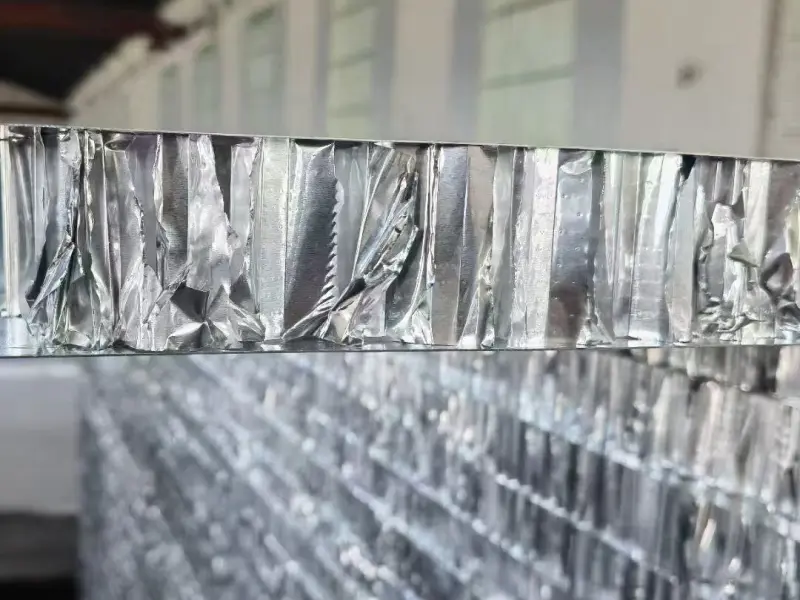
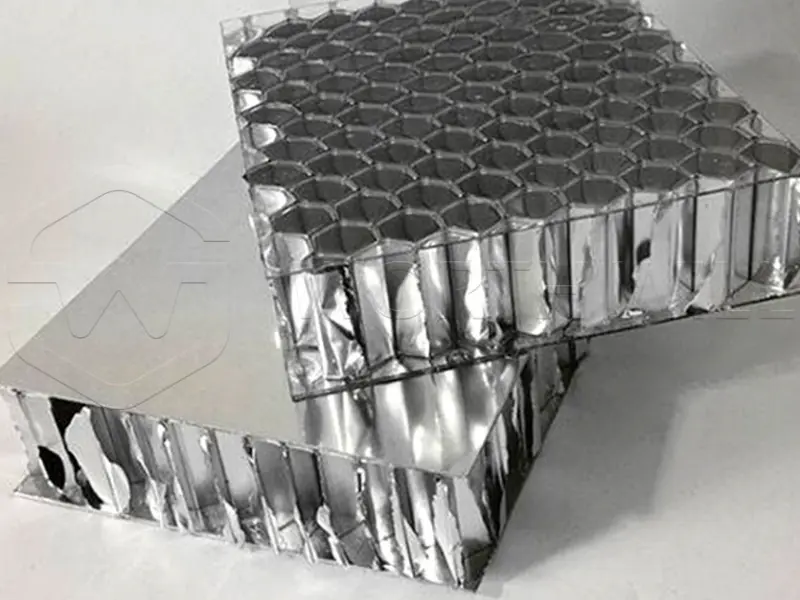
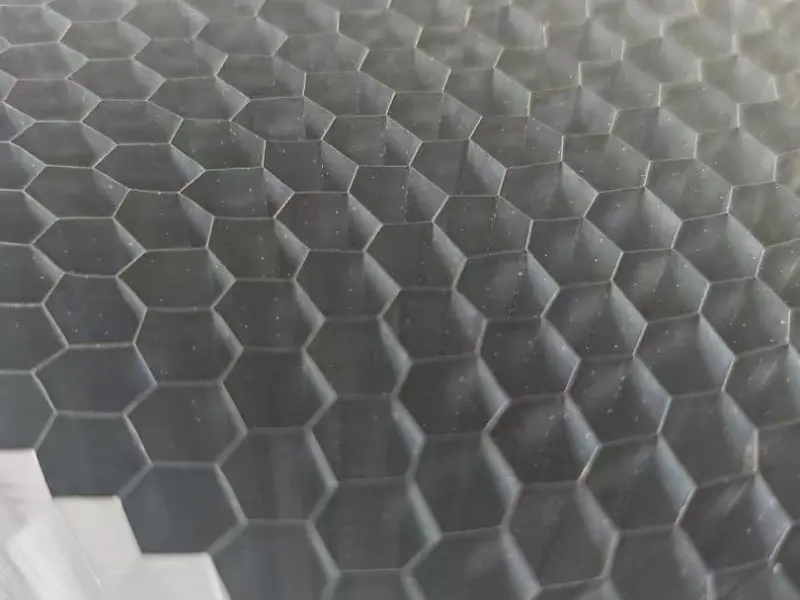
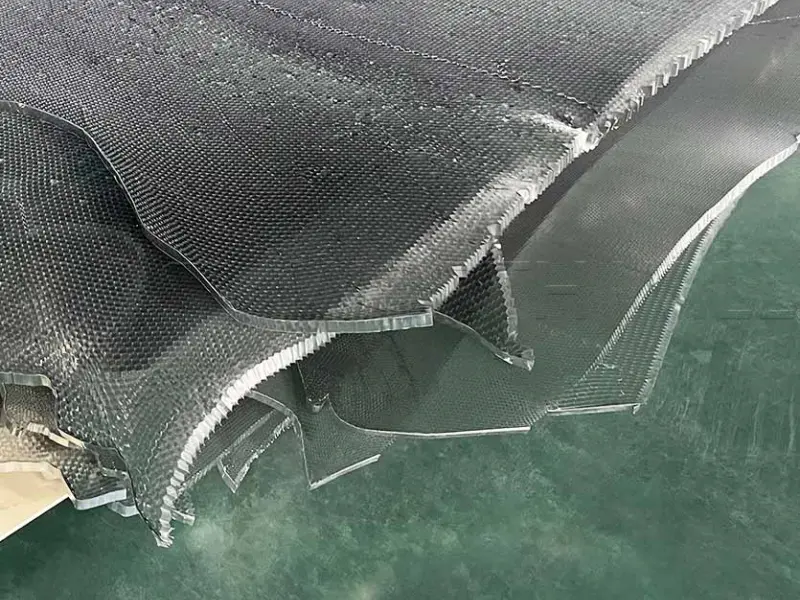
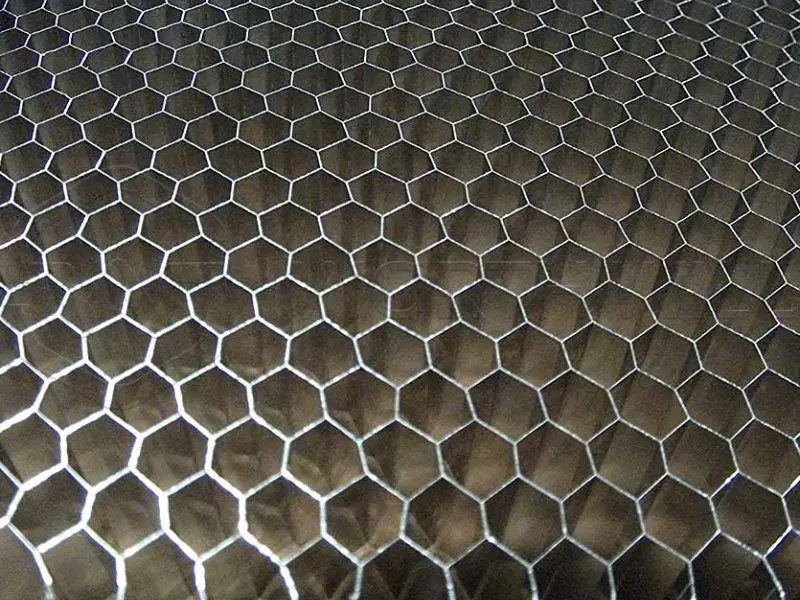
Aluminum honeycomb core is a structural material built from thin aluminum foil sheets bonded into a hexagonal cell network. It is light, stiff, and strong. In bulk supply, it serves aerospace panels, building facades, marine decks, clean room floors, and many other demanding applications.
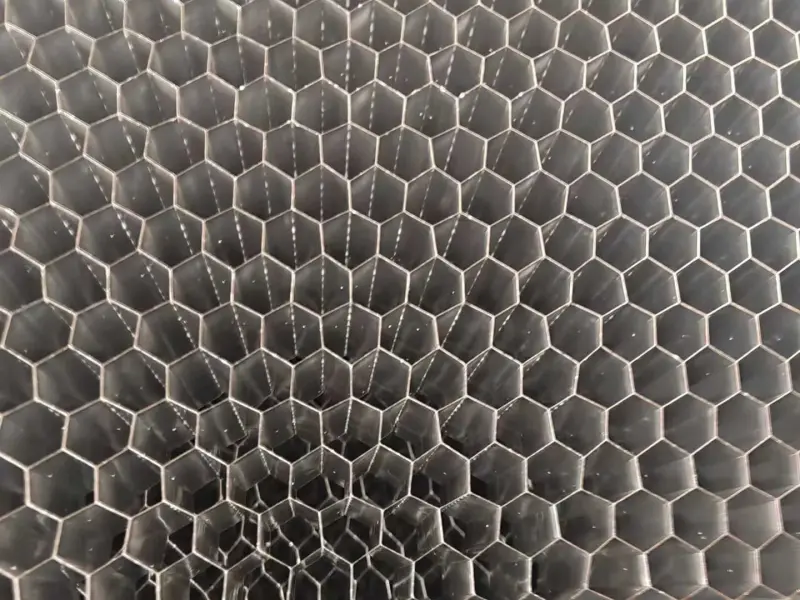
How the Honeycomb Cell Works
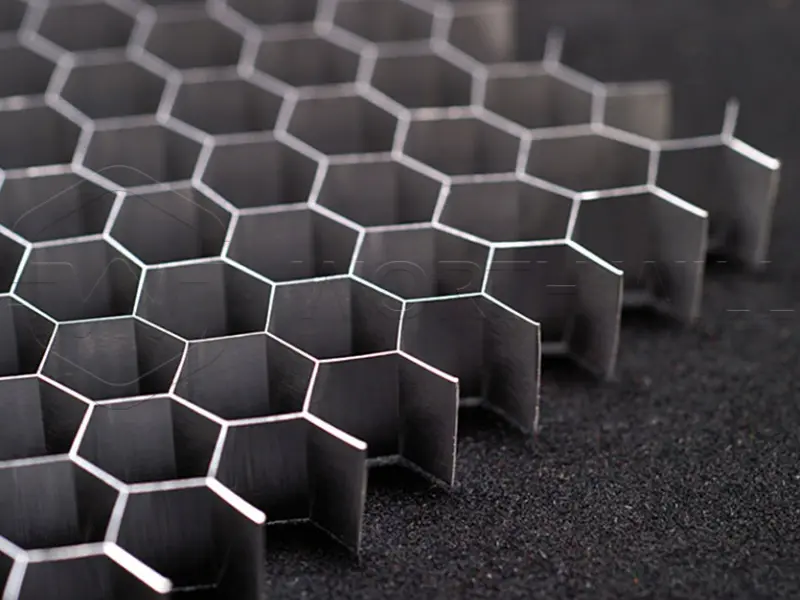
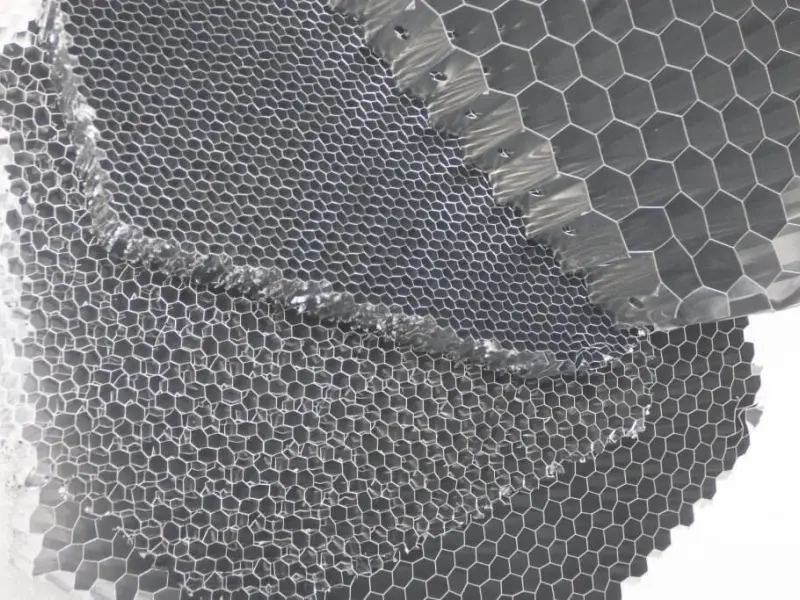
The cell walls resist compression from above and shear forces from the side. The thicker the foil and the smaller the cell, the stronger the core. Larger cells reduce weight but lower shear strength. Choosing the right cell size is the key to matching performance with cost.
Alloy & Temper Options
Most industrial honeycomb core uses 3000-series or 5000-series aluminum alloy. Each has different strength, corrosion resistance, and cost.
| Alloy | Temper | Key Property | Typical Use |
|---|---|---|---|
| 3003 | H18, H19 | Good formability, moderate strength | General industrial panels, partitions |
| 5052 | H18, H19 | High strength, excellent corrosion resistance | Marine, aerospace, heavy-load floors |
| 5056 | H39 | Highest strength in this group | Structural aerospace cores |
| 1100 | H18 | Very good thermal conductivity, softer | Heat exchanger cores, non-structural panels |
| 2024 | T3 | High strength, less corrosion resistance | Aerospace interior, engineered structures |
For most industrial and construction uses, 3003-H18 is the standard choice. For marine or high-humidity environments, 5052-H18 is preferred. Aerospace structural cores often specify 5052 or 5056 for higher shear values.
Core Cell Size Options
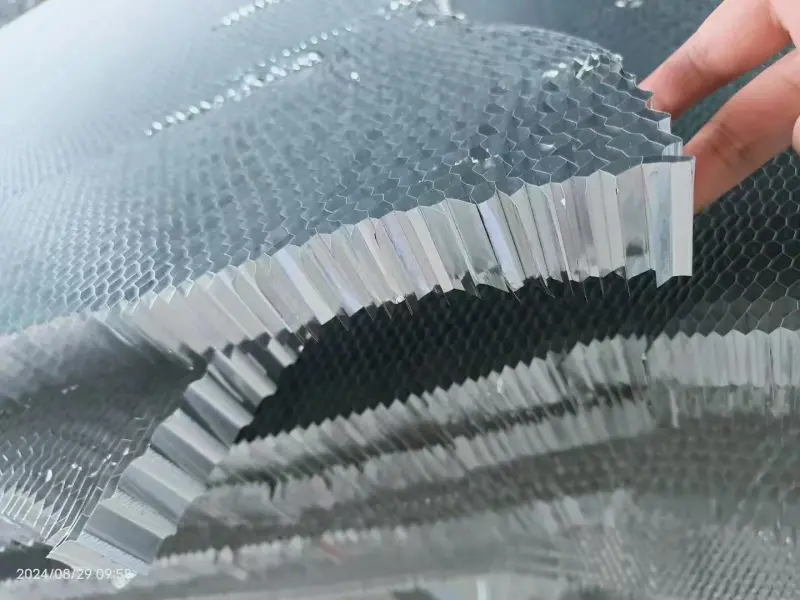
Cell size is measured across the flat of the hexagon (across flats). Smaller cells give higher density and strength. Larger cells reduce weight and lower cost.
| Cell Size | Density Range (kg/m³) | Strength Level | Common Application |
|---|---|---|---|
| 3/16 in (4.8 mm) | 48 – 96 | Very high | Aerospace panels, high-load floors |
| 1/4 in (6.4 mm) | 32 – 72 | High | Rail interiors, marine decks, façades |
| 3/8 in (9.5 mm) | 20 – 48 | Medium | General construction, partitions |
| 1/2 in (12.7 mm) | 16 – 32 | Medium-low | Lightweight wall panels, displays |
| 3/4 in (19.1 mm) | 10 – 20 | Low | Insulation fill, non-structural cores |
| 1 in (25.4 mm) | 8 – 14 | Very low | Packaging, energy absorption |
Foil Thickness & Density
Foil thickness controls how stiff and heavy each cell wall is. Thicker foil raises shear strength and density. Industrial buyers usually specify both cell size and foil thickness together.
| Foil Thickness (mm) | Typical Density (kg/m³) | Application Range |
|---|---|---|
| 0.02 | 8 – 16 | Light-duty fill, packaging cushion |
| 0.03 | 12 – 24 | Interior panels, furniture core |
| 0.04 | 16 – 32 | Partitions, display boards |
| 0.05 | 24 – 48 | Building façades, door cores |
| 0.06 | 32 – 64 | Marine decks, rail floors |
| 0.08 | 48 – 80 | Aerospace, structural sandwich panels |
| 0.10 | 64 – 96 | High-load aerospace and defense |
Standard Core Thickness
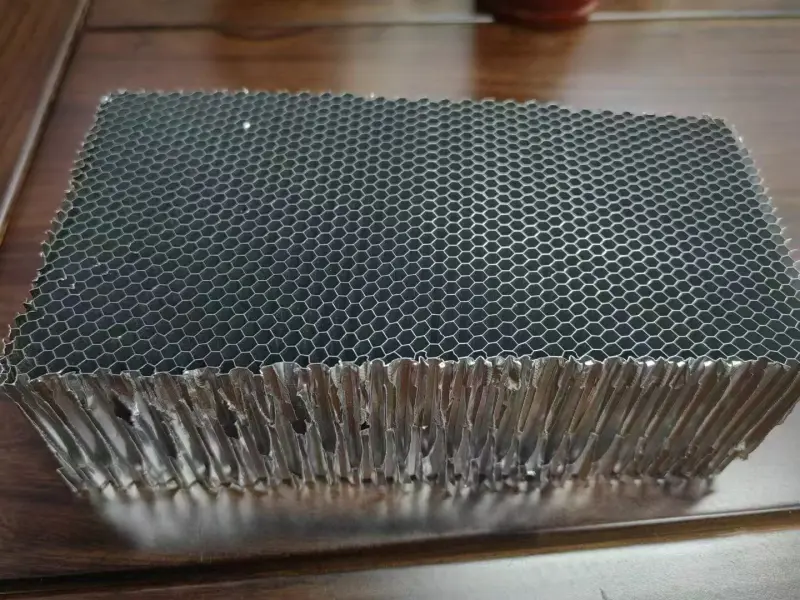
Core thickness is the height of the block from top to bottom. It is separate from foil thickness. Thicker cores give greater panel stiffness with little added weight. Most suppliers cut to order from master blocks.
| Core Thickness | Panel Application |
|---|---|
| 6 – 10 mm | Thin decorative panels, display walls |
| 12 – 20 mm | Door skins, lightweight partitions |
| 25 – 30 mm | Building facade panels, false ceilings |
| 40 – 50 mm | Floor panels, rail vehicle interiors |
| 60 – 80 mm | Aerospace sandwich panels |
| 100 – 150 mm | Structural building slabs, bridge decks |
| Custom up to 600 mm | Special engineering projects |
Product Types
Bulk aluminum honeycomb core comes in several formats. Each fits a different production workflow or end product. Buyers can order in block, sheet, or pre-bonded panel form.
Unexpanded Block (HOBE)
HOBE stands for Honeycomb Before Expansion. It is a compressed block of bonded foil strips. The buyer expands it to the needed width on-site. This format ships efficiently and reduces freight cost. It is popular for large-volume fabricators who cut and bond their own panels.
Expanded Sheet
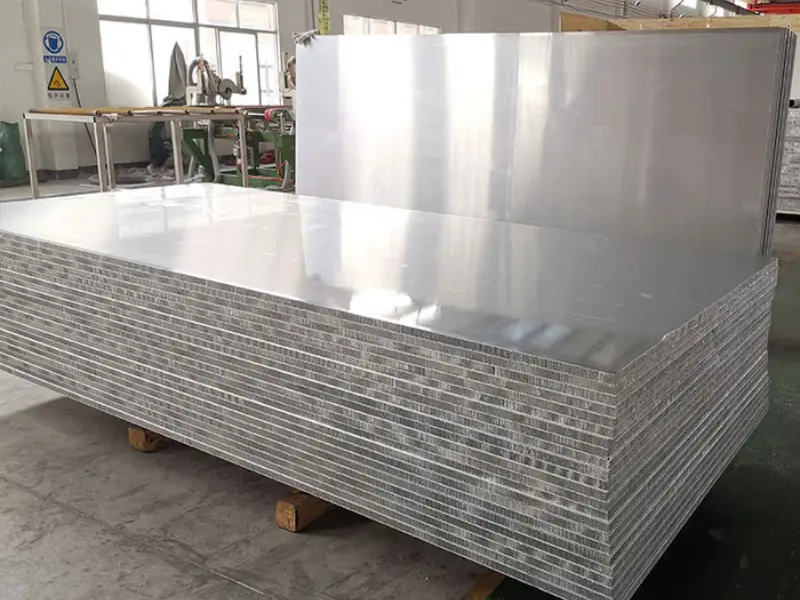
Already expanded to full cell structure. Ready for lamination or direct use. Standard sheet sizes are 1220 × 2440 mm (4 × 8 ft), but custom lengths are common. Thickness is cut to order. This is the most common form for panel manufacturers.
Sliced Block
A master block is grown to a large height, then sliced horizontally like a loaf of bread. Each slice is a consistent, flat sheet. Sliced cores have very uniform thickness. They suit precision aerospace and rail components.
Perforated Core
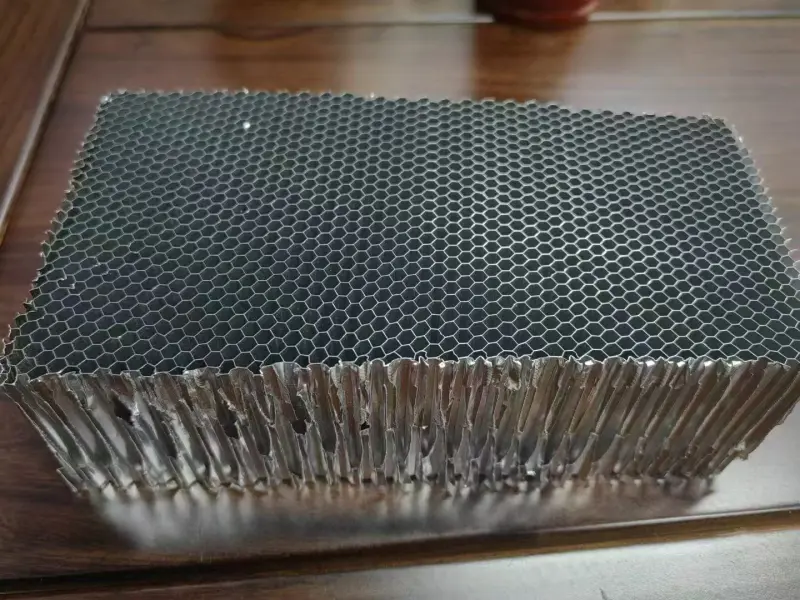
Cell walls have small holes punched through them. This allows air and resin to pass through the core during composite manufacturing. It reduces trapped air voids in cured panels. Common in carbon fiber and fiberglass sandwich structures.
Overexpanded (OX) Core
The hexagonal cells are stretched further in one direction, producing a rectangular cell shape. This makes the core easier to bend along one axis. It is used for curved panels such as aircraft fuselage linings and curved facade cladding.
Flex Core
A specially bonded core designed to curve in two directions. The cell geometry allows compound curves without crimping. It is used in aircraft nose cones, curved rail panels, and architectural feature pieces.
Anti-Static Core
Made with a carbon-loaded or coated foil. It dissipates static electricity. Used in electronics manufacturing floors, cleanroom panels, and data center raised floors.
Fire-Retardant Core
The foil or adhesive is treated to slow flame spread. It meets building codes in public spaces. Common in rail, subway station ceilings, and interior wall panels in high-occupancy buildings.
| Product Type | Format | Key Feature | Who Buys It |
|---|---|---|---|
| HOBE block | Compressed roll | Lowest freight cost | Panel manufacturers |
| Expanded sheet | Flat cut sheet | Ready to laminate | Composite shops |
| Sliced block | Precision cut sheet | Tight thickness tolerance | Aerospace suppliers |
| Perforated core | Flat sheet | Resin-infusion friendly | Composite fabricators |
| OX core | Expanded sheet | Single-axis bending | Aircraft, curved façades |
| Flex core | Expanded sheet | Compound curves | Aerospace, rail |
| Anti-static core | Expanded sheet | ESD control | Electronics industry |
| Fire-retardant core | Expanded sheet | Flame spread control | Rail, public buildings |
Mechanical Properties (Typical Values)
Values below are for 5052-H38 alloy, 1/4 in cell, 0.06 mm foil. Actual figures vary by alloy, cell size, and density.
| Property | Direction | Typical Value | Unit |
|---|---|---|---|
| Bare compressive strength | Out-of-plane | 2.1 – 6.9 | MPa |
| Stabilized compressive strength | Out-of-plane | 2.8 – 9.0 | MPa |
| Shear strength (L direction) | Longitudinal | 1.5 – 4.8 | MPa |
| Shear strength (W direction) | Transverse | 0.9 – 2.6 | MPa |
| Shear modulus (L) | Longitudinal | 200 – 620 | MPa |
| Shear modulus (W) | Transverse | 100 – 310 | MPa |
| Density | — | 16 – 96 | kg/m³ |
Application Areas
Bulk aluminum honeycomb core is used across more industries than most buyers expect. The combination of light weight, high stiffness, and easy bonding makes it a flexible base material.
Aerospace & Aviation
- Aircraft floor panels and cargo hold liners
- Fuselage interior wall and ceiling panels
- Wing trailing edge and control surface structures
- Satellite structural panels and antenna reflectors
- Helicopter rotor blades (filler core)
- Galley and lavatory enclosures
- Engine nacelle acoustic panels
Construction & Architecture
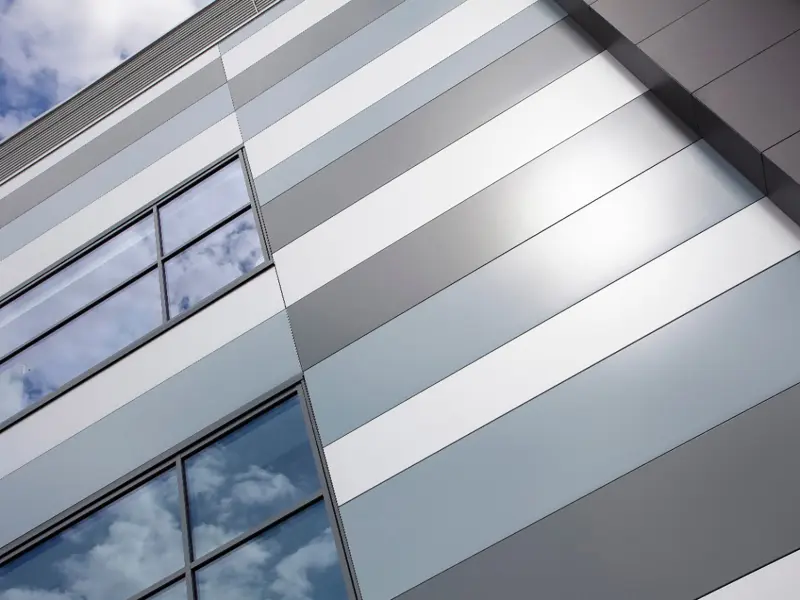
- Aluminum composite facade cladding panels
- Raised access flooring for data centers and offices
- Interior partition walls and movable wall systems
- False ceilings and acoustic ceiling tiles
- Curtain wall infill panels
- Bridge deck surfacing (pedestrian bridges)
- Prefabricated modular building wall panels
- Rooftop equipment platforms and walkways
Marine & Offshore
- High-speed vessel hull panels and superstructure
- Yacht interior bulkheads and cabin liners
- Offshore platform deck grating and flooring
- Naval vessel interior doors and partitions
- Ferry passenger area wall and ceiling cladding
- Life raft and rescue craft structural cores
Rail & Transportation
- High-speed train floor, wall, and ceiling panels
- Subway car interior lining panels
- Bus body side panels and roof sections
- Truck trailer floor and side wall panels
- Refrigerated vehicle insulated panel cores
- Automotive hood and trunk lid inner cores
Industrial & Manufacturing

- Machine tool table tops and precision surface plates
- Cleanroom flooring and anti-static panels
- Semiconductor equipment enclosure panels
- Conveyor system lightweight structural members
- Printing press blanket and impression cylinder inserts
- Vacuum forming and press mold tooling boards
- Industrial door cores for large factory doors
Defense & Security
- Military vehicle armor backing panels
- Blast and fragmentation energy-absorbing panels
- Ballistic-resistant wall and door assemblies
- Shelter and forward operating base panels
- Radar-transparent structural components
Electronics & Precision Equipment
- EMI shielding enclosure panels
- Optical table honeycomb breadboards
- Server rack side panels and blanking plates
- Satellite dish reflector substrates
- PCB testing fixture base plates
Furniture & Interior Design
- Lightweight table tops and work surfaces
- Exhibition booth walls and display panels
- Museum display case panels
- Retail fixture shelving and counter tops
- Stage and event flooring panels
| Industry | Primary Benefit Used | Typical Panel Density |
|---|---|---|
| Aerospace | Minimum weight, high stiffness | 48 – 96 kg/m³ |
| Construction | Flatness, large panel span | 16 – 48 kg/m³ |
| Marine | Corrosion resistance, low weight | 32 – 72 kg/m³ |
| Rail / Transit | Fire resistance, weight saving | 24 – 64 kg/m³ |
| Industrial | Stiffness, vibration damping | 32 – 80 kg/m³ |
| Defense | Energy absorption, strength | 48 – 96 kg/m³ |
| Furniture / Retail | Light weight, clean surface | 10 – 32 kg/m³ |
Why Buy in Bulk?
Bulk orders lower the unit price significantly. They also ensure consistent batch quality across a production run. Large fabricators and panel manufacturers often hold 6–12 weeks of stock on site to keep production lines running without supply delays.
Advantages of bulk purchasing
- Lower cost per square meter
- Consistent alloy and foil batch
- Fewer order cycles per year
- Priority delivery scheduling
- Custom cell size runs become viable
Standard bulk order formats
- Full pallet of expanded sheets
- HOBE rolls by weight (kg or metric ton)
- Master blocks by cubic meter
- Container loads (20 ft or 40 ft)
- Blanket purchase agreements (quarterly)
What Is Aluminum Honeycomb Core?
The core is made by expanding or corrugating aluminum foil into a honeycomb pattern. Each cell is a regular hexagon. The structure is bonded with a heat-resistant adhesive or through welding. The result is a very high strength-to-weight ratio.
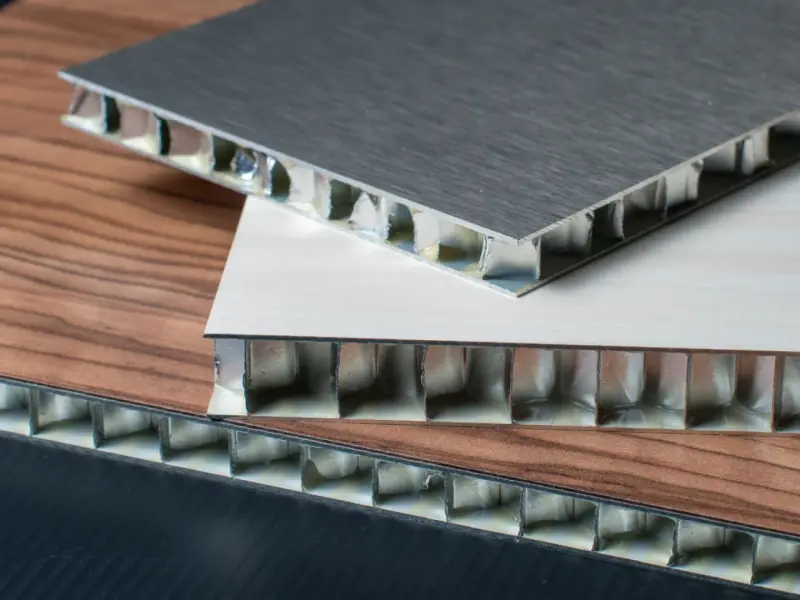
When sandwiched between two face sheets, the core gives a panel much higher stiffness than solid aluminum of the same weight. This is why it is used wherever weight and rigidity both matter.
Ordering Specifications Checklist
When requesting a quote, provide these parameters for an accurate price and lead time.
| Parameter | Options / Range |
|---|---|
| Alloy | 3003, 5052, 5056, 1100, 2024 |
| Temper | H18, H19, H38, H39 |
| Cell size | 3/16 in, 1/4 in, 3/8 in, 1/2 in, 3/4 in, 1 in (or metric equivalent) |
| Foil thickness | 0.02 – 0.10 mm |
| Core thickness | 6 – 600 mm, custom cut |
| Sheet size | 1220 × 2440 mm standard, or custom |
| Format | HOBE block, expanded sheet, sliced |
| Special type | Perforated, OX, flex, anti-static, fire-retardant |
| Quantity | m², sheets, kg, or metric ton |
| Surface treatment | Bare, chromate conversion, anodized (if bonded) |
Certifications & Standards
| Standard | Scope | Relevance |
|---|---|---|
| MIL-C-7438 | Aerospace honeycomb core | US military / aerospace spec |
| ASTM B209 | Aluminum sheet and plate | Base foil material standard |
| EN 1386 | Aluminum and alloy coils | European base material reference |
| BS EN 13245 | Structural panels | UK / EU construction panels |
| ISO 9001 | Quality management | Production process control |
| RoHS | Hazardous substances | Required for EU supply |
| REACH | Chemical compliance | EU chemical regulation |
| FAR 25.853 | Flame / smoke / toxicity | Aircraft interior fire standard |
Quick Reference: Cell Size vs. Application
| Cell Size | Best Application Match | Not Recommended For |
|---|---|---|
| 3/16 in (4.8 mm) | Aerospace, high-load floors, defense | Budget decorative panels |
| 1/4 in (6.4 mm) | Rail, marine, facade, precision equipment | Ultra-light decorative use |
| 3/8 in (9.5 mm) | Construction, partitions, general industrial | High-vibration structural |
| 1/2 in (12.7 mm) | Lightweight interior panels, displays | Load-bearing structures |
| 3/4 in – 1 in | Packaging, non-structural fill, insulation | Any structural application |
Note: All specifications can be customized. Standard grades ship in 5–10 business days from stock. Custom alloy, cell size, or thickness combinations require 15–30 business days. Contact our sales team with your drawing or data sheet for a fast quote.