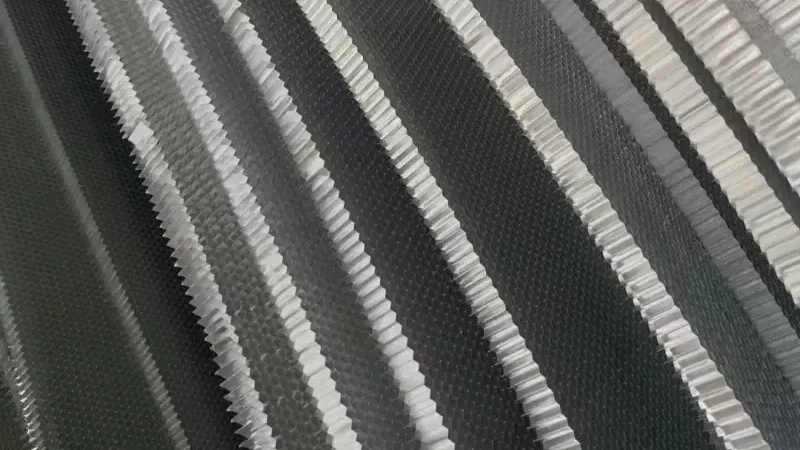
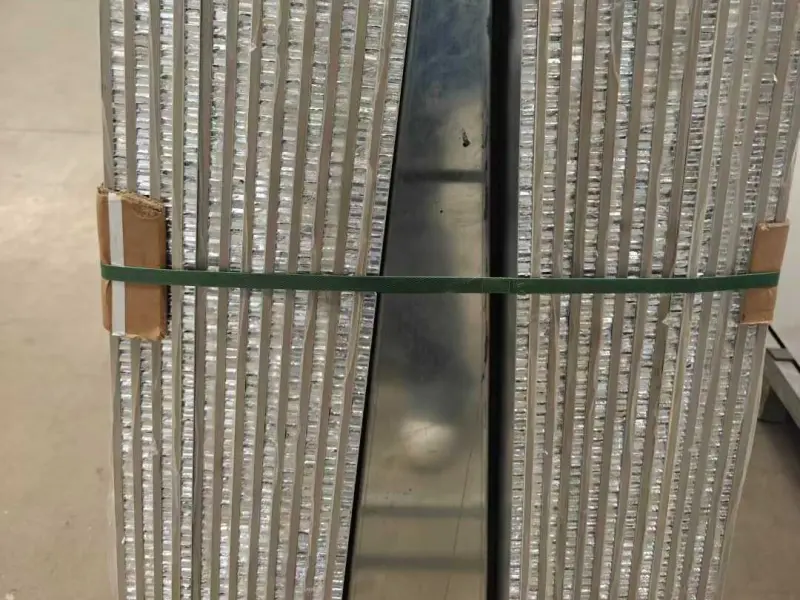
Aluminum honeycomb core price is not a single product. It comes in dozens of alloy, cell size, foil thickness, and density combinations. Each variable changes the price. Buyers who understand these factors get better quotes and avoid paying for spec they do not need.
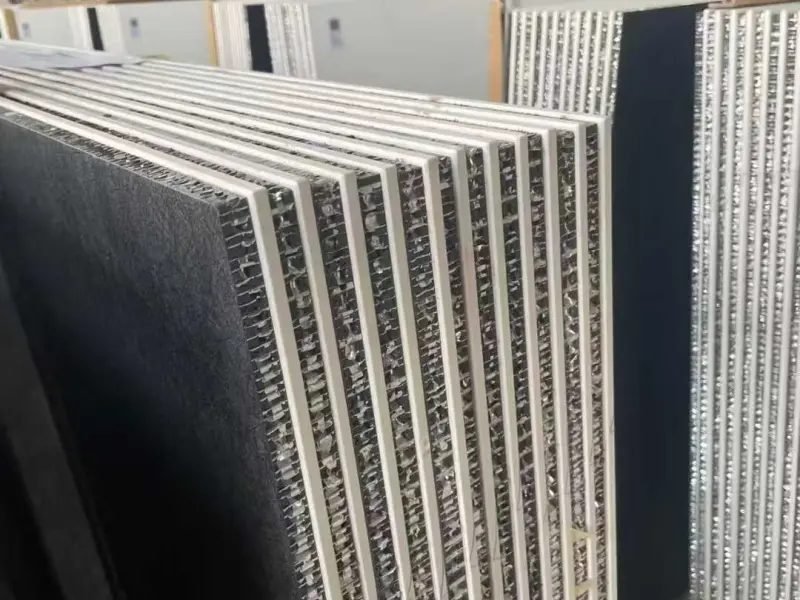
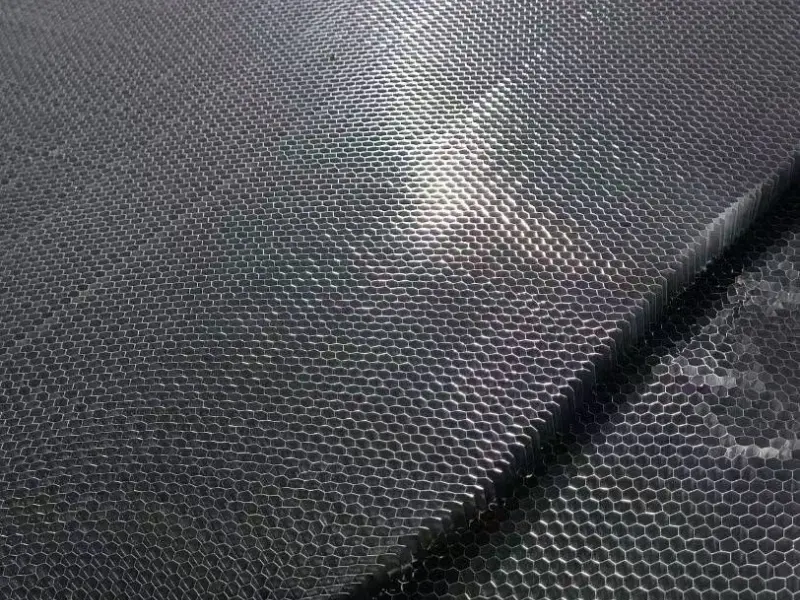
The five main cost drivers are:
- Alloy grade — 5052 costs more than 3003; 5056 costs more than 5052
- Foil thickness — thicker foil raises material weight and cost per m²
- Cell size — smaller cells need more foil per unit area, so cost is higher
- Core thickness — a thicker block uses more material
- Product format — HOBE block, expanded sheet, and sliced sheet each have different processing costs
Quantity also matters a lot. A full container order can be 30–50% cheaper per unit than a small trial order.
2026 Price Reference Table
These are ex-factory price ranges based on standard grades. Prices vary by supplier, region, quantity, and raw material market at time of order. Use these as a starting benchmark, not a final quote.
| Product Type | Alloy | Cell Size | Foil (mm) | Density (kg/m³) | Price Range (USD/m²) |
|---|---|---|---|---|---|
| Expanded sheet | 3003-H18 | 1/4 in (6.4 mm) | 0.04 | 24 – 32 | 8 – 14 |
| Expanded sheet | 3003-H18 | 3/8 in (9.5 mm) | 0.04 | 16 – 24 | 6 – 11 |
| Expanded sheet | 3003-H18 | 1/2 in (12.7 mm) | 0.03 | 10 – 16 | 4 – 8 |
| Expanded sheet | 5052-H18 | 1/4 in (6.4 mm) | 0.05 | 32 – 48 | 14 – 22 |
| Expanded sheet | 5052-H18 | 3/16 in (4.8 mm) | 0.06 | 48 – 64 | 20 – 35 |
| Expanded sheet | 5052-H18 | 3/16 in (4.8 mm) | 0.08 | 64 – 96 | 30 – 50 |
| Expanded sheet | 5056-H39 | 3/16 in (4.8 mm) | 0.06 | 48 – 72 | 35 – 60 |
| HOBE block (unexpanded) | 3003-H18 | 3/8 in | 0.04 | — | 5 – 9 per m² equiv. |
| HOBE block (unexpanded) | 5052-H18 | 1/4 in | 0.05 | — | 11 – 18 per m² equiv. |
| Sliced precision sheet | 5052-H18 | 3/16 in | 0.06 | 48 – 64 | 25 – 45 |
| Perforated core | 3003-H18 | 3/8 in | 0.04 | 16 – 24 | 9 – 16 |
| OX (overexpanded) core | 5052-H18 | 1/4 in OX | 0.05 | 24 – 40 | 18 – 30 |
| Flex core | 5052-H18 | Custom | 0.05 | 20 – 36 | 28 – 50 |
| Anti-static core | 3003 + coating | 3/8 in | 0.04 | 16 – 24 | 14 – 24 |
| Fire-retardant core | 3003-H18, FR adhesive | 3/8 in | 0.04 | 16 – 24 | 12 – 22 |
All prices USD, ex-factory China. Freight, import duty, and local taxes are not included.
Alloy & Temper: How They Affect Price
3003-H18 — Standard Grade Honeycomb Core
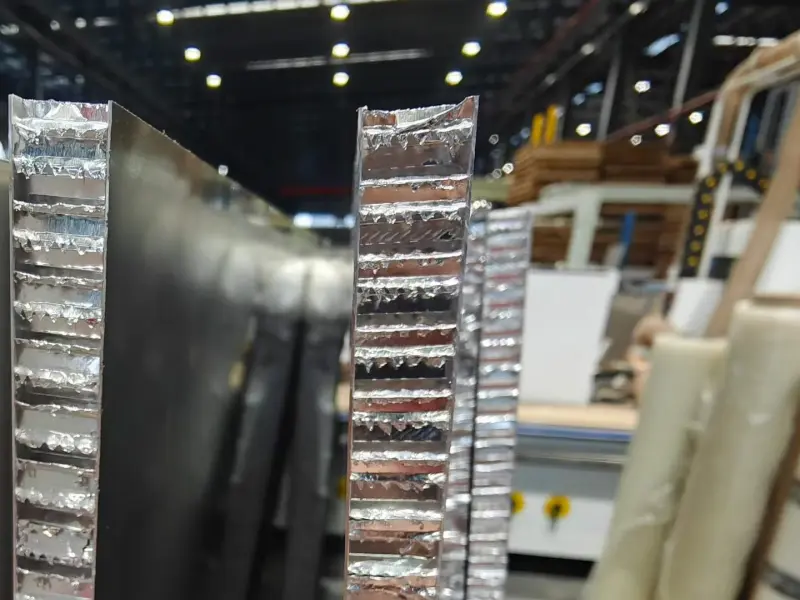
3003 is the entry-level alloy for honeycomb core. It is strong enough for most construction, furniture, and general industrial panels. The H18 temper gives it good hardness for processing. It is the cheapest alloy option and suits buyers who do not need marine or aerospace rating.
| Property | Value |
|---|---|
| Alloy series | 3000 (Al-Mn) |
| Temper | H18 |
| Tensile strength | ~185 MPa |
| Corrosion resistance | Good for dry and moderate environments |
| Price level | Lowest |
5052-H18 / H19 Honeycomb Core — Mid-Grade, Most Popular
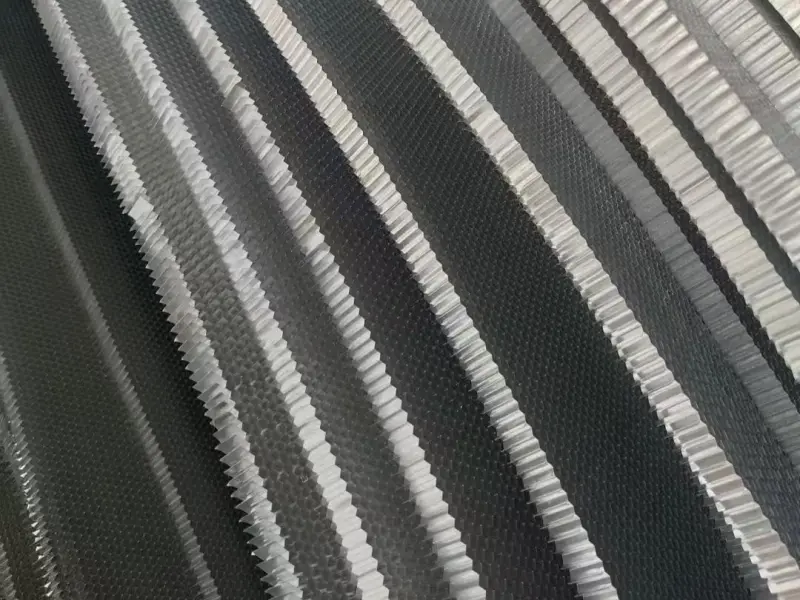
5052 is the most widely specified alloy for structural honeycomb core. It has significantly higher shear strength than 3003. It resists corrosion well in coastal and marine conditions. Aerospace interior panels and rail vehicle floors mostly use 5052. The price premium over 3003 is 30–60% depending on foil thickness.
| Property | Value |
|---|---|
| Alloy series | 5000 (Al-Mg) |
| Temper | H18 / H19 / H38 |
| Tensile strength | ~230 – 260 MPa |
| Corrosion resistance | Excellent, including marine |
| Price level | Medium — most popular |
5056-H39 Honeycomb Core — High-Strength Grade
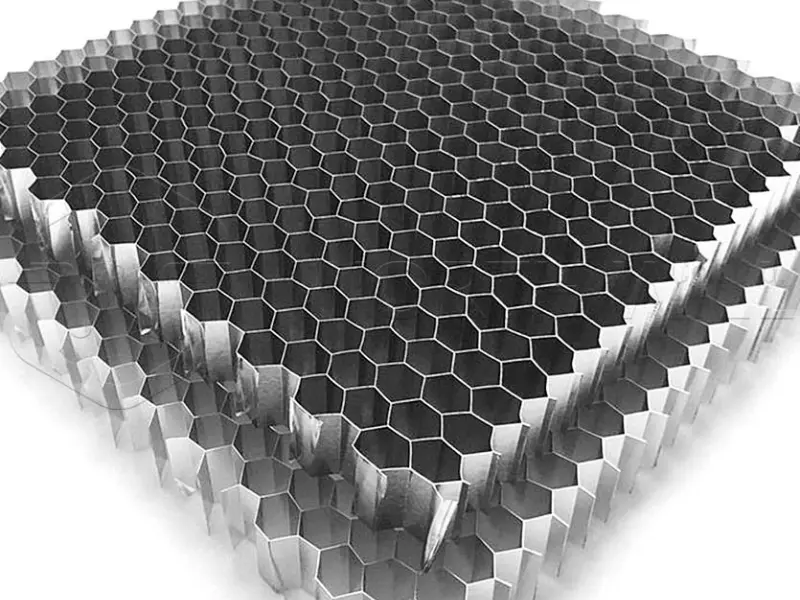
5056 delivers the highest shear strength of common honeycomb alloys. It is used in demanding aerospace structures and defense panels. Price is 40–80% higher than 5052. Most buyers do not need this grade unless a structural specification requires it.
| Property | Value |
|---|---|
| Alloy series | 5000 (Al-Mg-Cr) |
| Temper | H39 |
| Tensile strength | ~290 MPa |
| Corrosion resistance | Excellent |
| Price level | Highest — aerospace/defense |
1100-H18 Honeycomb Core — Thermal Grade
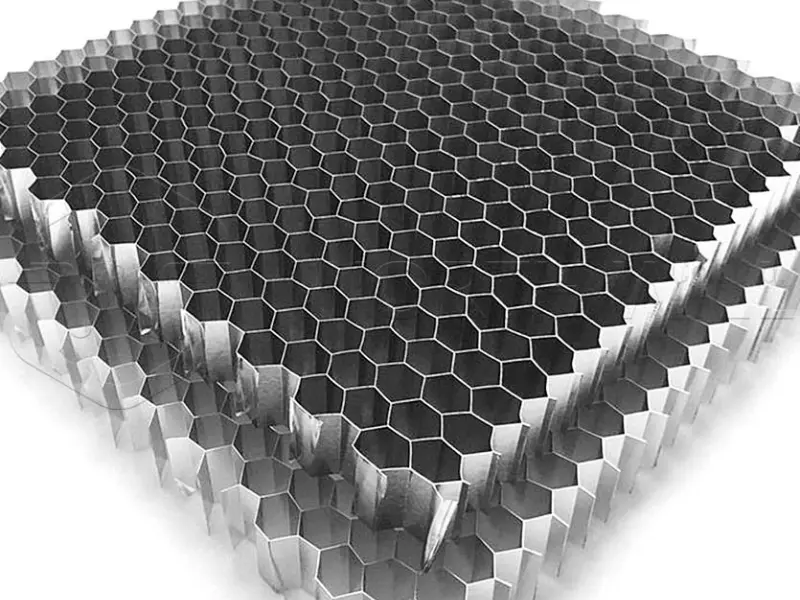
1100 alloy has the best thermal conductivity of common honeycomb alloys. It is softer and cheaper than 5052. Used in heat exchanger cores and non-structural thermal panels. Not suitable for load-bearing applications.
| Property | Value |
|---|---|
| Alloy series | 1000 (pure Al) |
| Temper | H18 |
| Tensile strength | ~165 MPa |
| Best feature | High thermal conductivity |
| Price level | Low — similar to 3003 |
Cell Size vs. Price vs. Strength
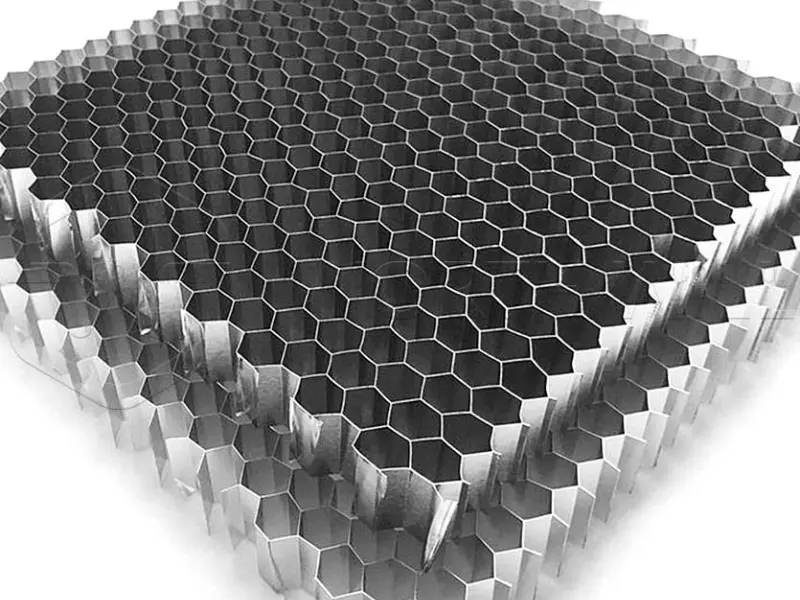
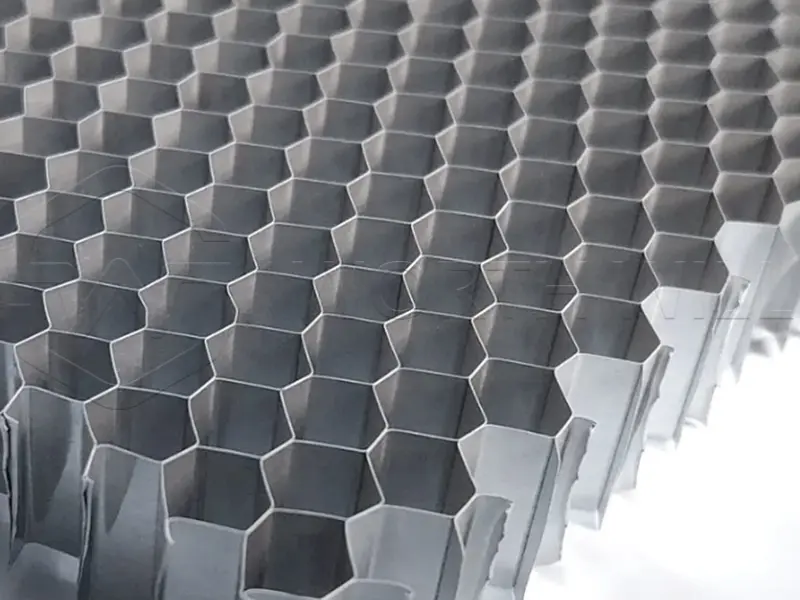
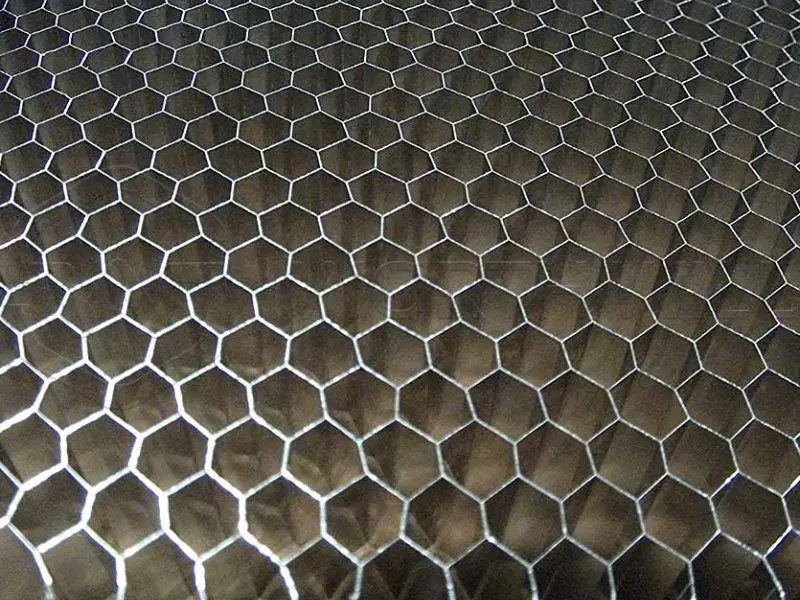
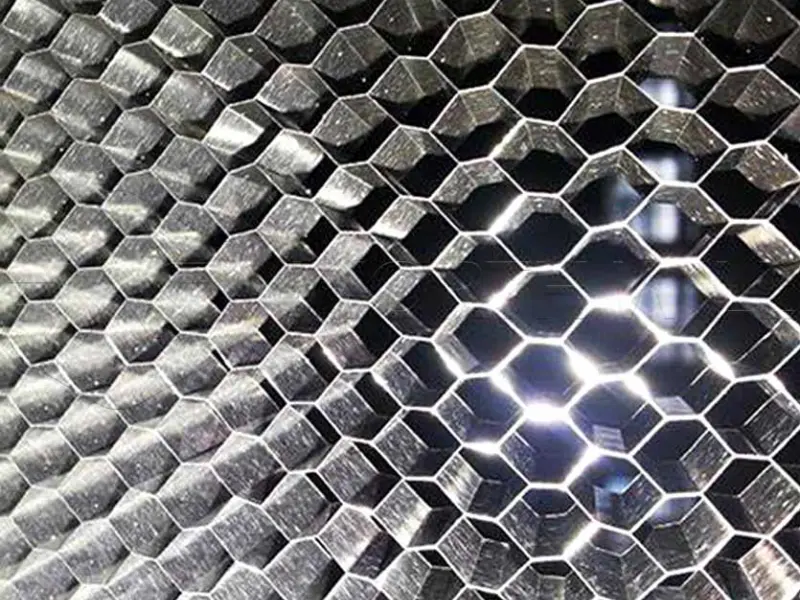
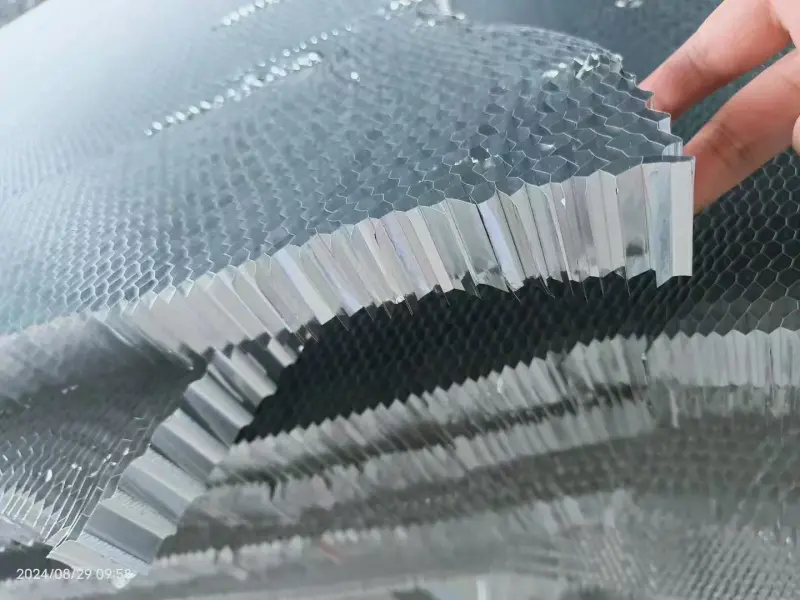
Smaller cells cost more. They require more foil material per square meter and more processing steps. But they give higher compressive and shear strength. The right cell size balances performance with cost.
| Cell Size | Relative Cost | Compressive Strength | Shear Strength | Best Use |
|---|---|---|---|---|
| 3/16 in (4.8 mm) | Highest | Very high | Very high | Aerospace, structural floors |
| 1/4 in (6.4 mm) | High | High | High | Rail, marine, premium facades |
| 3/8 in (9.5 mm) | Medium | Medium | Medium | Construction, general industrial |
| 1/2 in (12.7 mm) | Low | Low-medium | Low-medium | Interior panels, partitions |
| 3/4 in (19.1 mm) | Lower | Low | Low | Lightweight fill, displays |
| 1 in (25.4 mm) | Lowest | Very low | Very low | Packaging, non-structural |
Foil Thickness vs. Price
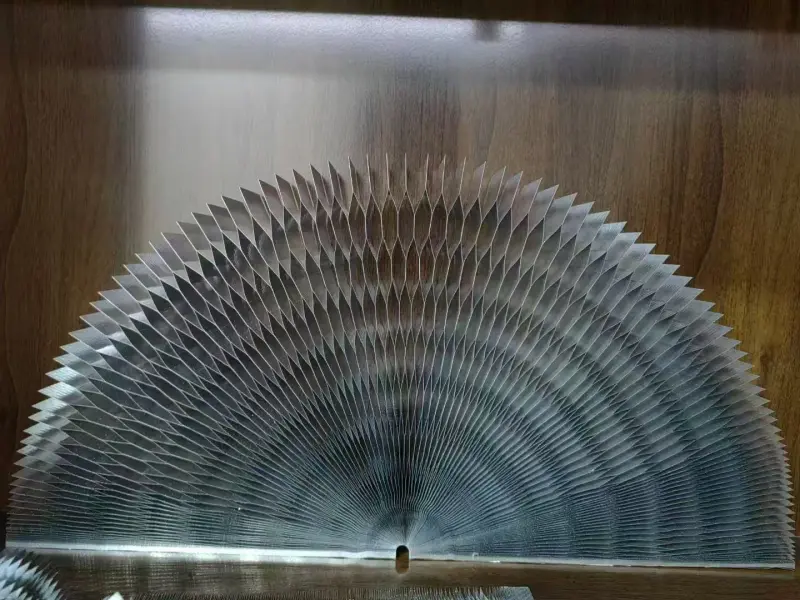
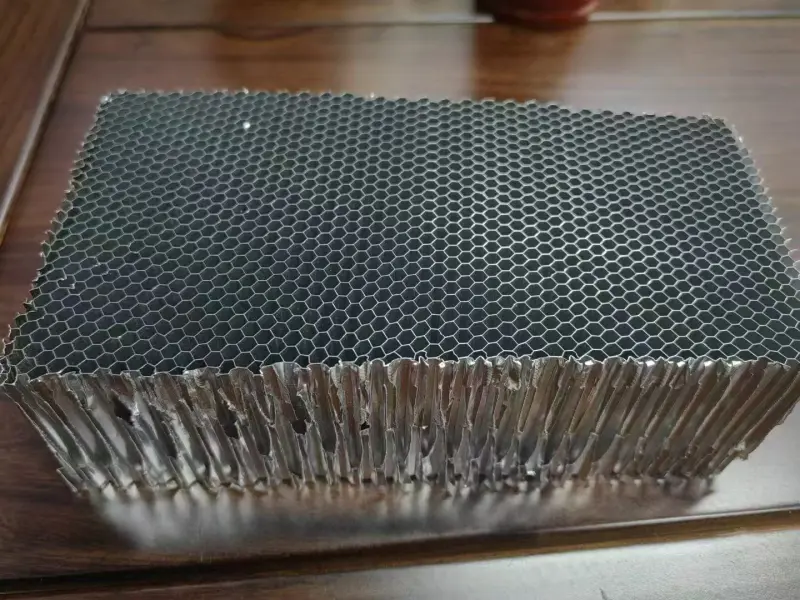
Foil thickness is the wall thickness of each hexagonal cell. It is the single biggest driver of density and strength. Thicker foil costs more per m² because there is simply more aluminum in the core.
| Foil Thickness (mm) | Density Range (kg/m³) | Strength Level | Cost Level |
|---|---|---|---|
| 0.02 | 8 – 14 | Very low | Lowest |
| 0.03 | 12 – 20 | Low | Low |
| 0.04 | 16 – 32 | Medium | Medium |
| 0.05 | 24 – 48 | Medium-high | Medium-high |
| 0.06 | 32 – 64 | High | High |
| 0.08 | 48 – 80 | Very high | Very high |
| 0.10 | 64 – 96 | Highest | Highest |
Core Thickness vs. Price
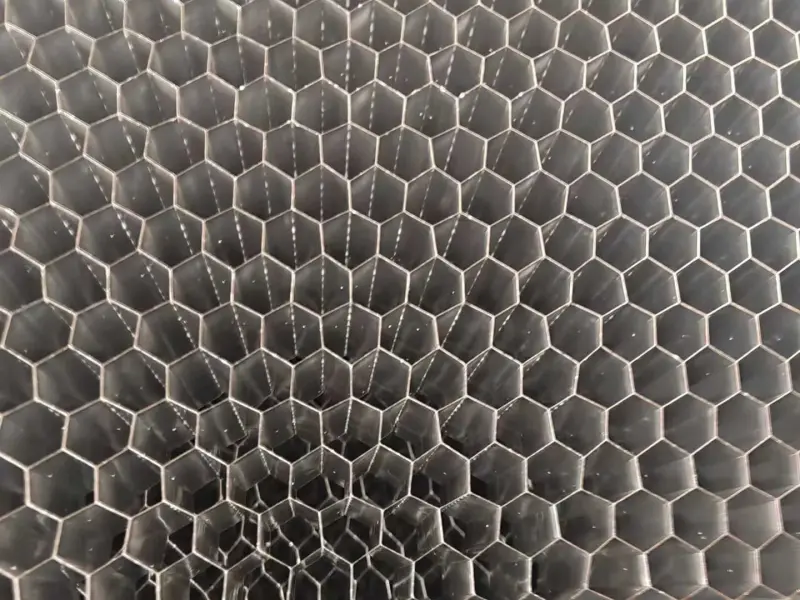
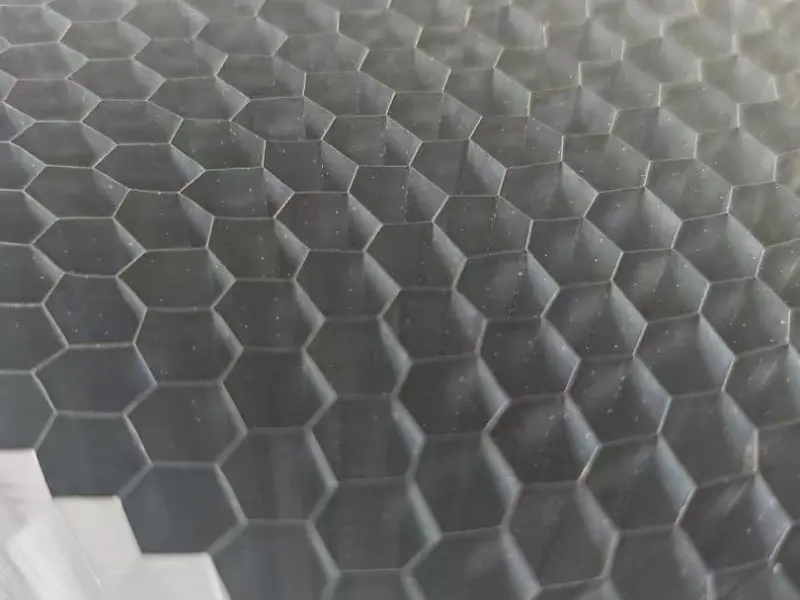
Core thickness is the height of the block from top face to bottom face. A thicker core uses more material but not proportionally more cost — the main cost is in the foil and cell structure, not the height alone.
| Core Thickness | Material Cost Factor | Panel Stiffness | Common Application |
|---|---|---|---|
| 6 – 10 mm | 1× (base) | Low | Thin decorative panels, door skins |
| 12 – 20 mm | 1.2× – 1.8× | Moderate | Partitions, light wall panels |
| 25 – 30 mm | 2× – 2.5× | Good | Building facade, false ceiling |
| 40 – 50 mm | 3× – 4× | High | Floor panels, rail interiors |
| 60 – 80 mm | 5× – 7× | Very high | Aerospace, heavy floor systems |
| 100 mm+ | 8×+ | Structural | Bridge decks, structural slabs |
Product Types & Price Positioning
Unexpanded HOBE Block
HOBE (Honeycomb Before Expansion) is the lowest-cost format per m² equivalent. It ships as a compact compressed block. The buyer expands it on-site. Freight cost is low because the volume before expansion is small. Large panel manufacturers prefer HOBE because it reduces shipping costs on high-volume orders.
Expanded Sheet
The most common purchase format. The core is already expanded to full cell structure and cut to the specified thickness. It costs slightly more than HOBE due to the expansion and slicing process. Most composite panel shops buy expanded sheets ready for lamination.
Precision Sliced Sheet
A master-grown block is sliced on a precision saw. Thickness tolerance is ±0.1 mm or better. This format is required for aerospace and rail components where flatness and thickness consistency are critical. It commands a 15–30% price premium over standard expanded sheet.
Perforated Core
Standard expanded core with small holes punched through cell walls. This allows resin to flow through the core during vacuum infusion. Used in fiberglass and carbon fiber composite panels. The perforation process adds 10–20% to the price of the equivalent standard core.
Overexpanded (OX) Core
Cells are stretched beyond normal expansion in one axis, creating a rectangular cell. This allows the core to bend along one direction without crimping. Used in curved panels for aircraft interiors and curved building facades. Price is 20–40% higher than standard expanded sheet of the same alloy.
Flex Core
Specially bonded to allow compound curvature. The adhesive node pattern is designed differently from standard core. This is the most expensive format. Used only where the panel must curve in two directions simultaneously — aircraft nose sections, curved rail panels.
Anti-Static Core
Standard 3003 core with a carbon-loaded coating applied to cell walls. It dissipates electrostatic charge. Required for electronics cleanroom floors, raised access floors in server rooms, and semiconductor fab panels. Adds 40–60% to the base core price.
Fire-Retardant Core
Uses a fire-retardant adhesive in the bonding process. The aluminum itself is non-combustible, but standard adhesives are not. FR-bonded core meets building codes for public interior use. Price premium is 30–50% over standard core.
Price Comparison by Application Sector
| Sector | Alloy | Cell Size | Core Thickness | Approx. Cost (USD/m²) |
|---|---|---|---|---|
| General construction (wall panel) | 3003-H18 | 3/8 in | 20 mm | 6 – 12 |
| Facade cladding panel | 3003-H18 | 1/4 in | 25 mm | 9 – 16 |
| Interior partition | 3003-H18 | 1/2 in | 15 mm | 5 – 9 |
| Rail vehicle floor | 5052-H18 | 1/4 in | 40 mm | 20 – 35 |
| Marine deck panel | 5052-H18 | 1/4 in | 30 mm | 18 – 30 |
| Aerospace interior | 5052-H18 | 3/16 in | 25 mm | 28 – 50 |
| Aerospace structural | 5056-H39 | 3/16 in | 50 mm | 50 – 90 |
| Cleanroom floor (anti-static) | 3003 + coating | 3/8 in | 40 mm | 28 – 45 |
| Furniture / display | 3003-H18 | 1/2 in | 12 mm | 4 – 8 |
Application Areas
Aerospace & Aviation
- Aircraft cabin floor panels and cargo liners
- Fuselage wall and ceiling sandwich panels
- Control surface and wing trailing edge cores
- Satellite structural panels
- Helicopter rotor blade filler
- Engine nacelle acoustic cores
Building & Construction
- Aluminum composite facade cladding panels
- Raised access flooring in offices and data centers
- Interior partition wall cores
- False ceiling and acoustic tile backing
- Prefabricated modular building panels
- Pedestrian bridge deck systems
Rail & Transportation
- High-speed train floor and wall panels
- Subway car interior lining
- Bus roof and side panels
- Truck trailer floor panels
- Refrigerated vehicle panel cores
- Automotive hood and trunk lid inner structure
Marine & Offshore
- High-speed vessel hull and superstructure panels
- Yacht interior bulkhead cores
- Offshore platform deck panels
- Naval vessel interior doors
- Ferry passenger area ceiling and wall cladding
Industrial & Electronics
- Cleanroom raised floor panels
- Semiconductor equipment enclosures
- Machine tool surface plates
- Optical table breadboards
- EMI shielding panel cores
- Vacuum forming tool boards
Defense
- Military vehicle armor backing
- Blast energy-absorbing panel systems
- Shelter and forward base structural panels
- Ballistic-resistant wall assemblies
Furniture & Retail
- Lightweight table tops and counter surfaces
- Exhibition booth wall panels
- Museum display case panels
- Stage and event flooring sections
- Retail shelving and fixture boards
What Drives Price Changes Year to Year
Aluminum honeycomb core prices follow the London Metal Exchange (LME) aluminum price with a lag. When aluminum ingot prices rise, foil costs rise 4–8 weeks later. Core prices then follow.
| Factor | Direction | Typical Impact |
|---|---|---|
| LME aluminum price up | Price up | +5 – 15% on material cost |
| Energy cost increase | Price up | Affects rolling and coating |
| CNY / USD exchange rate shift | Variable | Affects ex-China pricing |
| Freight cost increase | Price up | Adds to landed cost |
| Large order volume | Price down | 10 – 35% discount possible |
| Off-peak season order | Price down | Some flexibility in Q1 and Q3 |
| New alloy specification (5056) | Price up | +40 – 80% vs 3003 |
| Standard stock item | Price down | No custom run surcharge |
How to Get the Best Price
Specify the Minimum Grade You Actually Need
Many buyers over-specify. A partition wall does not need 5052-H18 aerospace-grade core. 3003-H18 at 3/8 in cell and 0.04 mm foil is enough and costs half the price.
Order in Full Pallet or Container Quantities
A single pallet order and a full container order of the same product can differ by 30% or more per m². If your production volume allows it, bulk purchasing saves significant cost.
Consolidate Cell Size and Thickness Variants
Ordering three different cell sizes in small quantities costs more than ordering one or two sizes in larger volume. Standardizing on fewer specs reduces setup costs and gives you leverage on price.
Request HOBE Format for High-Volume Orders
If your shop can expand and slice in-house, HOBE block is almost always cheaper per m² equivalent than buying pre-expanded sheet, especially on container-load quantities.
Ordering Specification Checklist
Include these details when requesting a quote to get an accurate price fast:
- Alloy (3003, 5052, 5056, 1100)
- Temper (H18, H19, H38, H39)
- Cell size (3/16, 1/4, 3/8, 1/2, 3/4, 1 inch — or mm equivalent)
- Foil thickness (mm)
- Core thickness (mm)
- Sheet size (mm × mm) or HOBE block dimensions
- Special type (perforated, OX, flex, anti-static, fire-retardant)
- Quantity (m², sheets, or metric tons)
- Delivery destination (affects freight estimate)
- Required certifications (ISO, RoHS, MIL-spec, etc.)
Certifications That May Affect Price
| Certification | Cost Impact | Notes |
|---|---|---|
| ISO 9001 | Minimal | Most established suppliers hold this |
| MIL-C-7438 | +10 – 20% | Military / aerospace spec, test reports required |
| RoHS / REACH | Minimal | Standard for EU-bound shipments |
| FAR 25.853 | +15 – 25% | Aircraft interior fire, smoke, toxicity standard |
| Third-party test report (SGS/BV) | +5 – 10% | Per-batch testing on request |
| EN 13501-1 fire class | +10 – 20% | Required for EU construction projects |
Quick Comparison: Aluminum Honeycomb Core vs. Other Core Materials
| Core Type | Weight | Strength | Cost | Water Resistance | Best For |
|---|---|---|---|---|---|
| Aluminum honeycomb | Very low | High | Medium | Good | Aerospace, construction, marine |
| Nomex honeycomb | Very low | Very high | Very high | Excellent | High-end aerospace only |
| Paper honeycomb | Low | Low | Very low | Poor | Interior furniture, packaging |
| PVC foam | Low | Medium | Low-medium | Good | Marine, wind turbine blades |
| PET foam | Low | Medium | Medium | Good | Transport, construction |
| Balsa wood | Medium | Medium | Medium | Poor unless treated | Marine, wind turbine (traditional) |
Aluminum honeycomb core sits at the best cost-to-performance ratio for most structural sandwich panel applications. Nomex is stronger but costs 5–10× more. Paper core is cheaper but cannot handle moisture or load.
Lead Times (2026 Reference)
| Order Type | Lead Time |
|---|---|
| Stock standard grade (3003, 3/8 in, expanded) | 5 – 10 business days |
| Stock 5052 grade, expanded sheet | 7 – 15 business days |
| Custom cell size or foil thickness | 15 – 25 business days |
| HOBE block, standard grade | 10 – 20 business days |
| Perforated or OX core | 15 – 25 business days |
| Flex core or anti-static core | 20 – 35 business days |
| Full container, custom spec | 25 – 40 business days |
Tags: Aluminum Honeycomb Core Price · Honeycomb Core Cost 2026 · 3003 Honeycomb Core · 5052 Honeycomb Core · Cell Size Price Comparison · HOBE Block Price · Aerospace Honeycomb Core · Construction Honeycomb Panel · Perforated Core · OX Core · Flex Core · Anti-Static Honeycomb · Aluminum Core per m² · Bulk Honeycomb Core Supply