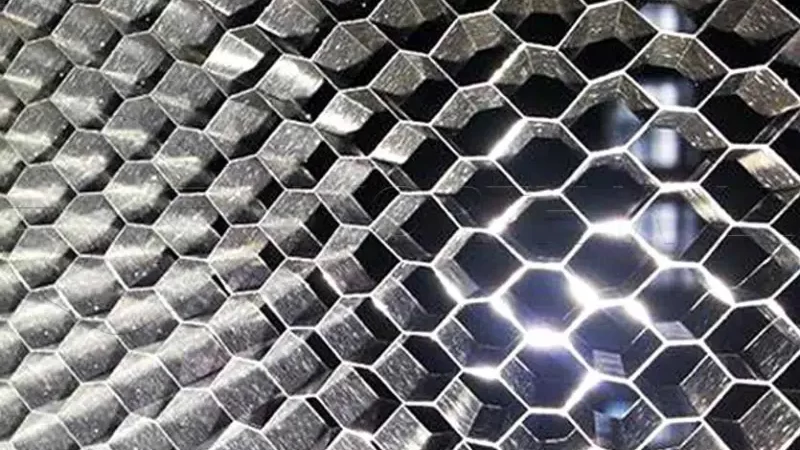
Aluminum honeycomb core is one of the most innovative materials in modern engineering. This lightweight yet incredibly strong structure has transformed industries ranging from aerospace to architecture. If you’re looking for a material that offers exceptional strength-to-weight ratio, you’ve found it.
Understanding Aluminum Honeycomb Core Structure
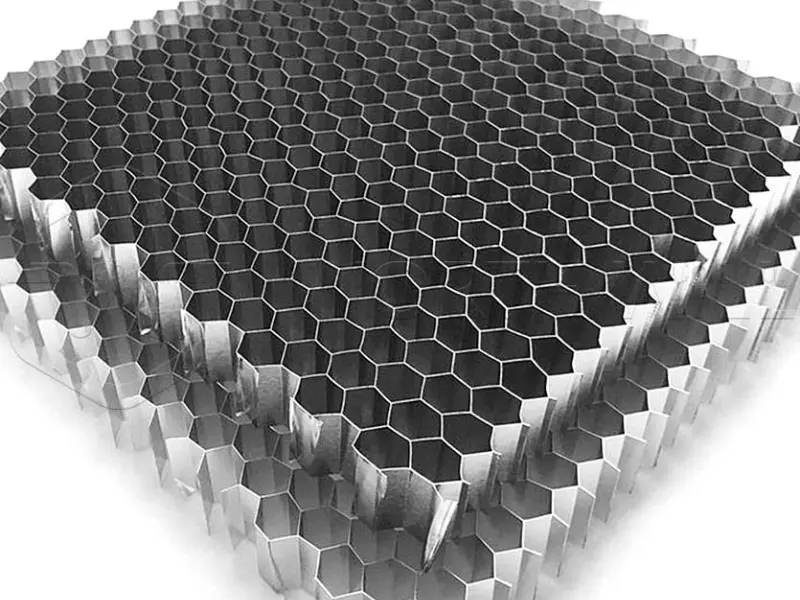
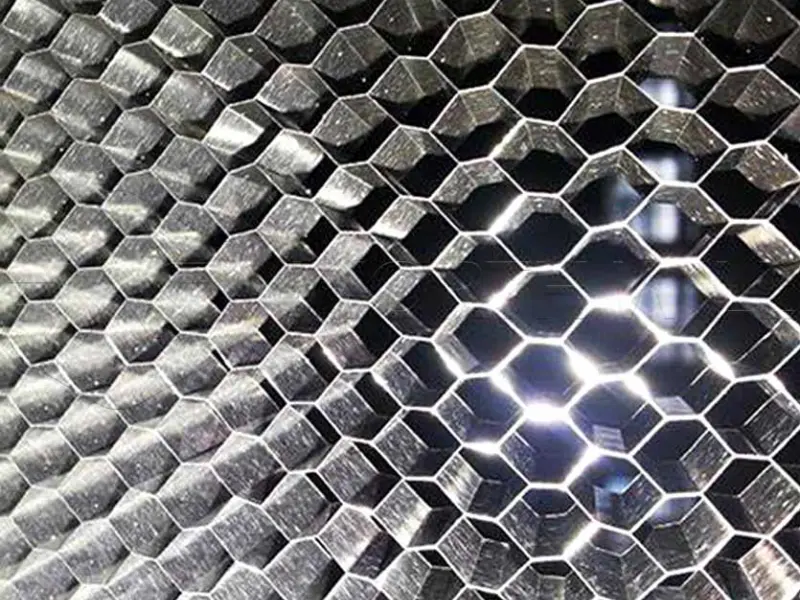
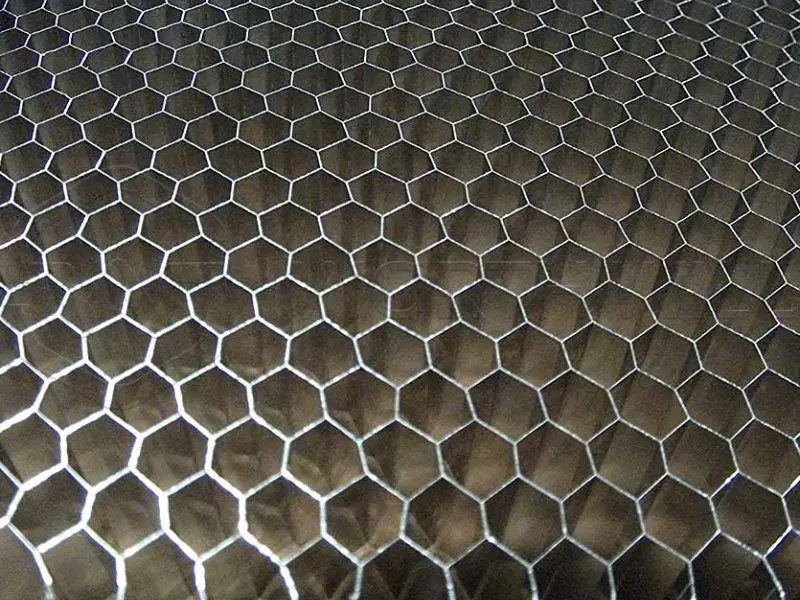
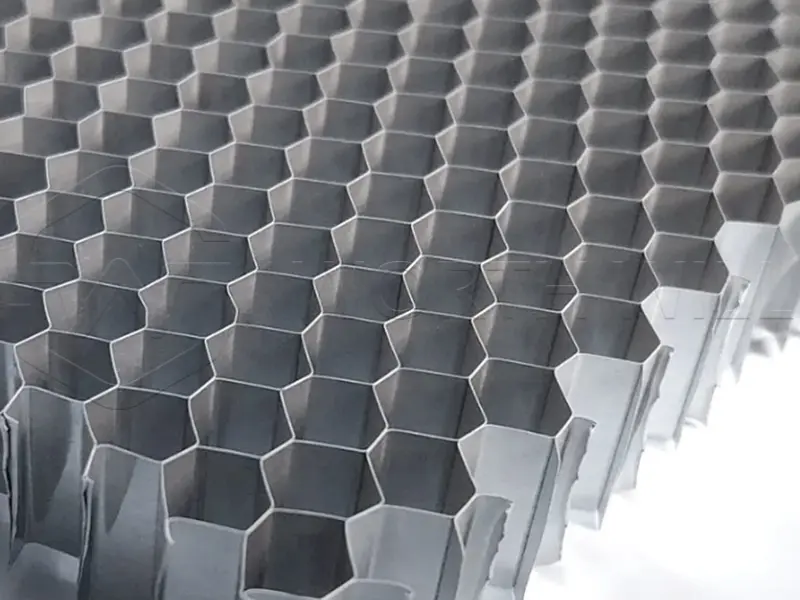
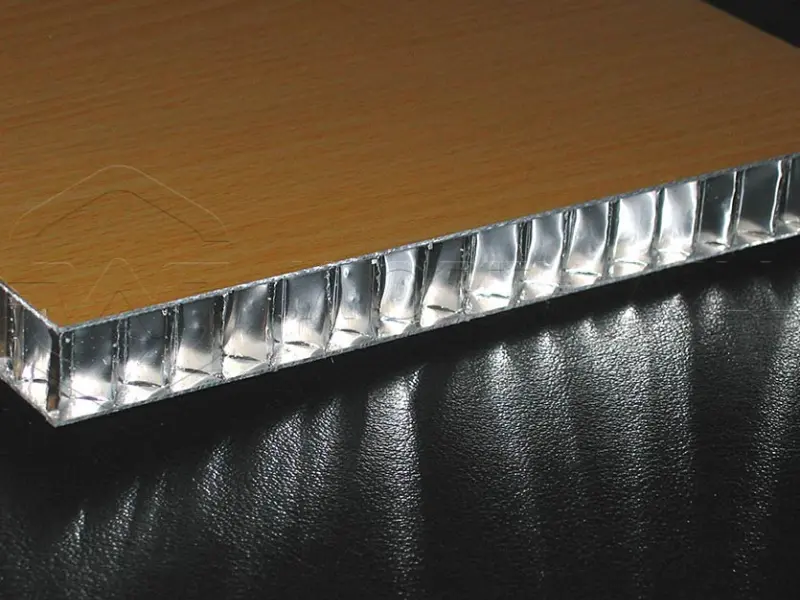
An aluminum honeycomb core consists of hexagonal cells made from thin aluminum foil sheets. These cells are bonded together to create a sandwich structure that mimics natural honeycomb patterns found in beehives. The unique geometry distributes loads efficiently across the entire surface.
The manufacturing process involves expanding stacked aluminum sheets that have been glued at specific intervals. When pulled apart, these sheets form the characteristic hexagonal pattern. This creates a material that is mostly air (typically 95-99%) while maintaining impressive structural integrity.
Key Structural Components
| Component | Description | Function |
|---|---|---|
| Cell Walls | Thin aluminum foil strips (0.05-0.15mm) | Carry shear and compression loads |
| Cell Nodes | Bonded intersection points | Transfer loads between cells |
| Double Walls | Reinforced cell boundaries | Provide additional edge strength |
| Core Height | Vertical dimension of honeycomb | Determines sandwich panel stiffness |
Types of Aluminum Honeycomb Core
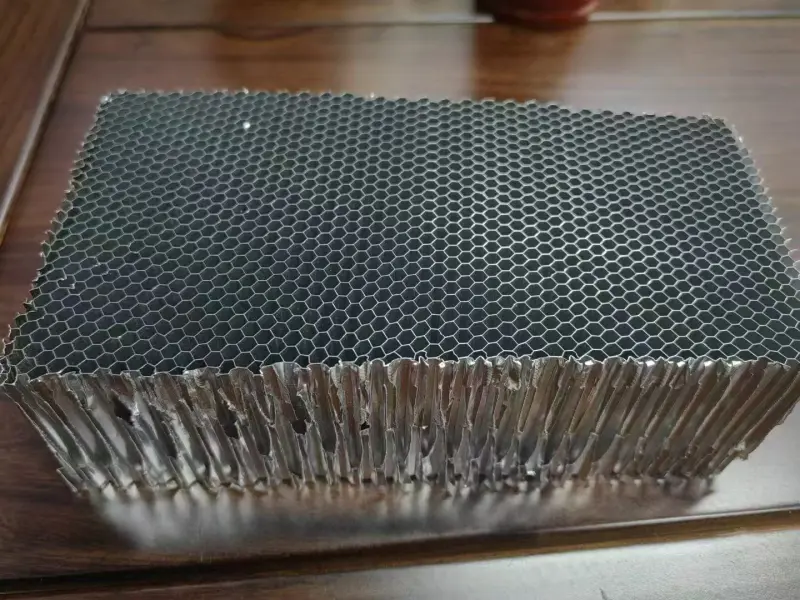
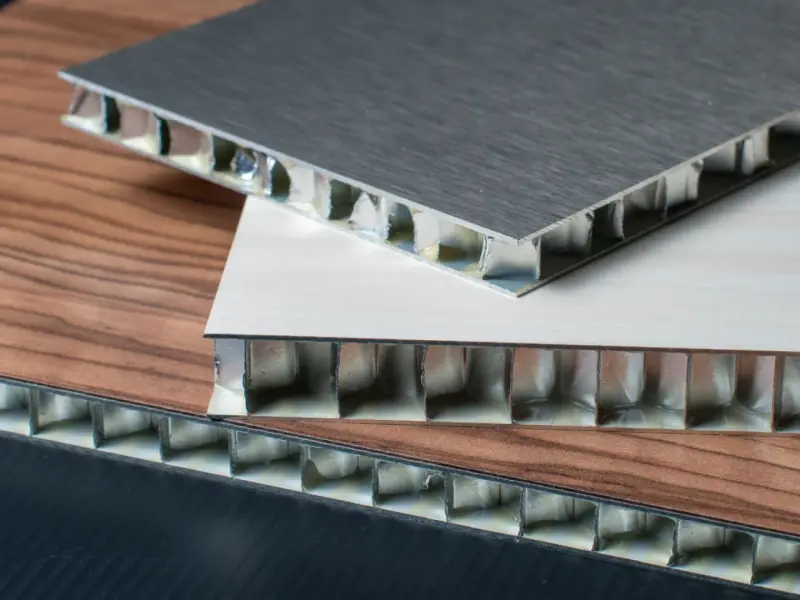
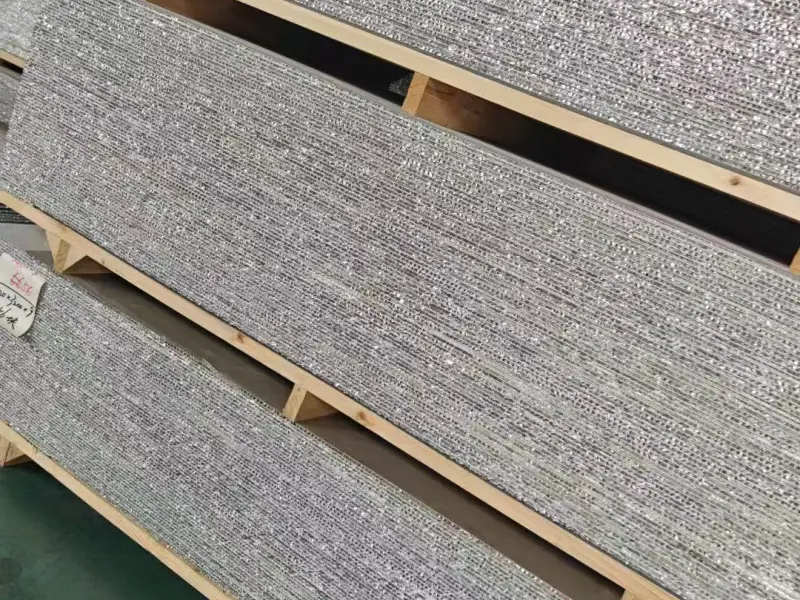
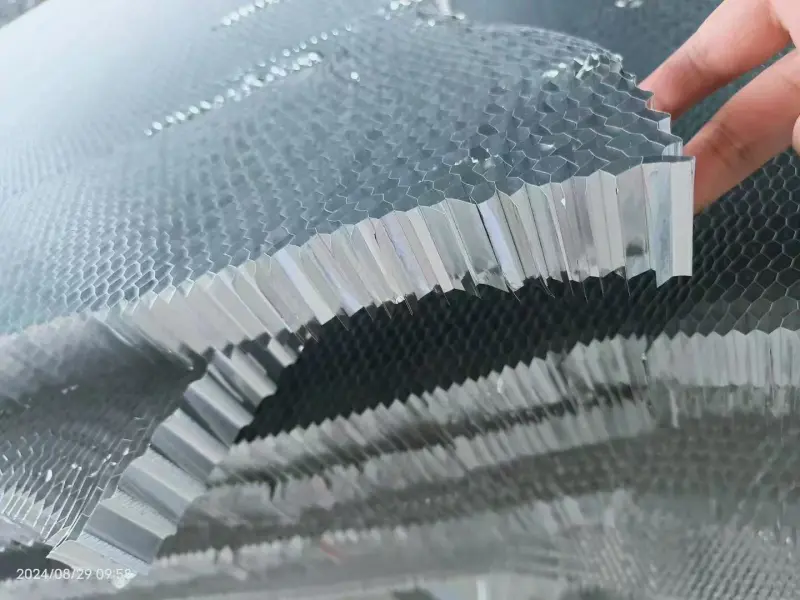
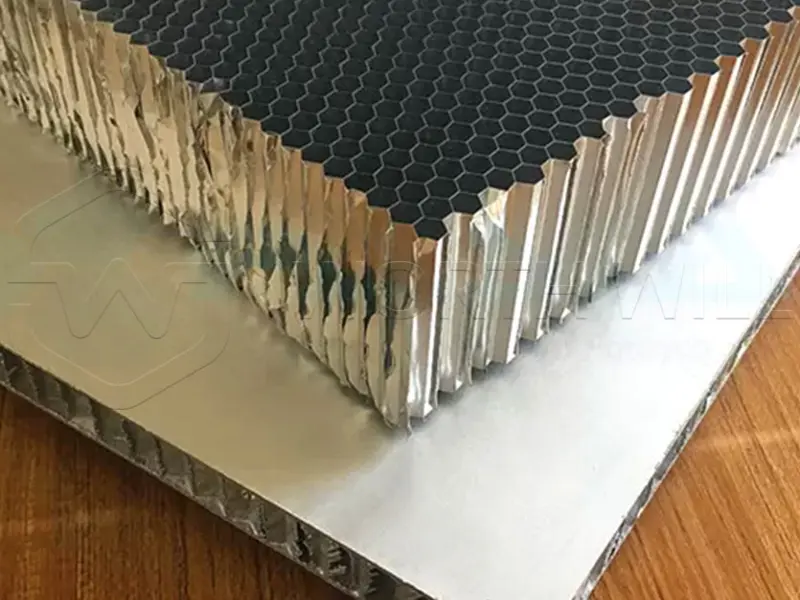
Manufacturers produce different varieties to meet specific application requirements. Understanding these types helps engineers select the optimal material for their projects.
For Cell Size
| Cell Size (inch) | Cell Size (mm) | Typical Density (kg/m³) | Best Applications |
|---|---|---|---|
| 1/8″ | 3.2mm | 80-130 | Aerospace, high-precision parts |
| 3/16″ | 4.8mm | 50-90 | Transportation, industrial panels |
| 1/4″ | 6.4mm | 30-70 | Marine, architectural panels |
| 3/8″ | 9.5mm | 20-50 | Building facades, large structures |
| 1/2″ | 12.7mm | 15-35 | Acoustic panels, filtration systems |
| 3/4″ | 19.0mm | 10-25 | Airflow management, energy absorption |
By Alloy Type
| Alloy Series | Aluminum Content | Strength Level | Corrosion Resistance | Primary Uses |
|---|---|---|---|---|
| 5052 | 97.2% Al, 2.5% Mg | Medium-High | Excellent | Marine, outdoor structures |
| 5056 | 95.0% Al, 5.0% Mg | High | Superior | Military, harsh environments |
| 2024 | 93.5% Al, 4.4% Cu | Very High | Good | Aerospace, high-stress parts |
| 3003 | 98.6% Al, 1.2% Mn | Medium | Very Good | General industrial, cost-effective |
| 6061 | 97.9% Al, 1.0% Mg, 0.6% Si | High | Excellent | Structural applications |
By Cell Configuration
| Configuration | Description | Advantages | Typical Uses |
|---|---|---|---|
| Hexagonal | Standard six-sided cells | Optimal strength-to-weight, omnidirectional | Most applications |
| Over-expanded | Elongated hexagonal cells | Formability, curved surfaces | Aircraft parts, boat hulls |
| Flex-Core | Curved cell walls | Flexibility, energy absorption | Impact protection, seals |
| Ribbon | Directional cell alignment | High directional strength | Beams, unidirectional loads |
Physical and Mechanical Properties
The remarkable performance of aluminum honeycomb core comes from its unique combination of properties. These specifications demonstrate why engineers specify this material for demanding applications.
Core Mechanical Properties
| Property | Typical Range | Unit | Test Method |
|---|---|---|---|
| Compressive Strength | 0.5 – 15.0 | MPa | ASTM C365 |
| Shear Strength (L) | 0.3 – 8.0 | MPa | ASTM C273 |
| Shear Strength (W) | 0.2 – 5.5 | MPa | ASTM C273 |
| Shear Modulus (L) | 50 – 2000 | MPa | ASTM C273 |
| Shear Modulus (W) | 25 – 1200 | MPa | ASTM C273 |
| Thermal Conductivity | 1.5 – 5.0 | W/(m·K) | ASTM C518 |
| Thermal Expansion | 23 × 10⁻⁶ | /K | ASTM D696 |
Note: L = Longitudinal direction, W = Transverse (width) direction
Density and Weight Comparison
| Material | Density (kg/m³) | Relative Weight | Strength-to-Weight |
|---|---|---|---|
| Aluminum Honeycomb Core | 20 – 130 | 1.0 (baseline) | Excellent |
| Aluminum Solid Sheet | 2700 | 20-135x heavier | Moderate |
| Steel Honeycomb | 50 – 200 | 2.5-1.5x heavier | Good |
| Nomex Honeycomb | 30 – 150 | Similar | Lower at high temps |
| PVC Foam Core | 40 – 200 | 2-1.5x heavier | Lower |
| Balsa Wood Core | 100 – 250 | 5-2x heavier | Moderate |
Manufacturing Process
Understanding how aluminum honeycomb core is made helps appreciate its quality and consistency. Modern manufacturing ensures precise cell geometry and reliable performance.
Production Steps
| Stage | Process Description | Quality Control |
|---|---|---|
| 1. Foil Preparation | Aluminum foil cleaned and treated | Thickness measurement (±0.005mm) |
| 2. Adhesive Application | Precise glue lines printed on foil | Pattern accuracy verification |
| 3. Layer Stacking | Alternating layers built into blocks | Layer count and alignment check |
| 4. Curing | Heat and pressure bond layers | Cure temperature monitoring |
| 5. Slicing | Block cut to required core thickness | Thickness tolerance ±0.1mm |
| 6. Expansion | Sheets pulled to form hexagons | Cell size verification |
| 7. Corrosion Treatment | Chromate or alternative coating | Coating thickness testing |
| 8. Cutting to Size | Final dimension processing | Dimensional inspection |
Applications of Aluminum Honeycomb Core
The versatility of aluminum honeycomb core spans numerous industries. Its unique properties solve engineering challenges across diverse sectors.
Aerospace and Aviation
- Aircraft flooring — lightweight structural panels
- Interior partitions — cabin walls and ceilings
- Cargo liners — protective, lightweight barriers
- Wing control surfaces — flaps, ailerons, spoilers
- Engine nacelles — heat-resistant fairings
- Satellite structures — rigid, dimensionally stable platforms
- Helicopter blades — internal reinforcement
Transportation
- Railway carriages — floor panels, interior walls
- Bus and coach bodies — structural sandwich panels
- Ship hulls and decks — marine-grade lightweight construction
- Automotive racing parts — body panels, impact structures
- Truck and trailer bodies — cargo containers, side panels
- High-speed trains — aerodynamic fairings
Architecture and Construction
- Curtain wall systems — building facades
- Ceiling panels — acoustic and aesthetic solutions
- Clean room partitions — pharmaceutical and electronic facilities
- Elevator panels — lightweight, rigid car walls
- Exterior cladding — weather-resistant decorative panels
- Sun shading devices — solar control structures
- Roofing systems — insulated, lightweight covers
Industrial and Commercial
- Machine tool bases — vibration damping platforms
- Laser cutting tables — flat, stable work surfaces
- Semiconductor equipment — precision structural components
- Medical imaging tables — radiolucent, strong platforms
- Exhibition stands — portable, rigid display structures
- Stage flooring — temporary event platforms
Energy and Environment
- Wind turbine blades — internal structural reinforcement
- Solar panel frames — lightweight mounting systems
- Nuclear waste containers — impact-resistant casks
- Air filtration systems — honeycomb flow straighteners
- Heat exchangers — thermal management cores
Advantages of Aluminum Honeycomb Core
| Advantage | Explanation | Impact |
|---|---|---|
| Exceptional Strength-to-Weight | High structural performance at minimal mass | Fuel savings, increased payload |
| Shear Resistance | Efficient load distribution in sandwich panels | Structural integrity under load |
| Fire Resistance | Aluminum doesn’t burn, meets aviation standards | Safety compliance, reduced insurance |
| Corrosion Resistance | Alloys like 5052 withstand harsh environments | Long service life, low maintenance |
| Thermal Stability | Low thermal expansion coefficient | Dimensional accuracy across temperatures |
| Electrical Conductivity | Grounding and EMI shielding capabilities | Electronic protection, safety |
| Recyclability | 100% recyclable material | Environmental sustainability |
| Formability | Can be curved and shaped to complex geometries | Design flexibility |
| Acoustic Properties | Sound absorption and transmission control | Noise reduction applications |
| Cost Efficiency | Lower lifecycle cost than solid materials | Long-term economic benefit |
Design Considerations
When specifying aluminum honeycomb core for your project, several factors require attention.
Selection Parameters
| Parameter | Options | Selection Criteria |
|---|---|---|
| Cell Size | 1/8″ to 3/4″ | Load requirements, panel size, curvature |
| Foil Thickness | 0.05mm to 0.15mm | Strength needs, weight limits |
| Core Density | 20 to 130 kg/m³ | Structural loads, impact resistance |
| Core Height | 3mm to 300mm | Stiffness requirements, space constraints |
| Alloy Type | 3003, 5052, 5056, etc. | Environment, strength, cost |
| Surface Treatment | Bare, chromated, anodized | Corrosion exposure, bonding requirements |
Sandwich Panel Design
| Component | Typical Material | Function |
|---|---|---|
| Face Sheet (Top) | Aluminum, carbon fiber, fiberglass | Tensile strength, surface finish |
| Adhesive Layer | Epoxy, polyurethane, film adhesive | Bond core to faces |
| Honeycomb Core | Aluminum honeycomb | Shear transfer, spacing |
| Adhesive Layer | Epoxy, polyurethane, film adhesive | Bond core to faces |
| Face Sheet (Bottom) | Aluminum, carbon fiber, fiberglass | Compressive strength, surface finish |
Testing and Quality Standards
Aluminum honeycomb core must meet rigorous standards to ensure reliability.
| Standard | Organization | Scope |
|---|---|---|
| ASTM C365 | ASTM International | Flatwise compressive properties |
| ASTM C273 | ASTM International | Shear properties |
| ASTM C394 | ASTM International | Shear fatigue |
| ASTM E1091 | ASTM International | Acoustic absorption |
| Boeing BSS 7236 | Boeing | Aerospace material specifications |
| Airbus AIMS | Airbus | Industry material specifications |
| MIL-PRF-32275 | US Military | Military performance requirements |
Comparison with Alternative Core Materials
| Material | Weight vs Al Honeycomb | Cost Factor | Best For | Limitations |
|---|---|---|---|---|
| Aluminum Honeycomb | Baseline (1.0x) | Medium | High performance, fire resistance | Higher cost than foam |
| Nomex Aramid | 0.8-1.2x | High | Electrical insulation, radar transparency | Moisture absorption, lower strength |
| Fiberglass Honeycomb | 1.5-2.0x | Medium | Dielectric applications | Heavier, lower stiffness |
| Polypropylene Honeycomb | 0.6-0.8x | Low | Cost-sensitive, chemical resistance | Low strength, temperature limited |
| PVC Foam | 1.5-3.0x | Low | Marine, insulation | Lower strength, outgassing |
| PET Foam | 1.2-2.0x | Low-Medium | Thermoformable, recyclable | Lower temperature resistance |
| Balsa Wood | 3.0-5.0x | Low | Traditional boat building | Moisture issues, inconsistent |
| Polyurethane Foam | 2.0-4.0x | Very Low | Insulation, buoyancy | Very low strength |
Installation and Fabrication Tips
Working with aluminum honeycomb core requires specific techniques for optimal results.
Cutting Methods
| Method | Best For | Considerations |
|---|---|---|
| Die Cutting | High volume, simple shapes | Clean edges, fast production |
| Water Jet | Complex shapes, no heat | No thermal distortion, any thickness |
| CNC Routing | Precision edges, 3D profiling | Excellent accuracy, programming required |
| Band Saw | Straight cuts, thick cores | Cost-effective, moderate precision |
| Laser Cutting | Thin cores, intricate patterns | Heat affected zone consideration |
Bonding Guidelines
| Adhesive Type | Cure Temperature | Shear Strength | Best Applications |
|---|---|---|---|
| Epoxy Film | 120-180°C | 25-40 MPa | Aerospace, structural |
| Paste Epoxy | Room temp to 80°C | 15-30 MPa | Repairs, prototyping |
| Polyurethane | Room temperature | 8-15 MPa | General industrial |
| Acrylic | Room temperature | 10-20 MPa | Fast assembly, lower loads |
Maintenance and Longevity
| Factor | Impact | Mitigation |
|---|---|---|
| Corrosion | Cell wall degradation in marine environments | Use 5052 or 5056 alloy, protective coatings |
| Moisture Ingress | Core contamination, delamination | Proper edge sealing, moisture barriers |
| Impact Damage | Localized cell crushing | Protective face sheets, design allowances |
| Thermal Cycling | Adhesive fatigue | Flexible adhesives, matched CTE materials |
| UV Exposure | Adhesive degradation (if exposed) | UV-stable coatings, opaque face sheets |
Future Trends in Aluminum Honeycomb Core
The aluminum honeycomb core industry continues evolving with new technologies.
| Innovation | Description | Benefits |
|---|---|---|
| Micro-cell Technology | Cells smaller than 1/16 inch | Enhanced formability, smoother surfaces |
| 3D Printed Nodes | Additive manufactured cell intersections | Custom geometries, optimized load paths |
| Nano-coatings | Ultra-thin protective layers | Superior corrosion resistance, minimal weight |
| Recycled Content | Higher recycled aluminum percentage | Reduced environmental impact |
| Smart Cores | Embedded sensors for structural health monitoring | Predictive maintenance, safety monitoring |
| Hybrid Structures | Combination with other core types | Tailored properties for specific zones |
What Is Aluminum Honeycomb Core?
Aluminum honeycomb core represents engineering excellence in material design. Its remarkable combination of lightness, strength, and versatility makes it indispensable across critical industries. From enabling fuel-efficient aircraft to creating stunning architectural facades, this material continues solving complex engineering challenges.
When selecting aluminum honeycomb core, consider your specific load requirements, environmental conditions, and manufacturing constraints. The wide range of cell sizes, alloys, and densities available ensures there’s an optimal solution for virtually every application.
As sustainability becomes increasingly important, the recyclability and long service life of aluminum honeycomb structures provide additional value. Future innovations promise even greater performance and environmental benefits, securing the position of aluminum honeycomb core as a material of choice for decades to come.
For your next lightweight structural project, evaluate whether aluminum honeycomb core can deliver the performance you need while reducing weight and cost compared to solid materials.
This comprehensive guide to aluminum honeycomb core provides the technical foundation for specifying this advanced material in aerospace, transportation, architecture, and industrial applications.
Primary Keywords: aluminum honeycomb core, honeycomb sandwich panel, lightweight core material, aerospace honeycomb, aluminum honeycomb structure, honeycomb core specifications, sandwich panel core, hexagonal aluminum core