What Is an Aluminum Honeycomb Core?
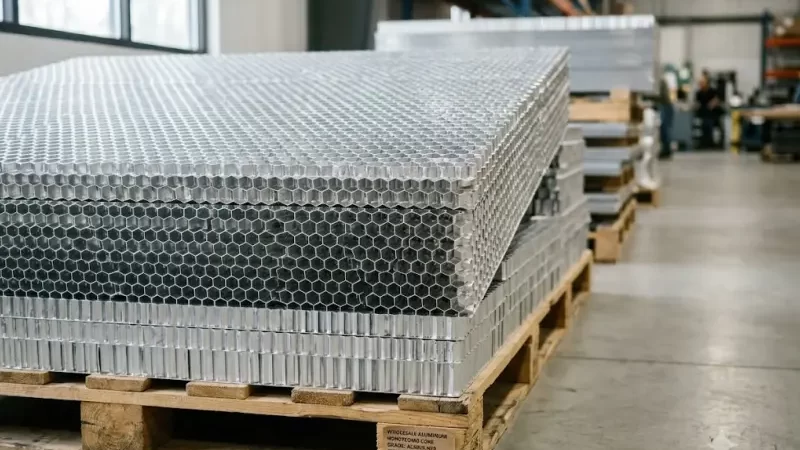
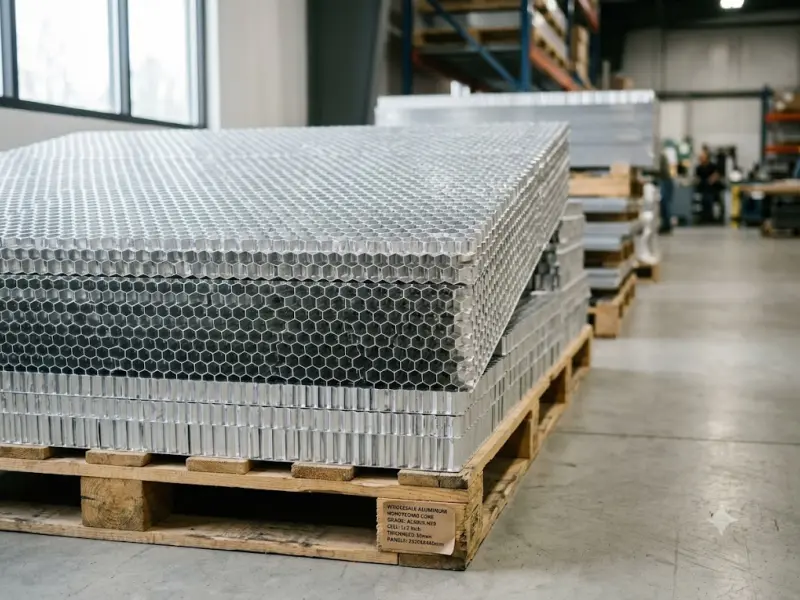
An Wholesale Aluminum Honeycomb Core is a sheet of bonded aluminum foil strips. Factories glue layers of foil together in strips. Then they stretch the block into a honeycomb grid. Each cell is a hexagon. The walls are thin. The shape is strong.
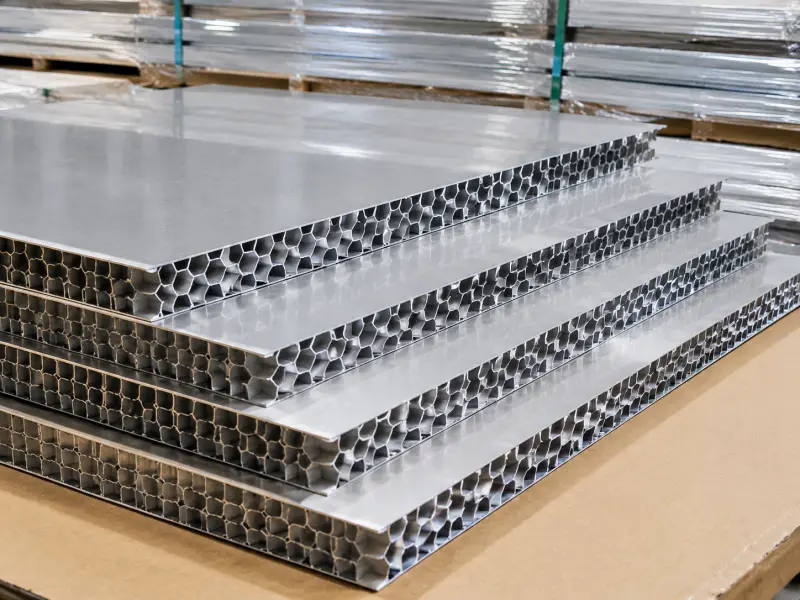
This core sits between two face sheets. Together they make aluminum honeycomb panels. You see them in airplanes, trains, and clean rooms. The core carries shear loads. The face skins carry tension and compression.
Buyers often search for honeycomb core material when they want to reduce weight without losing stiffness. It works better than solid metal plates when every gram matters.
Why Buyers Choose Wholesale Aluminum Honeycomb Core
Buying wholesale changes the unit price. It also changes how you store and handle stock. Here is why factories and distributors buy in volume.
- Lower cost per square meter – Large orders cut foil waste and machine setup time.
- Consistent cell geometry – One production run keeps cell size and wall thickness uniform.
- Custom block sizes – Suppliers can bond and slice blocks to your exact panel height.
- Faster project schedules – You keep stock on hand instead of waiting for small batches.
- Alloy selection – A single wholesale order can mix 5052 and 5056 grades if you need both.
Working directly with honeycomb core manufacturers also means you get mill test reports and traceability. That matters for aerospace and marine jobs.
Alloy Types and Temper States
Not all honeycomb is the same metal. The alloy changes corrosion resistance, strength, and how the foil forms into hexagons.
Common Alloys in Honeycomb Core
| Alloy | Aluminum Content | Key Trait | Best Use |
|---|---|---|---|
| 3003 | 98.6% | Manganese added, good formability | General panels, interior walls |
| 5052 | 97% | Magnesium and chromium, strong weldability | Marine, trucks, industrial floors |
| 5056 | 95% | Higher magnesium, better salt resistance | Aerospace, naval, offshore |
| 2024 | 93.5% | Copper added, very high strength | Military, structural repair |
Temper Explained
| Temper | Name | Foil Behavior | Typical Application |
|---|---|---|---|
| H18 | Full hard | Stiff, springy, holds shape | Small cell sizes, thin walls |
| H19 | Extra hard | Very stiff, high strength | Micro cell honeycomb |
| H39 | Special foil temper | Balanced for expansion | Standard aerospace core |
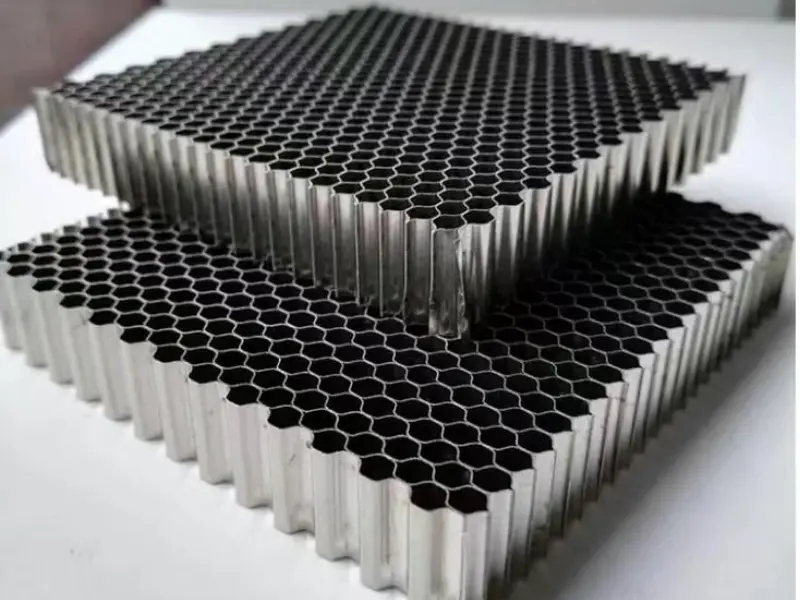
Most aerospace honeycomb core uses 5056-H39 or 5052-H39. The “39” temper is made for the expansion process. It lets the block stretch into cells without tearing. General industrial panels often use 3003-H18 because it costs less and forms easily.
Core Specifications Explained
When you request a quote, suppliers ask for numbers. Here is what those numbers mean.
Cell Size Options
| Cell Size (inch) | Cell Size (mm) | Typical Density (kg/m³) | Common Use |
|---|---|---|---|
| 1/16 in | 1.6 mm | 128 – 144 | Air vents, flow straighteners |
| 1/8 in | 3.2 mm | 64 – 83 | Aircraft floors, panels |
| 3/16 in | 4.8 mm | 48 – 56 | Walls, partitions, doors |
| 1/4 in | 6.4 mm | 32 – 48 | Shelters, truck bodies |
| 3/8 in | 9.5 mm | 24 – 32 | Energy absorption, packaging |
Smaller cells give higher density. Higher density means higher shear strength. Larger cells save weight and cost but reduce stiffness.
Foil Thickness vs. Core Density
| Foil Gauge (mm) | Typical Alloy | Resulting Density Range | Best For |
|---|---|---|---|
| 0.04 mm | 5052 | 24 – 32 kg/m³ | Light partitions |
| 0.05 mm | 5052 | 48 – 56 kg/m³ | Standard panels |
| 0.07 mm | 5056 | 64 – 83 kg/m³ | Aircraft interior |
| 0.10 mm | 5056 | 128+ kg/m³ | High-load floors |
Core Thickness Ranges
| Block Type | Min Thickness | Max Thickness | How It Is Sold |
|---|---|---|---|
| Sliced sheet | 3 mm | 100 mm | Individual sheets |
| Unexpanded block | 100 mm | 500 mm | Blocks for in-house expansion |
| Custom slice | Any | Any | CNC cut to shape |
Product Types and Formats
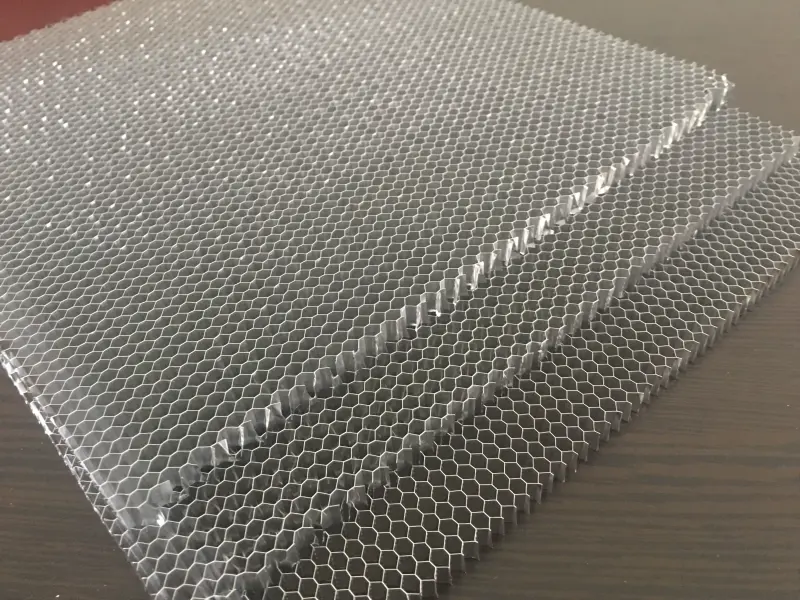
Wholesale aluminum honeycomb core comes in more shapes than flat sheets. Factories slice and treat the material to match your process.
Expanded Sheets
These are ready to use. The block is already stretched into open cells. You lay the sheet into a mold or between face skins. This is the fastest option for panel makers.
Unexpanded Blocks
The foil layers are bonded but not pulled open. You store them compact. When you need a panel, you slice the block to thickness and expand it yourself. This saves shipping volume and protects the cell walls from damage in transit.
Perforated Honeycomb Core
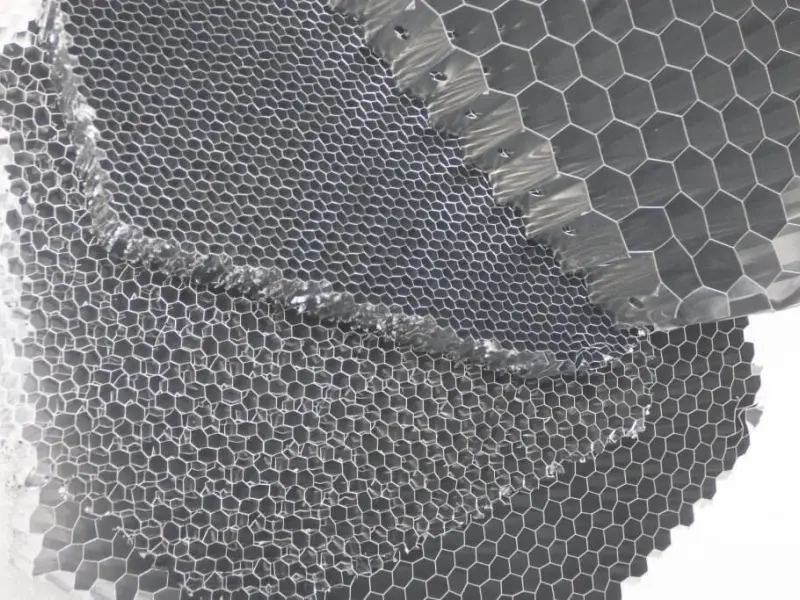
The aluminum foil is punched with tiny holes before bonding. This lets air and adhesive move through the cells. It is critical for venting during cure cycles in composite panels. It also helps when you bond the core to skins in an autoclave.
Micro Cell Honeycomb
Cell sizes below 1/16 inch fall into the micro range. These cores are used in precision tooling, optical benches, and high-frequency shields. The small cells add damping and reduce vibration.
Corrosion-Resistant Core
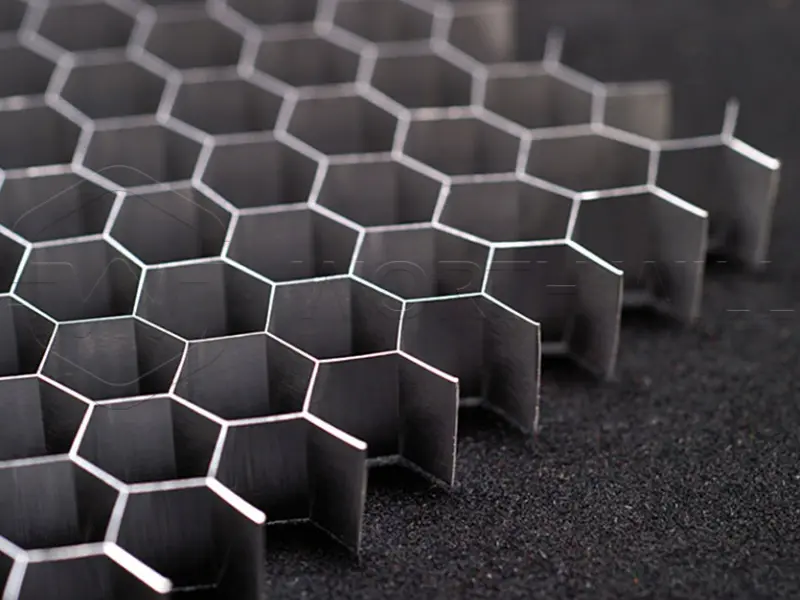
Some suppliers add a chromate conversion coating or anodize the foil. This is common in marine aluminum honeycomb sheet where salt spray is a threat. Anti-corrosion honeycomb extends the life of hull panels and offshore furniture.
Expanded vs. Unexpanded Honeycomb
Not sure which form to order? Compare them side by side.
| Feature | Expanded Honeycomb | Unexpanded Honeycomb |
|---|---|---|
| Shipping volume | Large, lots of air space | Compact, dense blocks |
| Storage footprint | Needs rack space | Stacks on pallets |
| Labor at your factory | Minimal, ready to bond | Requires slicing and expanding tools |
| Cell wall damage risk | Higher in transit | Very low |
| Best batch size | Small to medium runs | Large volume panel makers |
| Typical lead time from supplier | Shorter | Longer if custom sliced |
If you have a vacuum press and need ten panels today, buy expanded. If you import a full container and have a slice-and-expand line, buy blocks.
Surface Treatments and Coatings
Raw aluminum bonds well, but some jobs need extra protection. Here are the common upgrades.
| Treatment | What It Does | Where It Helps |
|---|---|---|
| Chromate coating | Adds a thin chemical film against oxidation | Marine panels, humid climates |
| Anodizing | Thickens the natural oxide layer | Architectural facades, outdoor use |
| Primer coating | Paints a bonding layer on the cell edges | Composite manufacturing, better adhesive grip |
| Perforation | Puts small holes in every cell wall | Autoclave curing, air evacuation |
When you talk to aluminum honeycomb core suppliers, ask which treatments they keep in stock. Some mills only offer bare foil. Others run full coating lines.
The list of uses for honeycomb core material keeps growing. Here are the main markets where buyers place wholesale orders.
Applications Across Industries
Aerospace and Aviation
- Aircraft cabin floors and ceilings
- Galley structures and bulkheads
- Cargo liner panels
- Helicopter rotor blades
- Satellite structures
Aerospace buyers usually demand 5056 honeycomb core with small cells and full traceability. Certifications like BAC 5514 or BMS 4-20 are common.
Transportation
- High-speed train interior panels
- Bus partition walls
- Truck and trailer floors
- Ship bulkheads and ceilings
- Electric vehicle battery enclosures
Rail and bus makers want fire resistance plus light weight. They often choose 5052 honeycomb core with fire-retardant adhesive.
Architecture and Construction
- Curtain wall panels
- Clean room ceilings
- Elevator car walls
- Acoustic baffles
- Decorative metal ceilings
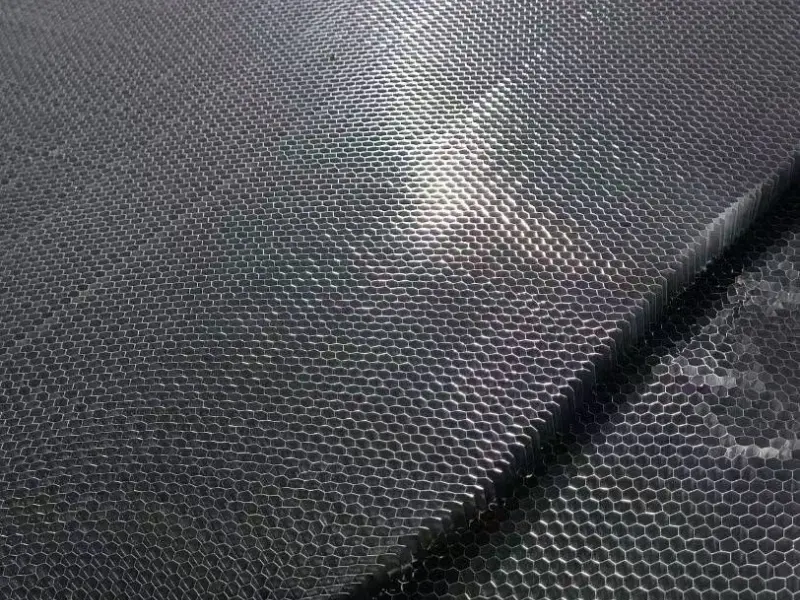
Architects like the flat, rigid surface of aluminum honeycomb panels. They can laminate stone, wood, or glass on top without sagging.
Industrial and Manufacturing
- Machine tool tables
- Laser cutting platforms
- Inspection fixtures
- Thermal insulation barriers
- Air straightening grids
Factories use aluminum honeycomb sheet as a stable base that does not warp with temperature changes.
Marine and Offshore
- Yacht interior furniture
- Offshore platform wall panels
- Naval ship compartments
- Lifeboat structures
Salt air attacks bare aluminum. That is why marine buyers specify anti-corrosion honeycomb with chromate or epoxy coatings.

How to Select the Right Honeycomb Core
Use this decision table to narrow your order.
| Your Need | Suggested Alloy | Suggested Cell Size | Suggested Form |
|---|---|---|---|
| Aircraft interior panels | 5056-H39 | 1/8 in | Expanded, perforated |
| Marine partition walls | 5052-H39 | 3/16 in | Expanded, chromated |
| Truck body panels | 5052-H18 | 1/4 in | Expanded |
| Machine tool base | 3003-H18 | 3/8 in | Expanded or block |
| RF shielding, small parts | 5052-H19 | 1/16 in | Expanded |
| Energy absorption crash pads | 3003-H18 | 1/2 in | Block, custom slice |
Quality Standards and Certifications
Reputable honeycomb core manufacturers test their product to global standards. Ask for these documents before you place a wholesale order.
| Standard | What It Covers | Who Requires It |
|---|---|---|
| ASTM E1091 | Aluminum honeycomb core shear properties | General industrial buyers |
| AMS C7438 | Core material for aircraft | Aerospace OEMs |
| BMS 4-20 | Boeing material spec for honeycomb | Boeing suppliers |
| MIL-PRF-32293 | Military performance spec | Defense contractors |
| EN 2244 | European aerospace standard | Airbus and European rail |
A mill test report should list foil gauge, cell size, density, alloy, temper, and shear strength. Keep these records for every batch.
Aluminum Honeycomb Core Price Factors
Aluminum honeycomb core price changes based on more than just weight. Here is what moves the quote.
- Alloy cost – 5056 costs more than 3003 because of magnesium content.
- Cell size – Smaller cells need more foil per cubic meter. That raises density and price.
- Foil thickness – Thick walls use more metal.
- Coating – Chromate and primer add process steps.
- Form – Expanded sheets cost more to ship because of air volume.
- Volume – Wholesale orders above 500 m² usually unlock the best unit price.
- Certification – Aerospace traceability adds testing costs.
If you need a budget option for non-critical panels, 3003 alloy with 3/16 inch cells keeps the price low. If you need aerospace grade, expect the price to double.
FAQ: Common Questions from Buyers
What is the difference between 5052 and 5056 honeycomb core?
5052 honeycomb core uses a magnesium-chromium alloy. It resists salt water and welds well. It is the workhorse for marine, rail, and truck panels. 5056 honeycomb core adds more magnesium. It is stronger and resists corrosion even better. Aerospace buyers prefer 5056 because of the higher strength-to-weight ratio. For indoor walls, 5052 is enough. For aircraft and offshore platforms, 5056 is safer.
What does expanded vs unexpanded honeycomb mean?
Expanded honeycomb is already stretched into open hexagon cells. You can lay it straight into a mold. Unexpanded honeycomb is still a compressed block. You slice it to thickness and then stretch it open at your factory. Expanded saves labor. Unexpanded saves shipping space and protects the foil from dents.
How do I choose honeycomb cell size?
Small cells give high density and high shear strength. Large cells give low weight and lower cost. For aircraft floors, use 1/8 inch or smaller. For truck walls or shelters, 1/4 inch or 3/8 inch works fine. If you need airflow or sound absorption, larger cells perform better.
What is perforated honeycomb core?
This is honeycomb with tiny holes punched through the cell walls. The holes let air and adhesive resin flow during curing. It is essential for composite panels made in autoclaves. Without perforations, trapped air can create voids between the core and the face skin.
Is aluminum honeycomb core fire resistant?
The aluminum itself does not burn. However, the adhesive that bonds the foil layers can be flammable. For rail and aircraft use, suppliers use fire-retardant adhesives that meet smoke and toxicity standards. Always ask for the fire rating if your project has safety codes.
Can I get custom dimensions in a wholesale order?
Yes. Most aluminum honeycomb core suppliers slice blocks to your exact thickness. They can also cut sheets to special widths or shapes. Custom work may add a tooling fee, but the per-unit cost still drops at wholesale volume. Send a drawing with tolerances when you request a quote.
What is micro cell honeycomb used for?
Micro cell honeycomb has cell sizes below 1/16 inch. It is used in precision optical tables, electronic shields, and small structural parts. The tiny cells add stiffness in a very thin layer. It costs more than standard cell sizes because the foil must be thinner and the expansion process is more precise.
How do I store honeycomb core material?
Keep it dry. Aluminum does not rust, but moisture can weaken the node adhesive over time. Store expanded sheets flat on pallets. Do not stack heavy objects on top. Store unexpanded blocks in a cool, dry warehouse. Avoid sharp edges that can crush the cell walls.
What is the standard sheet size for wholesale orders?
Common expanded sheet sizes are 1220 mm x 2440 mm or 1250 mm x 2500 mm. Unexpanded blocks are often 100 mm thick and 1000 mm x 2000 mm in footprint. Many honeycomb core manufacturers can produce metric or imperial sizes based on your machinery.
How does honeycomb core density affect performance?
Higher density means more foil per cubic meter. That gives higher shear strength and better impact resistance. Lower density saves weight and cost but reduces stiffness. A density of 80 kg/m³ is common for aircraft floors. A density of 32 kg/m³ is common for architectural walls.