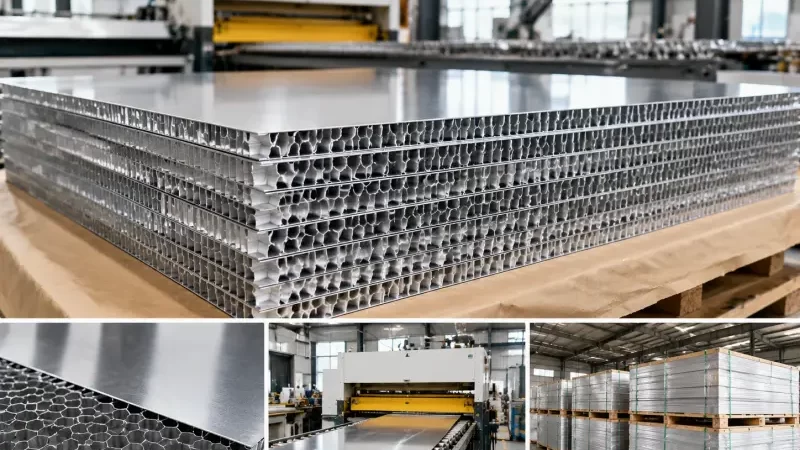
China Aluminum Honeycomb Core Manufacturer is the hidden skeleton inside modern panels. It gives stiffness without weight. Planes fly higher because of it. Trains run faster. Walls stay flat across wide spans. A China aluminum honeycomb core manufacturer sits at the center of this global supply chain. Mills in China produce millions of square meters each year. They ship to aerospace factories, shipyards, and building sites on every continent.
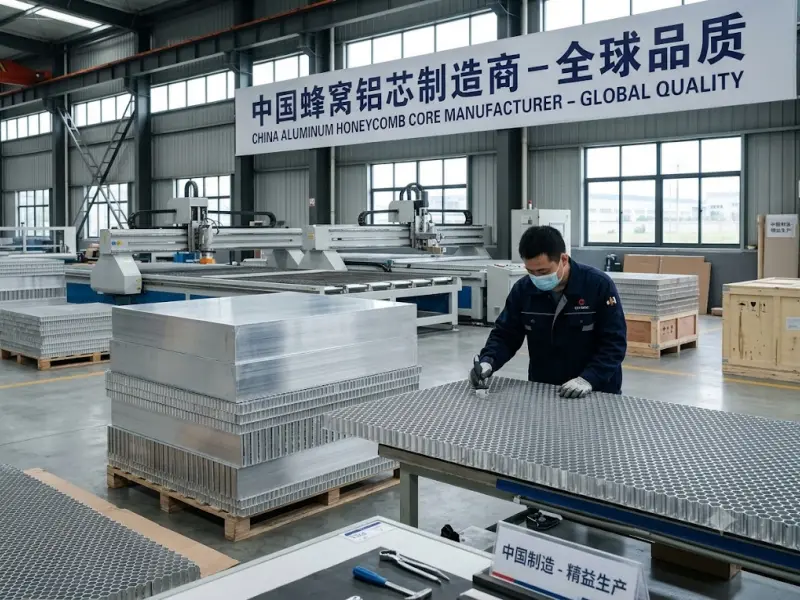
Why Aluminum Honeycomb Core Dominates Lightweight Design
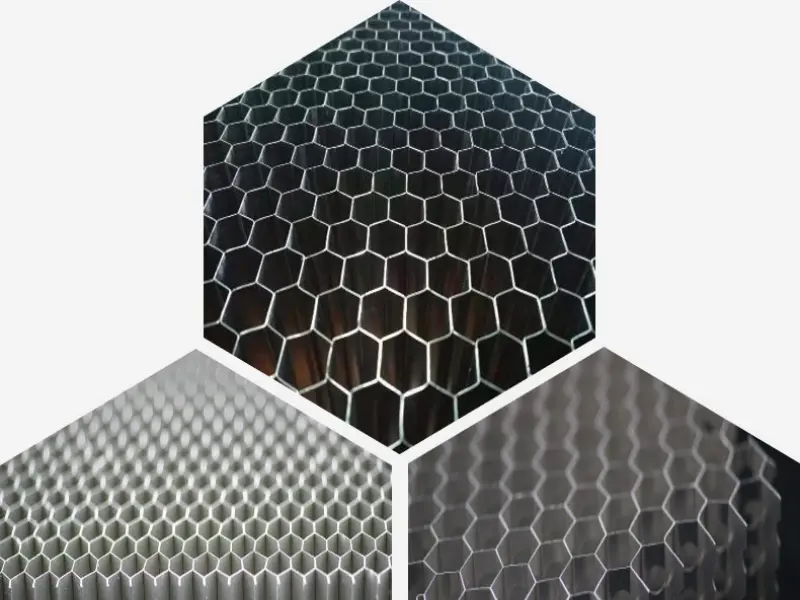
Engineers need strength. They also need low mass. Solid metal plates give strength but weigh too much. Foam cores cut weight but sag under load. Aluminum honeycomb core sits in the sweet spot. Thin foils bond together in a hexagonal pattern. The result is a structure that resists compression, absorbs impact, and stays flat over long spans.
The core works inside sandwich panels. Thin face sheets glue to the top and bottom. The honeycomb carries shear forces. The faces carry tension and compression. Together they create a panel that outperforms solid metal of the same weight by a wide margin.
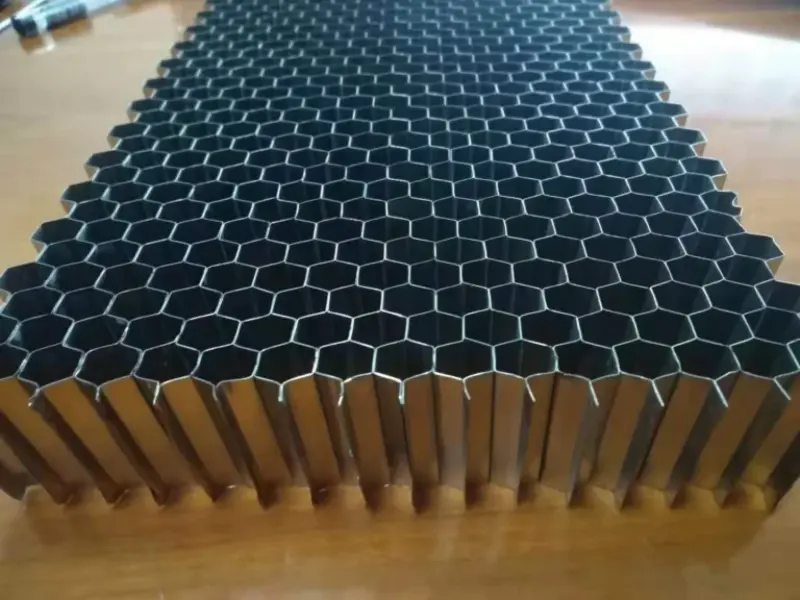
What Buyers Gain from a China
Aluminum Honeycomb Core Manufacturer
China holds the largest share of global honeycomb core output. Factories there run high-speed foil mills, precision expanders, and automated bonding lines. Buyers choose a China aluminum honeycomb core manufacturer for clear reasons.
Scale — Large plants run 24-hour shifts. They fill container orders in weeks, not months.
Alloy range — Chinese mills stock 3003, 5052, and 5056 foil. They switch alloys fast to match your spec.
Cost control — Vertical integration keeps foil, adhesive, and labor under one roof. That trims unit price.
Custom cutting — CNC saws slice blocks to exact thickness. Waterjet cutters shape curved profiles.
Export experience — Top suppliers hold AS9100, ISO 9001, and DNV-GL certs. They know aerospace and marine packing rules.
Core Types and Cell Configurations
Not every honeycomb cell looks the same. The cell shape, size, and expansion method change the core behavior. Here are the main types a China manufacturer keeps in stock.
Standard Expanded Honeycomb
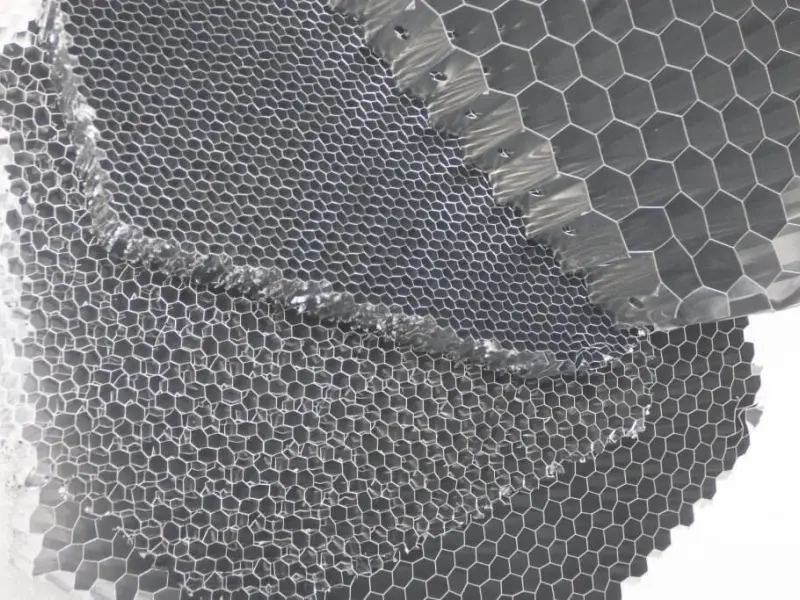
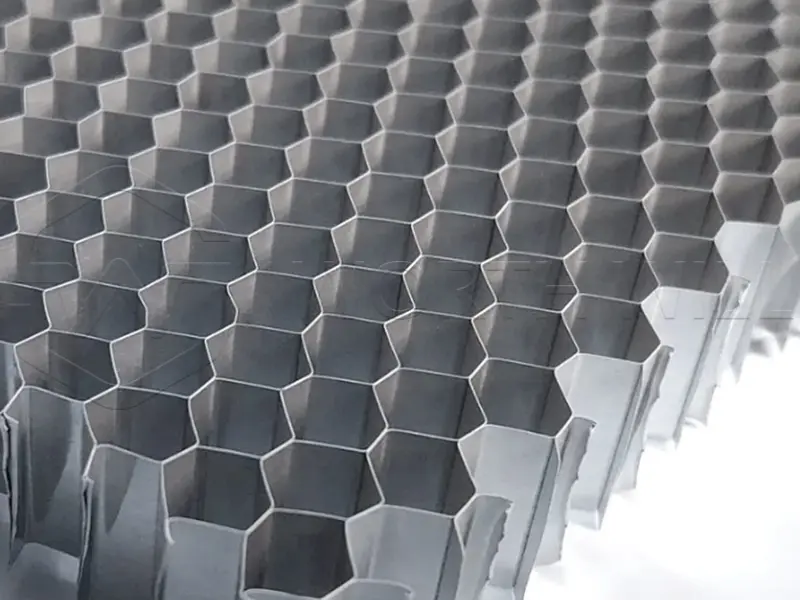
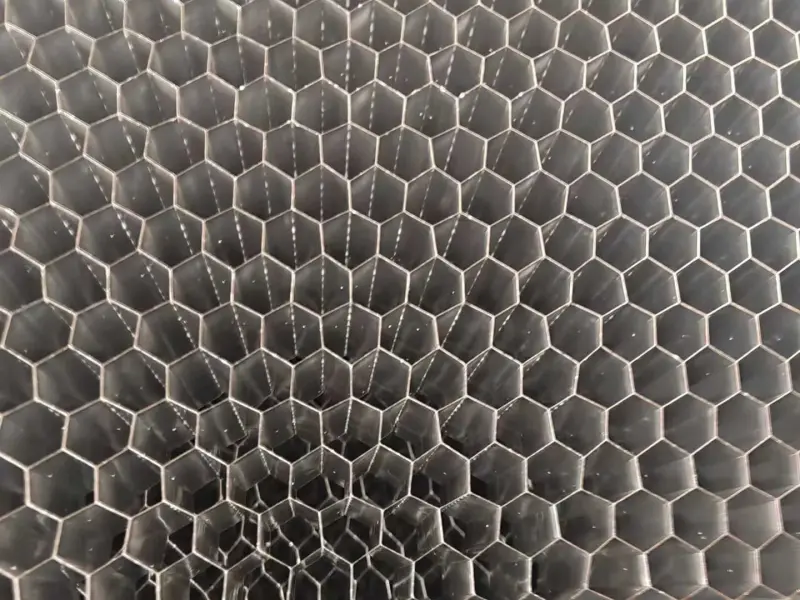
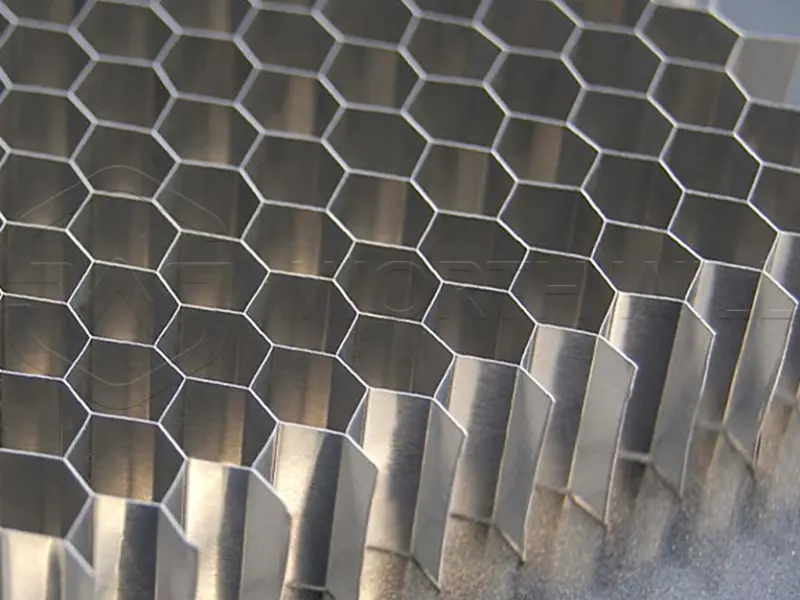
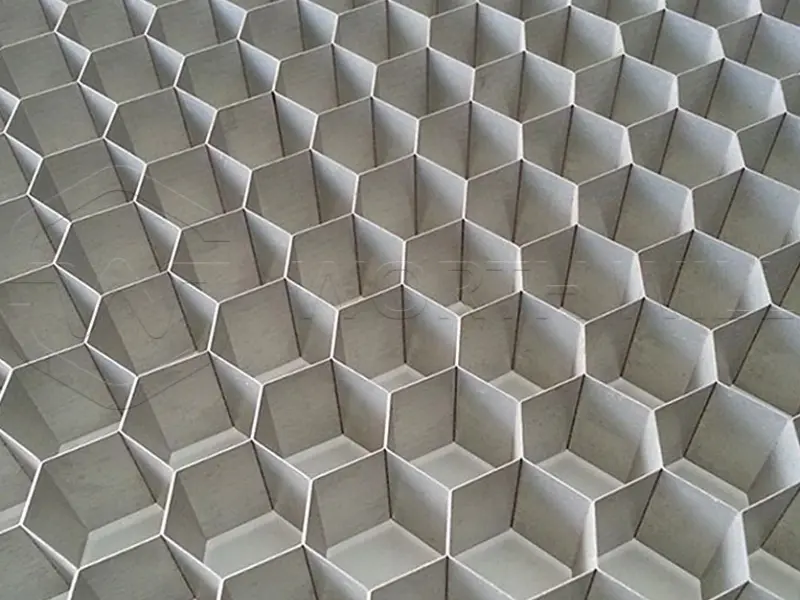
This is the classic hexagon. Foil strips glue together in stacked layers. A machine pulls the stack sideways. The glued nodes hold. The unglued sections open into six-sided cells. Standard expanded core is the default for flat panels.
Cell sizes: 3.2 mm to 25.4 mm
Foil gauges: 0.04 mm to 0.20 mm
Best for: Flat architectural panels, cleanroom walls, furniture
Over-Expanded Honeycomb
Over-expanded core starts like standard core. Then workers stretch it further. The hexagons elongate into rectangles. This lets the core bend around gentle curves without buckling. It is popular in train interiors and radomes.
Cell shape: Elongated hexagon / rectangle
Best for: Curved panels, cylindrical columns, boat hulls
Micro-Cell Honeycomb
Micro-cell core uses tiny cells under 3 mm. The foil is thin. The density is high. These cores suit precision optics, laser benches, and satellite structures where even tiny deflections matter.
Cell sizes: 1.6 mm to 3.2 mm
Foil gauges: 0.025 mm to 0.06 mm
Best for: Aerospace, optics benches, precision tooling plates
Unexpanded Blocks
Some buyers want the raw glued stack. They expand it themselves at the panel line. Unexpanded blocks ship dense. They save freight space. A single crate holds many blocks that later open to full size.
Best for: Panel makers with in-house expansion lines
Alloy Breakdown: Which Metal Fits Your Load
The foil alloy changes corrosion resistance, strength, and weldability. A reliable China aluminum honeycomb core manufacturer offers multiple grades. Here is how they compare.
| Alloy | Aluminum Content | Strength | Corrosion Resistance | Best Application |
|---|---|---|---|---|
| 3003 | 98.6% | Moderate | Good in dry air | Interior panels, furniture, displays |
| 5052 | 97.2% | High | Excellent in saltwater | Marine, coastal architecture, trucks |
| 5056 | 95.1% | Very high | Superior salt resistance | Aerospace, military, offshore |
| 2024 | 93.5% | Very high | Requires coating | High-load aerospace (special order) |
Alloy 3003 is the workhorse. It is cheap, easy to bond, and ample in supply. Alloy 5052 steps up for marine work. Alloy 5056 is the premium choice when failure is not an option.
Temper and Foil State
The foil temper tells you how hard the metal is before bonding. It affects expansion and node strength.
H18 Temper (Full Hard)
H18 foil is work-hardened. It holds its hexagon shape after expansion. The nodes stay crisp. Most structural cores use H18 because the geometry stays true under load.
Typical use: Standard expanded core, load-bearing panels
Alloys: 3003-H18, 5052-H18, 5056-H18
H19 Temper (Extra Hard)
H19 is harder than H18. It offers a slight strength boost. The trade-off is less ductility during expansion. Some aerospace specs call for H19 to maximize compression strength.
Typical use: Aerospace floor panels, cargo liners
Alloys: 5052-H19, 5056-H19
O Temper (Soft Annealed)
O temper foil is fully annealed. It bends easily. You see it in cores that must form tight radii or absorb energy in crush zones. It is less common in rigid panels.
Typical use: Energy-absorbing crash structures, sculptural forms
Alloys: 3003-O (special order)
Dimensional Breakdown by the Numbers
Honeycomb core specs follow clear numbers. Cell size, foil thickness, and core density work together. Here are the ranges a China aluminum honeycomb core manufacturer typically lists.
Cell Size vs Foil Thickness
| Cell Size (inch) | Cell Size (mm) | Common Foil Thickness | Typical Density (kg/m³) |
|---|---|---|---|
| 1/16″ | 1.6 mm | 0.025 – 0.05 mm | 80 – 130 |
| 1/8″ | 3.2 mm | 0.04 – 0.08 mm | 50 – 110 |
| 3/16″ | 4.8 mm | 0.05 – 0.10 mm | 40 – 90 |
| 1/4″ | 6.4 mm | 0.05 – 0.13 mm | 30 – 80 |
| 3/8″ | 9.5 mm | 0.06 – 0.15 mm | 20 – 60 |
| 1/2″ | 12.7 mm | 0.08 – 0.18 mm | 15 – 50 |
| 3/4″ | 19.0 mm | 0.10 – 0.20 mm | 10 – 40 |
| 1″ | 25.4 mm | 0.13 – 0.25 mm | 8 – 30 |
Smaller cells and thicker foil make denser, stronger core. Larger cells with thin foil make lighter, cheaper core.
Core Thickness Ranges
| Thickness Range | Common Use | Panel Type |
|---|---|---|
| 3 – 6 mm | Thin decorative panels, doors | Architectural cladding |
| 6 – 15 mm | Standard wall panels, partitions | Commercial interiors |
| 15 – 25 mm | Floor panels, structural bulkheads | Transport, marine |
| 25 – 50 mm | Energy absorption, heavy floors | Rail, aerospace cargo |
| 50 – 150 mm | Blast mitigation, special structures | Military, offshore |
How Different Industries Use Honeycomb Core
Aluminum honeycomb core serves markets you see every day. Here is where it shows up.
- Aircraft interiors — Floor panels, galley structures, overhead bins. Fire-resistant 5052 core meets FAA burn tests.
- Shipbuilding — Bulkheads, ceilings, and furniture in cruise liners. 5052 or 5056 resists salt spray.
- Rail transport — Interior wall panels and tables in high-speed trains. Lightweight core cuts energy use.
- Cleanrooms — Ceiling and wall panels in chip fabs and pharma plants. Smooth faces seal against dust.
- Architectural facades — Exterior cladding on stadiums and towers. Large panels stay flat in wind.
- Satellite structures — Solar array substrates and antenna backings. Micro-cell 5056 offers thermal stability.
- Automotive — Race car floors, energy-absorbing crash boxes. Core crushes in a controlled way.
- Industrial tooling — Vacuum tables and straightedges. Honeycomb keeps large surfaces flat.
- Exhibition stands — Lightweight display walls that ship flat and assemble fast.
- Military shelters — Rapid-deploy tents and mobile command units. Panels insulate and stop fragments.
Performance Comparison: 3003 vs 5052 vs 5056
Choosing the wrong alloy wastes money or risks failure. Here is a direct comparison.
| Property | 3003 Alloy | 5052 Alloy | 5056 Alloy |
|---|---|---|---|
| Compressive strength | Moderate | High | Very high |
| Shear strength | Moderate | High | Very high |
| Salt spray resistance | Fair | Excellent | Superior |
| Cost per kg | Lowest | Mid-range | Highest |
| Weight for equal strength | Heavier | Lighter | Lightest |
| Typical certification | General grade | Marine, transport | Aerospace, military |
| Bonding ease | Excellent | Good | Good |
Use 3003 for interior jobs where cost rules. For Use 5052 for marine and transport. Use 5056 when the spec demands aerospace-grade performance.
Expanded vs Unexpanded Core: Which Ships Better
Buyers face a choice. Do you want the core expanded and ready to lay up? Or do you want dense blocks to expand yourself?
| Factor | Expanded Core | Unexpanded Blocks |
|---|---|---|
| Shipping volume | Large | Compact |
| Freight cost | Higher | Lower |
| Labor at your factory | None | You need an expander |
| Risk of damage in transit | Cells can crush if poorly packed | Very low |
| Best for | Small shops, quick layups | Large panel lines, vertical integration |
| Typical packaging | Plywood crates with foam | Shrink-wrapped stacks on pallets |
Most buyers outside Asia choose expanded core. It arrives ready to bond. Panel makers with high volume often prefer unexpanded blocks to save on ocean freight.
Perforated vs Solid Cell Walls
Some applications need airflow through the core. Others need a sealed barrier.
Solid Wall Core
Solid foil cells trap air. That air acts as insulation. Solid core is the default for thermal and acoustic panels.
Perforated Wall Core
Tiny holes punch through the foil before expansion. Air moves through the core. Perforated core helps in:
- Ventilated facades
- Acoustic panels that absorb sound
- Vacuum bonding processes where air must escape
A China manufacturer can perforate to defined open-area percentages, often 5% to 20%.

Common Specifications for Global Projects
Buyers from different regions ask for different spec sheets. Here is how a China aluminum honeycomb core manufacturer maps common callouts.
| Spec Source | Common Callout | Equivalent Details |
|---|---|---|
| Airbus / Boeing | AMS C 7438 | 5052 or 5056, aerospace tolerances |
| DIN German | DIN 53291 | Cell size, density, shear values |
| British | BS EN 3873 | Bond strength, node pull tests |
| Chinese National | GB/T 1453 | General honeycomb test methods |
| Marine | DNV-GL rules | 5052 core, salt spray proof |
Always share your target spec when you request a quote. A good supplier cross-references the standard and suggests the closest Chinese grade.
Quality Checks Before Export
Top-tier manufacturers run a strict inspection line. Here is what they check before the crate leaves the factory.
- Cell geometry — Calipers and optical gauges measure cell size across the sheet. Variation must stay within ±5%.
- Foil gauge verification — Micrometers confirm foil thickness at multiple points. Thin spots weaken the core.
- Node bond strength — Peel tests pull nodes apart. The force must meet the spec for the alloy and adhesive.
- Compression testing — A press crushes samples to measure plateau stress and ultimate strength.
- Shear testing — Samples slice in two directions to prove shear modulus and strength.
- Salt spray testing — 5052 and 5056 batches sit in fog cabinets for 500 to 1000 hours to confirm corrosion resistance.
- Flatness check — Expanded sheets rest on a granite table. Gaps under the sheet must fall within tolerance.
Fire-Resistant and Specialty Grades
Standard aluminum does not burn, but the adhesive in the nodes can. Specialty cores use fire-retardant adhesives. They pass ASTM E84, EN 13501, or FAR 25.853 tests.
Fire-Retardant Core
Adhesive formulas include phosphorus or halogen-free retardants. The core self-extinguishes when the flame source moves away. It costs more but is mandatory in aircraft and high-rise buildings.
Corrosion-Resistant Coating
Some 3003 cores receive a chromate or clear chemical conversion coating. This adds a barrier layer for humid tropical climates.
Packaging and Shipping Formats
Honeycomb core is light but bulky. Packaging matters.
| Format | Dimensions | Protection | Best For |
|---|---|---|---|
| Expanded sheets in crate | Up to 2000 x 4000 mm | Foam inserts, plywood box | Large architectural panels |
| Expanded sheets on pallet | 1220 x 2440 mm | PE film, corner guards | Standard container loads |
| Unexpanded blocks | 500 x 2000 x 2000 mm | Shrink wrap, banding | High-volume panel makers |
| Sliced slices in cartons | Custom thickness | VCI paper, cardboard | Small orders, samples |
Most China manufacturers can cut slices from 3 mm to 150 mm thick. Tolerances hit ±0.1 mm on CNC saws.
How to Start Your Order with a China Manufacturer
Getting a quote is simple if you prepare four facts.
Cell size — Pick the hexagon width. 6.4 mm is common for panels. 3.2 mm is common for aerospace.
Foil thickness — Thicker foil means stronger core. Match it to your load case.
Alloy and temper — 3003-H18 for budget. 5052-H18 for marine. 5056-H19 for aerospace.
Dimensions and quantity — State slice thickness, sheet size, and annual volume. Larger volumes unlock better pricing.
Send a drawing if you need curved slices, perforated walls, or special edge profiles. Many China shops run waterjet and CNC routers to finish the core before it ships.
FAQ
What is the standard cell size for aluminum honeycomb core
The most common cell size is 6.4 mm, also called quarter-inch. It offers a good balance of weight, strength, and cost. Aerospace shops often use 3.2 mm. Architects who want deep texture sometimes choose 12.7 mm or larger.
Which alloy works best for marine applications
Alloy 5052 is the marine standard. It resists saltwater corrosion far better than 3003. For extreme offshore exposure, alloy 5056 is even better. Both bond well and hold node strength in humid conditions.
Can honeycomb core be cut to custom shapes
Yes. A China aluminum honeycomb core manufacturer uses band saws, wire saws, and waterjet cutters to shape core. They can cut circles, arcs, and tapers. Tight tolerances down to ±0.2 mm are possible on CNC equipment.
What is the difference between expanded and unexpanded blocks
Expanded core is already pulled open into hexagons. It is ready to bond to face skins. Unexpanded blocks are still dense stacks. They ship compact and save freight cost. The buyer expands them later with a dedicated machine.
How do you bond aluminum honeycomb to face sheets
Most panels use epoxy film adhesive or PUR hot-melt adhesive. The sandwich goes into a heated press or vacuum bag. Pressure and temperature cure the glue. Some aerospace panels use film adhesives that cure at 120°C or 175°C.
Is perforated honeycomb available for airflow
Yes. Manufacturers punch micro-holes in the foil before expansion. Open areas from 5% to 20% are standard. Perforated core helps in acoustic panels, ventilated walls, and vacuum infusion composite layups.
What is the maximum panel size a China manufacturer can supply
Expanded sheets up to 2000 mm x 6000 mm are possible from large mills. More common stock sizes are 1220 mm x 2440 mm and 1250 mm x 2500 mm. For oversized jobs, suppliers splice sheets with staggered joints.
How does foil thickness affect core strength
Thicker foil raises compressive strength and shear modulus. It also raises weight and cost. A good rule is to use the thinnest foil that still handles your design load. Your supplier can run compression tests on sample densities to help you decide.
Can you supply fire-resistant honeycomb core
Yes. Fire-retardant adhesives pass aviation and building codes. A China manufacturer can produce core that meets FAR 25.853, ASTM E84 Class A, or EN 13501 B-s1-d0. Always state the exact fire standard in your inquiry.
What certifications should a reliable manufacturer hold
Look for ISO 9001 for general quality. AS9100 is the aerospace standard. DNV-GL or ABS approval matters for marine work. Some factories also hold ISO 14001 for environmental management. Ask for the certificate scope to confirm it covers honeycomb core production.