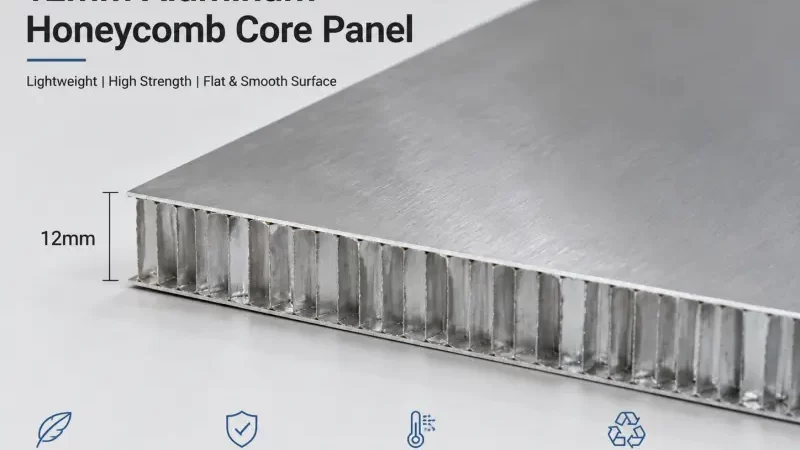
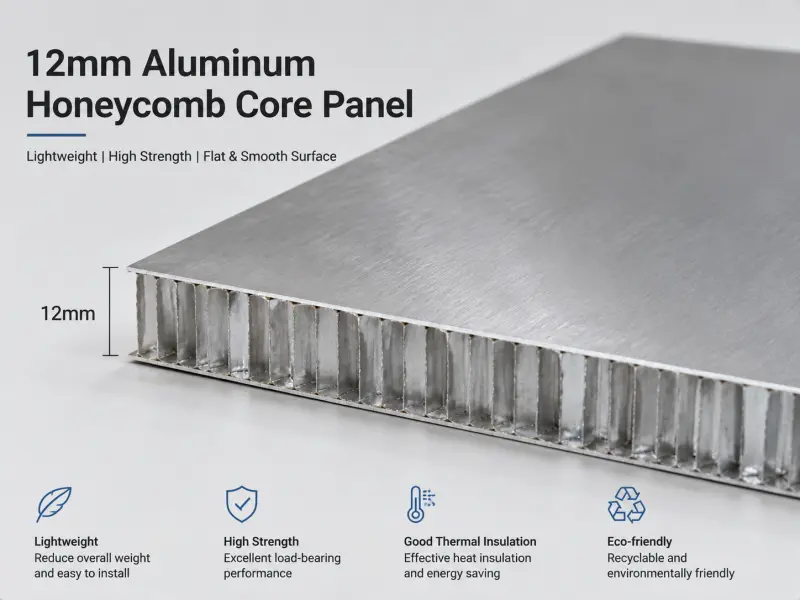
A 12 mm aluminum honeycomb core panel is a sandwich structure. It has two thin aluminum face sheets bonded to a hexagonal aluminum honeycomb core in the middle. The total thickness is 12 millimeters. This size is thick enough for structural rigidity but thin enough to keep weight low.
Many architects and engineers choose this thickness for wall cladding, furniture, and transport interiors. It is lighter than solid aluminum plate of the same size. Yet it resists bending and impact far better than thin sheet metal. The 12 mm panel also accepts screws and fasteners without crushing, which thinner panels cannot always do.
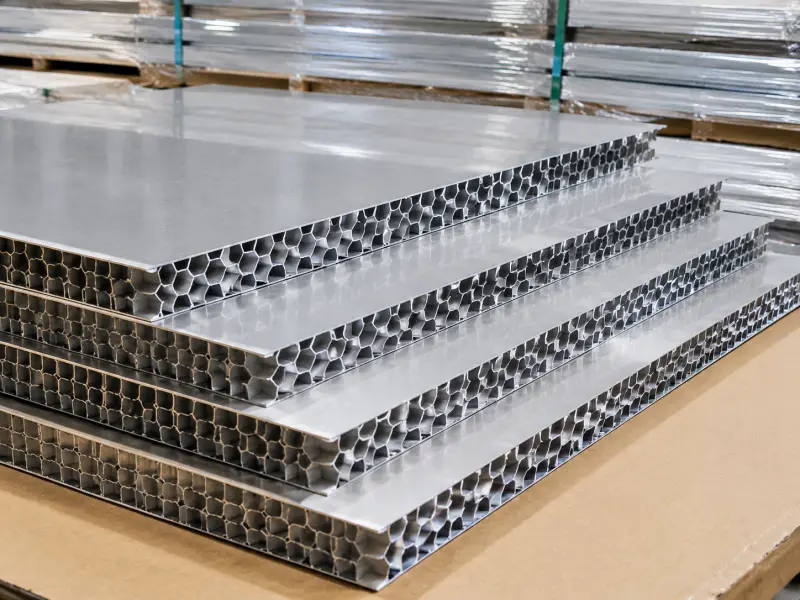
The core itself is made from thin aluminum foil strips. These strips are glued in layers, expanded, and then bonded to the face skins. The hexagon shape inside mimics a beehive. This geometry spreads load evenly and absorbs energy on impact.
Face Sheet Alloys: The Skin Matters
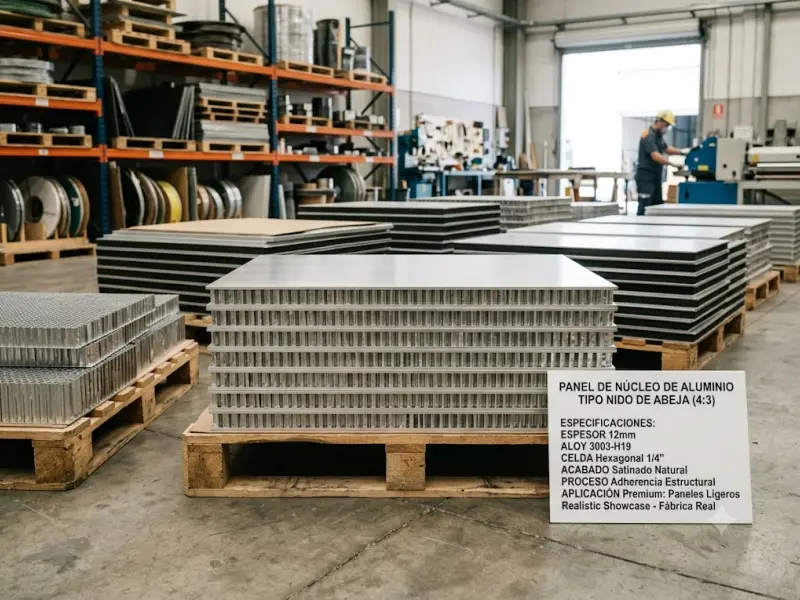
The outer layers of the panel are called face sheets or skins. These skins protect the core and carry most of the surface load. The alloy of the skin decides how the panel handles weather, impact, and bending.
3003-H24 Face Sheets
This is the standard alloy for commercial panels. It contains manganese.
| Property | Value |
|---|---|
| Series | 3xxx |
| Manganese | 1.0–1.5% |
| Temper | H24 |
| Tensile strength | ~140–180 MPa |
| Corrosion resistance | Good |
| Cost | Low to medium |
| Best use | Interior walls, ceilings, standard cladding |
3003-H24 is easy to bend and form. It takes paint and adhesive well. For dry indoor spaces and normal outdoor environments, this alloy is sufficient. It is the most common skin material for 12 mm aluminum honeycomb panels in building projects.
5052-H14 Face Sheets
This alloy contains magnesium. It is stronger and more weather-resistant than 3003.
| Property | Value |
|---|---|
| Series | 5xxx |
| Magnesium | 2.2–2.8% |
| Temper | H14 |
| Tensile strength | ~210–260 MPa |
| Corrosion resistance | Excellent |
| Cost | Medium to high |
| Best use | Marine, coastal facades, high-load partitions |
5052-H14 is the go-to skin when the panel faces salt air, heavy rain, or physical abuse. It resists denting from wind-borne debris. It also holds up better in coastal cities where salt spray attacks metal.
Skin Alloy Comparison
| Feature | 3003-H24 | 5052-H14 |
|---|---|---|
| Strength | Moderate | Higher |
| Formability | Excellent | Good |
| Salt resistance | Fair | Excellent |
| Dent resistance | Standard | Better |
| Cost | $ | $$ |
| Typical finish | PE, PVDF, polyester | PVDF, anodized |
Quick guide:
- Budget interior jobs → 3003-H24
- Coastal or high-traffic exteriors → 5052-H14
Core Alloys: The Hidden Engine
The honeycomb core is not just empty space. It is built from thin foil that must hold its shape under pressure. The alloy of this foil matters.
3003 Honeycomb Core Foil
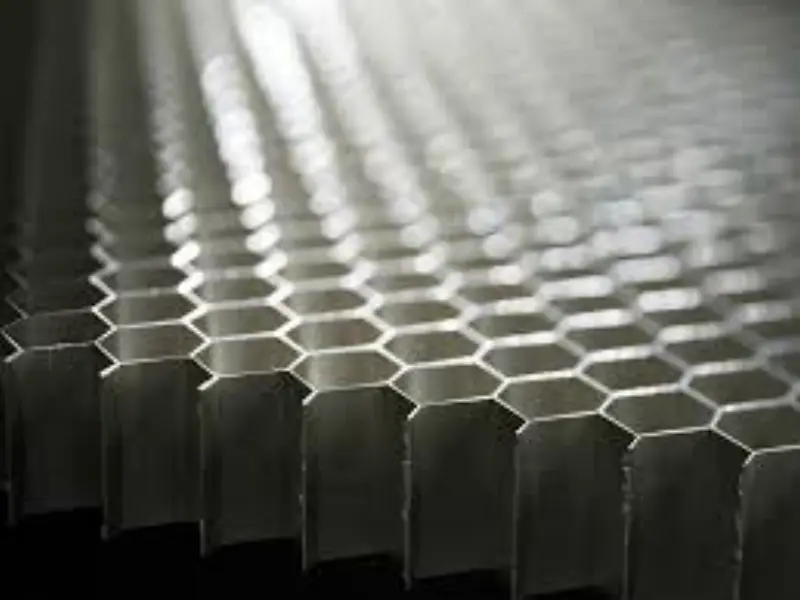
This is the commercial-grade core material. It is cost-effective and easy to expand into hexagonal cells.
| Property | Value |
|---|---|
| Foil thickness | 0.03–0.08 mm typical |
| Cell size range | 1/16″ to 1″ |
| Density range | 20–83 kg/m³ |
| Compressive strength | 0.59–4.41 MPa |
| Best use | Standard architectural panels, furniture, signage |
3003 core is soft enough to expand without tearing. It provides good thermal conductivity. This makes it popular in panels that also act as heat barriers or in HVAC applications.
5052 Honeycomb Core Foil
This is the high-performance core material. It is stronger and stiffer than 3003 core.
| Property | Value |
|---|---|
| Foil thickness | 0.03–0.08 mm typical |
| Cell size range | 1/16″ to 1″ |
| Density range | 25–160 kg/m³ |
| Compressive strength | Up to ~12 MPa (stabilized) |
| Best use | Aerospace floors, marine bulkheads, railcar panels |
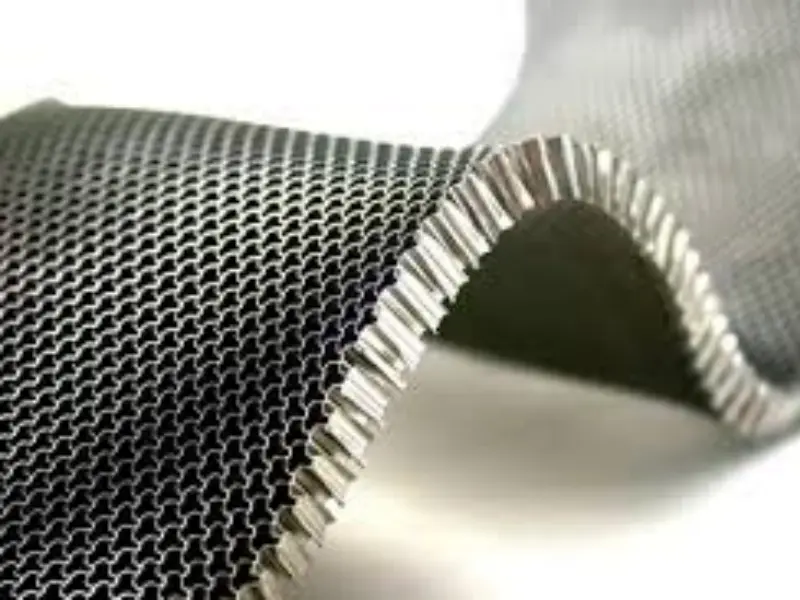
5052 core resists fatigue and corrosion better than 3003. In a 12 mm aluminum honeycomb core panel, a 5052 core adds durability without adding much weight. The trade-off is a higher price.
Core Alloy Comparison
| Feature | 3003 Core | 5052 Core |
|---|---|---|
| Base strength | Moderate | High |
| Fatigue resistance | Standard | Superior |
| Salt spray life | Shorter | Longer |
| Expansion ease | Easier | Harder |
| Cost | Lower | Higher |
| Best panel type | Commercial, interior | Marine, aerospace, rail |
Temper States for Face Sheets and Core
Temper describes how hard the metal is. It affects forming, bonding, and final strength.
Face Sheet Tempers
| Temper | Description | Best For |
|---|---|---|
| H14 | Half-hard, some stiffness | Flat panels, light forming |
| H24 | Half-hard, stabilized | Better flatness, less warp |
| H16 | Three-quarter hard | Rigid panels, minimal forming |
| H18 | Full hard | Very stiff, flat only |
| O | Annealed, soft | Deep drawing, complex curves |
For 12 mm panels, H14 and H24 are the most common face sheet tempers. H24 is slightly more stable after cutting. It resists the slight warping that can happen when a panel is sliced to size.
Core Foil Tempers
| Temper | Description | Best For |
|---|---|---|
| H18 | Hard, high strength | Standard honeycomb walls |
| H19 | Extra hard, maximum stiffness | High-density cores, heavy loads |
Core foil is almost always H18 or H19. The hard temper keeps the thin cell walls from buckling under compression. Softer foil would collapse too easily.
Cell Size, Foil Thickness, and Density
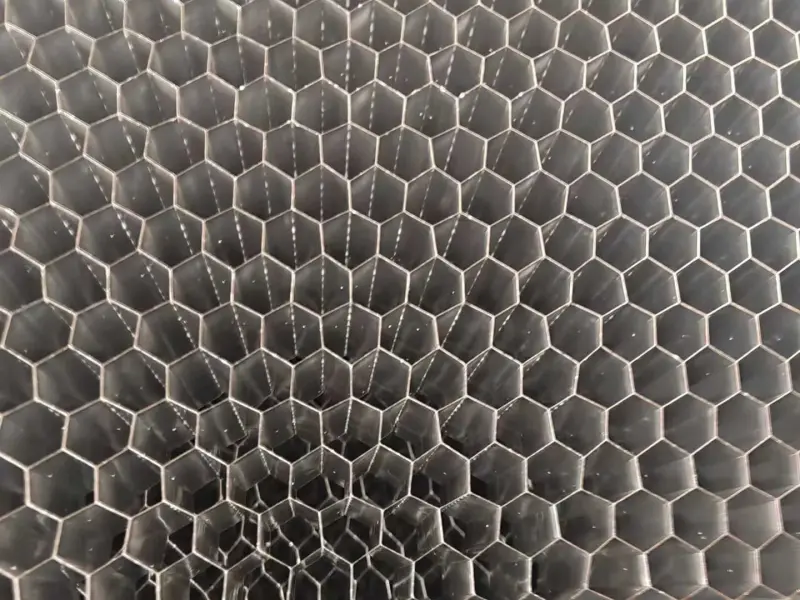
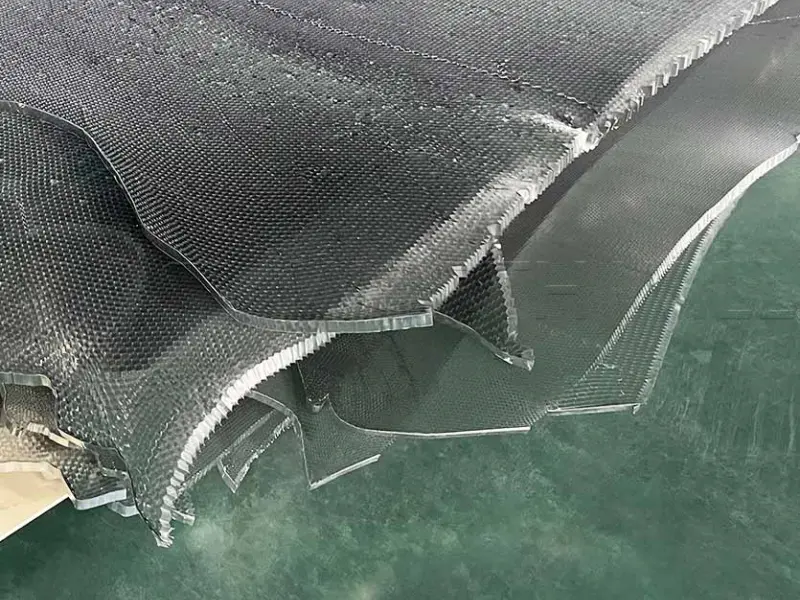
The honeycomb core can be tuned by changing three numbers: cell size, foil thickness, and density.
Cell Size Options
Cell size is the distance across the hexagon. Smaller cells make a stronger core. Larger cells make a lighter core.
| Cell size | Approximate mm | Strength level | Weight level | Best use |
|---|---|---|---|---|
| 1/16″ | ~1.6 mm | Very high | Higher | Precision tooling, aerospace |
| 1/8″ | ~3.2 mm | High | Medium | Rail floors, industrial tables |
| 1/4″ | ~6.4 mm | Medium | Medium | Wall panels, ceilings, furniture |
| 3/8″ | ~9.5 mm | Moderate | Lower | Large wall cladding, partitions |
| 1/2″ | ~12.7 mm | Lower | Low | Lightweight panels, non-structural |
| 3/4″ | ~19 mm | Low | Very low | Acoustic panels, air straighteners |
For a 12 mm thick panel, 1/4″ and 3/8″ cells are the most common. The panel is thick enough to accommodate these sizes without looking sparse inside.
Foil Thickness vs. Density
Thicker foil means heavier, stronger core walls.
| Foil thickness | Typical density (3003) | Typical density (5052) | Panel feel |
|---|---|---|---|
| 0.04 mm | ~30–40 kg/m³ | ~35–45 kg/m³ | Light, standard |
| 0.05 mm | ~50–60 kg/m³ | ~55–65 kg/m³ | Medium, solid |
| 0.06 mm | ~70–80 kg/m³ | ~75–85 kg/m³ | Heavy-duty |
| 0.08 mm | ~90–110 kg/m³ | ~100–120 kg/m³ | Very rigid |
Most 12 mm architectural panels use 0.04–0.05 mm foil. Industrial and transport panels move up to 0.06–0.08 mm for extra toughness.
Surface Finishes and Coatings
The face sheets can carry many different surfaces. The coating protects the aluminum and gives the panel its final look.
PE Coating
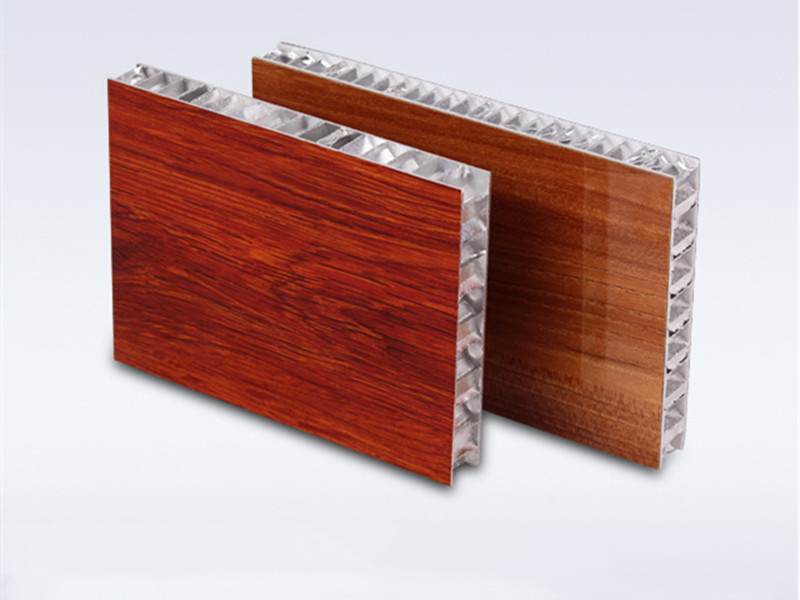
Polyester paint is the budget option. It comes in many colors.
| Feature | Detail |
|---|---|
| Thickness | ~15–25 microns |
| Color range | Wide |
| UV resistance | Moderate |
| Best use | Indoor panels, ceilings, furniture |
PE coating fades faster in direct sun. It is fine for interiors and covered exteriors.
PVDF Coating
Polyvinylidene fluoride is a premium fluorocarbon paint. It lasts much longer outdoors.
| Feature | Detail |
|---|---|
| Thickness | ~25–35 microns |
| UV resistance | Excellent |
| Warranty potential | 15–20 years |
| Best use | Exterior curtain walls, facades, soffits |
PVDF holds color in harsh sun and salt air. Most high-end architectural 12 mm panels use this coating.
Anodized Finish
Anodizing grows a hard oxide layer on the aluminum skin. It is not paint.
| Feature | Detail |
|---|---|
| Layer type | Aluminum oxide |
| Colors | Clear, bronze, black, gold |
| Scratch resistance | Very good |
| Best use | Elevator interiors, trim, modern facades |
Anodized 5052 gives a clearer, more uniform look than anodized 3003. The manganese in 3003 can create slight color variation.
Wood Grain and Stone Film
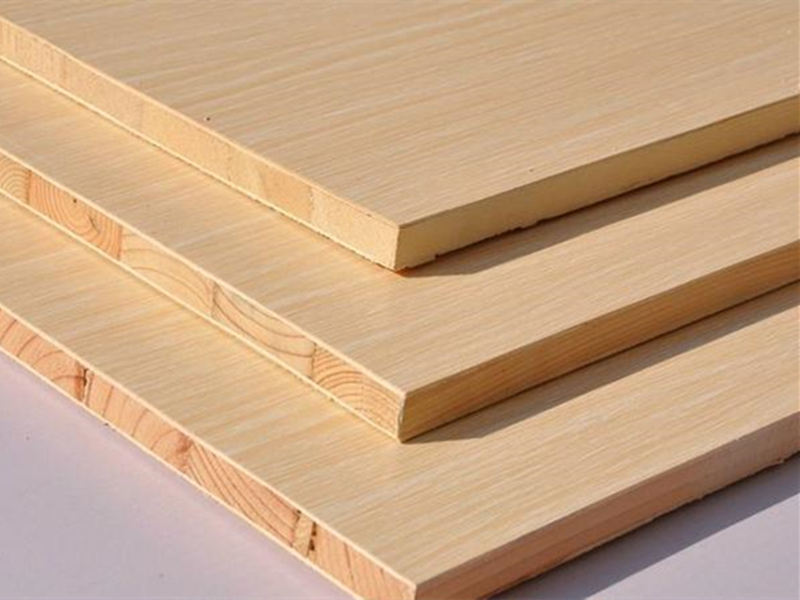
A decorative PVC or PET film bonds to the face sheet. It mimics wood, marble, or fabric.
| Feature | Detail |
|---|---|
| Look | Realistic printed patterns |
| Cost | Lower than real materials |
| Maintenance | Easy wipe-clean |
| Best use | Cabinet doors, office partitions, retail interiors |
Wood grain 12 mm panels are popular in kitchens and commercial fit-outs. They give the warmth of wood with the strength of aluminum.
12 mm vs. Other Panel Thicknesses
Not every job needs 12 mm. Here is how this thickness compares to thinner and thicker options.
| Thickness | Total weight | Rigidity | Typical use |
|---|---|---|---|
| 6 mm | Light | Low | Ceilings, light partitions, signage |
| 10 mm | Medium-low | Moderate | Wall cladding, furniture backs |
| 12 mm | Medium | Good | Wall and ceiling panels, cabinets, doors |
| 15 mm | Medium-high | Higher | High-traffic walls, elevator panels |
| 20 mm | Heavy | Very high | Structural floors, platforms, ship bulkheads |
| 25 mm+ | Very heavy | Maximum | Heavy industrial, aerospace floors |
Why choose 12 mm?
- It is rigid enough for wall panels up to 1,500 mm wide without extra support.
- It accepts standard hinges and handles for cabinet doors.
- It provides enough depth for clean edge banding and routing.
- It costs less than 20 mm panels while offering most of the same benefits for non-structural walls.
This thickness appears across many industries. It is the all-rounder of the honeycomb panel family.
Applications That Rely on 12 mm Panels
Building and Architecture
The construction industry uses 12 mm panels for both looks and function.
- Exterior curtain walls on office towers
- Interior lobby wall cladding
- Ceiling tiles in airports and malls
- Column covers and soffits
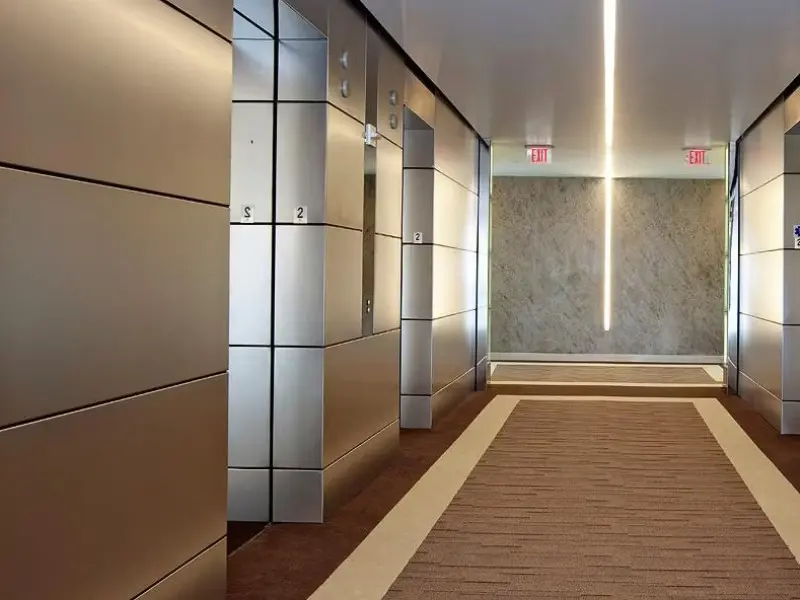
- Elevator cab interiors
- Cleanroom partitions
The flatness of a 12 mm aluminum honeycomb panel is hard to beat. It stays straight even in buildings that sway or settle.
Furniture and Cabinetry
Cabinet makers and furniture factories like the light weight and screw-holding power.
- Kitchen cabinet doors
- Wardrobe sliding doors
- Office desk tops
- Conference room partitions
- Retail display fixtures
- Bathroom vanity panels
A 12 mm panel door is about one-third the weight of a solid wood door of the same size. Hinges last longer. Shipping costs drop.
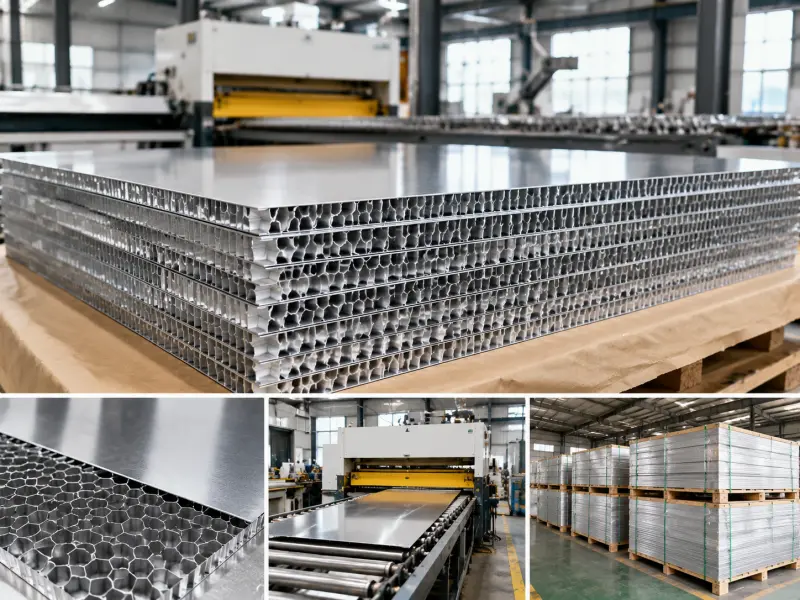
Industrial and Special Uses
Factories and labs need clean, flat, durable surfaces.
- Machine enclosures and guards
- Laser cutting bed slats
- Optical table tops
- EMI shielding enclosures
- Air straighteners in wind tunnels
- Acoustic baffles
The honeycomb structure inside can be perforated to let air or sound pass through. This makes 12 mm panels useful in HVAC and acoustic engineering.
Transportation
Weight savings in vehicles mean fuel savings.
- Train and subway interior wall panels
- Bus ceiling and side lining
- Marine cabin partitions and ceilings
- Truck body lining
- RV interior fit-outs
- Aircraft galley and bulkhead panels (with 5052 core)
The 12 mm thickness absorbs road and rail vibration without cracking. It also meets fire safety rules in public transport.
How to Choose the Right 12 mm Panel
Ask yourself these questions before you buy.
Is the panel for indoor or outdoor use?
→ Outdoor: Choose PVDF coating and 5052 skin if the budget allows. Indoor: PE coating and 3003 skin are fine.
Will the panel face salt air or heavy rain?
→ Use 5052-H14 face sheets and 5052 core. The extra cost pays back in lifespan.
Does the panel need to carry weight or just hang on a wall?
→ Wall only: Standard density core. Load-bearing: Higher density core with thicker foil.
Do you need a specific color or pattern?
→ Solid colors: PVDF or PE. Wood look: Decorative film. Metallic look: Anodized.
What is the largest unsupported span?
→ For spans over 1,200 mm, consider 15 mm or 20 mm. For spans under 1,000 mm, 12 mm is usually enough.
Is fire rating required?
→ Aluminum itself is non-combustible. Ask your supplier for the panel’s fire classification certificate. Many 12 mm panels reach Class A or B1 ratings.
Frequently Asked Questions
What is inside a 12 mm aluminum honeycomb core panel?
Inside is a hexagonal honeycomb core made from thin aluminum foil. The cells look like a beehive. Two aluminum face sheets bond to the top and bottom of the core. The total stack is 12 mm thick.
Is a 12 mm panel strong enough for wall cladding?
Yes. A 12 mm aluminum honeycomb core panel is much stiffer than a solid 12 mm aluminum sheet of the same weight. It resists wind load, impact, and bending. It is standard thickness for many commercial curtain wall systems.
What is the difference between 3003 and 5052 skin?
3003 skin is softer, easier to form, and cheaper. It works well indoors and in normal weather. 5052 skin is stronger and resists salt and moisture better. It is the safer choice for coastal buildings, ships, and trains.
Can I use 12 mm panels for kitchen cabinets?
Yes. This thickness is very popular for cabinet doors. It is light, flat, and does not warp like solid wood in humid kitchens. You can laminate it with wood grain film or paint it in any color.
How much does a 12 mm honeycomb panel weigh?
Weight depends on the core density and skin thickness. A typical 12 mm panel with 0.5 mm skins and standard density core weighs about 4.5 to 6.5 kg per square meter. This is roughly half the weight of a solid aluminum plate with the same outer dimensions.
Are 12 mm panels fireproof?
Aluminum does not burn. The honeycomb core is also aluminum, so it is non-combustible. However, the adhesive that bonds the skins to the core can soften at very high temperatures. Most quality panels use fire-resistant adhesive and carry a fire rating certificate. Always check the rating for your specific project.
Can 12 mm panels be cut on site?
Yes. You can cut them with a carbide-tipped circular saw or a panel saw with a fine blade. Use masking tape along the cut line to protect the surface coating. Support the panel well to avoid chipping the edges.
What is the standard size of a 12 mm panel?
Common stock sizes are 1,220 mm × 2,440 mm or 1,500 mm × 3,000 mm. Many suppliers also offer custom lengths up to 6,000 mm or more. Width is usually limited by the bonding press size.
Do 12 mm panels insulate sound and heat?
Yes. The air trapped inside the honeycomb cells acts as a barrier. The panel blocks some heat transfer and absorbs some sound. For higher acoustic performance, you can specify a perforated face sheet and add acoustic batting behind the panel.
How do I clean a 12 mm aluminum honeycomb panel?
Use mild soap and water with a soft cloth. For exterior PVDF panels, you can use a gentle glass cleaner. Avoid abrasive powders or steel wool. These scratch the coating and dull the finish.