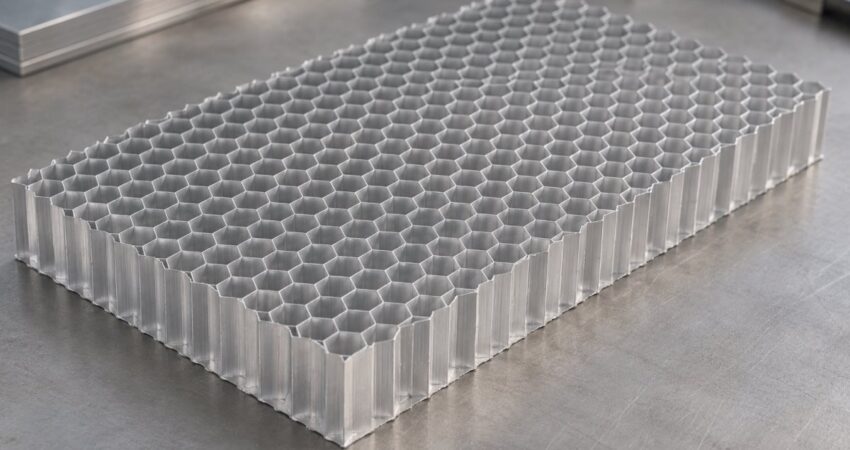
Ordering custom aluminum honeycomb core starts with a clear specification. A request that only says “send your best price” can produce quotations for different alloys, cell sizes, thicknesses, and delivery conditions. Those offers may look comparable while describing different materials. This guide explains what to include in an RFQ, how to approve a sample, and what to check before shipment. It is intended for buyers sourcing core for sandwich panel production and other industrial applications.
Start with the finished application
Tell the supplier what the core will become: an interior partition, furniture panel, ceiling component, equipment cover, or another assembly. State whether you need bare honeycomb core or a finished bonded panel. These are different purchasing scopes. Include the intended environment, panel dimensions, support arrangement, and any project requirements. For structural or regulated applications, have the responsible engineer define the acceptance criteria before material selection.
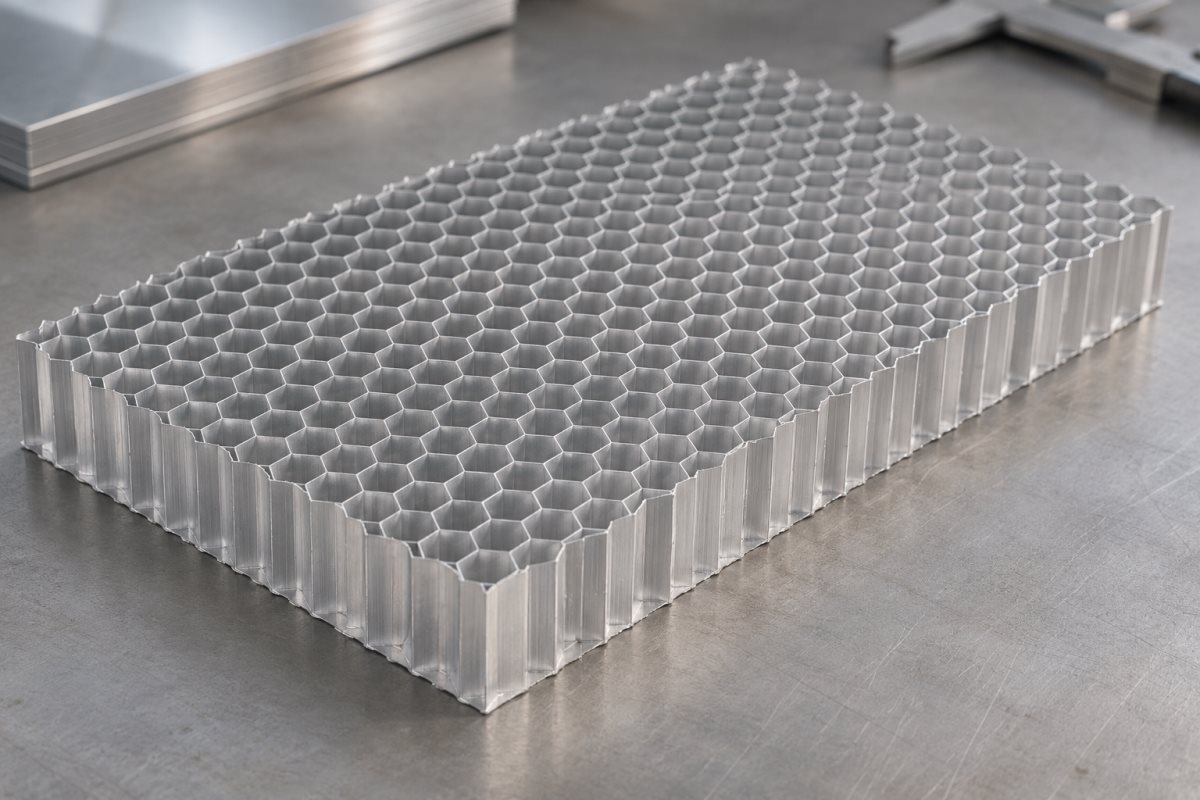
A photograph helps explain the intended appearance, but it cannot replace a drawing. Mark the length, width, core thickness, and orientation on the same document. Give the drawing a revision number so that the quotation, sample, and production order all reference the same requirements.
Aluminum honeycomb core RFQ checklist
Use the table below as a starting template. If a value is undecided, write “supplier proposal required” and describe the application. This is more useful than leaving an important field blank. Ask the supplier to identify every proposed deviation separately.
| RFQ field | Information to provide |
|---|---|
| Application | Finished product, environment, and project requirements |
| Construction | Alloy, cell size convention, and foil thickness |
| Dimensions | Length, width, core thickness, tolerances, and drawing revision |
| Supply form | Unexpanded block, expanded sheet, or cut-to-size core |
| Quantity | Sample quantity, trial order, and repeat demand |
| Quality documents | Agreed inspection criteria and required reports |
| Delivery | Destination, delivery terms, and required date |
Specify cell size, foil thickness, and core thickness separately
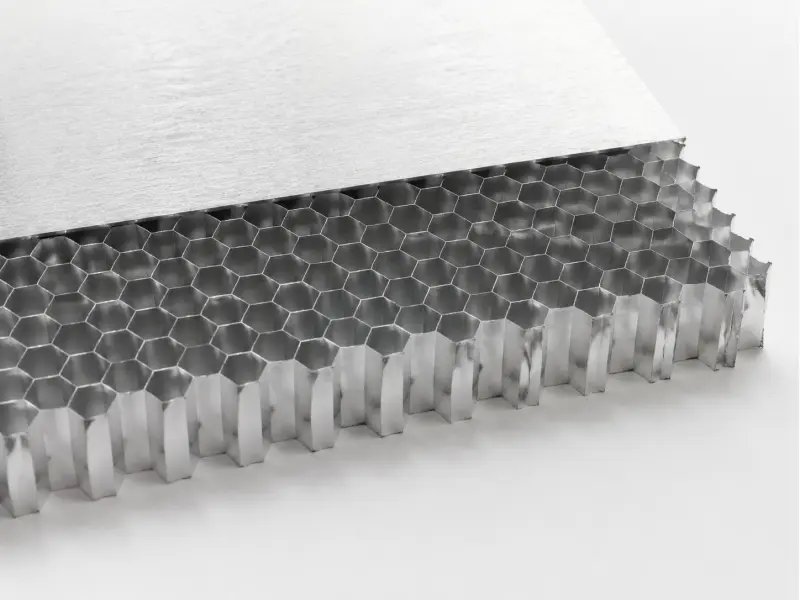
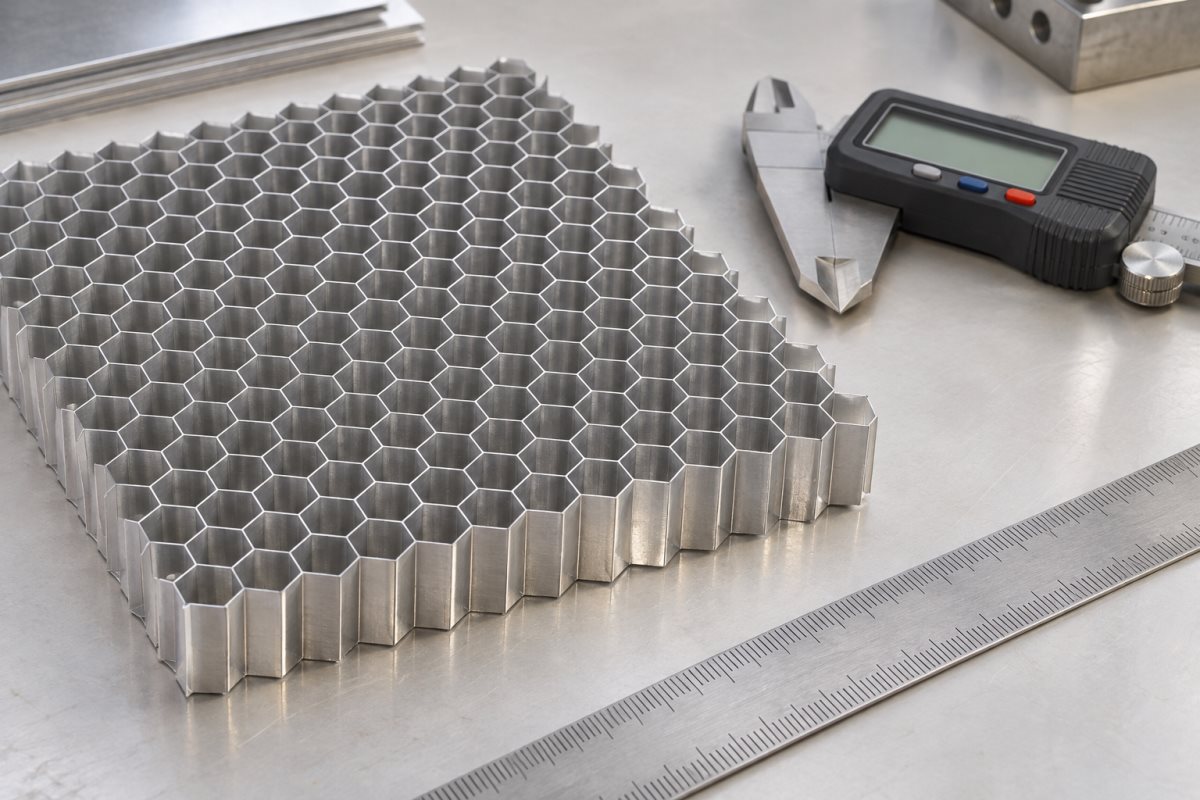
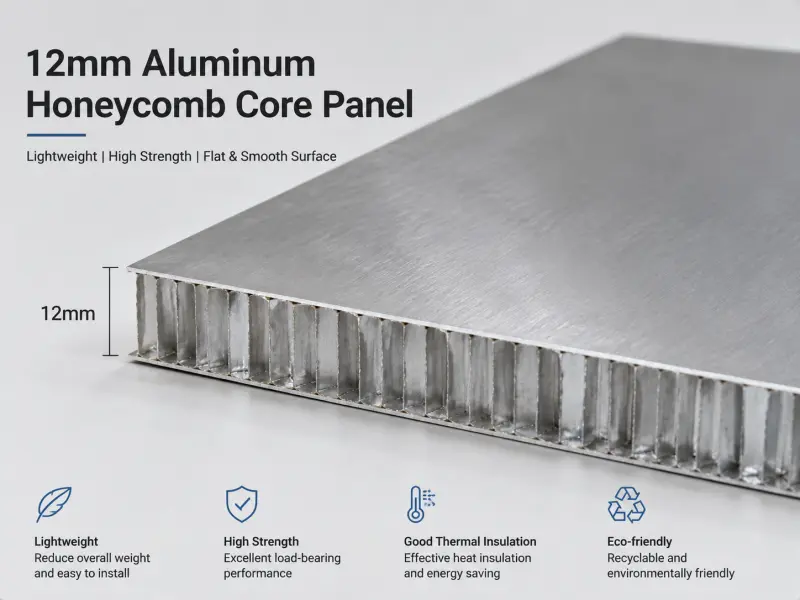
These three dimensions describe different aspects of the core. Cell size describes the honeycomb geometry, foil thickness describes the cell wall material, and core thickness is the distance between the two bonding faces. State the measurement convention for cell size and the required dimensional tolerances. Do not assume that two suppliers use identical terminology or measuring methods.
Alloy designation alone does not define the finished core performance. Geometry, material condition, bonding, and manufacturing consistency also matter. If you are comparing options, request data for the exact proposed construction, including test method and specimen details. Avoid treating a general brochure value as a guaranteed value for every order.
Choose the supply form before comparing prices
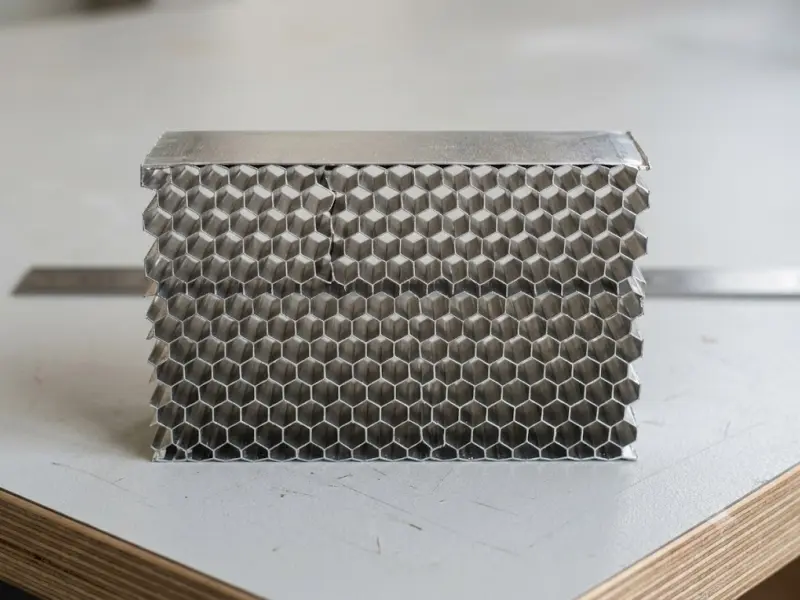
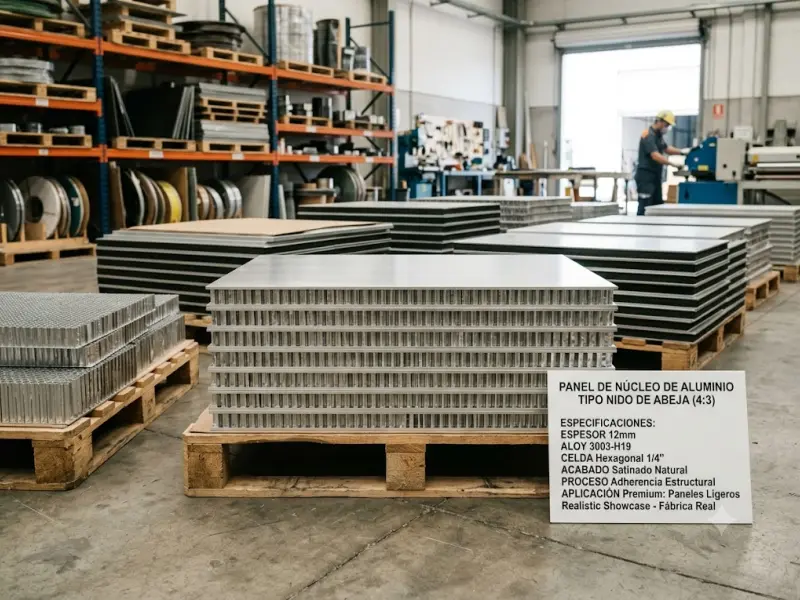
Ask whether the quotation covers unexpanded blocks, expanded sheets, or cut-to-size pieces. Confirm which dimensions apply before and after expansion, who performs the expansion, and how the material will be handled in production. A lower material price may create additional work, tooling needs, or scrap at your facility. Compare total delivered and usable cost rather than the headline unit price alone.
For repeat production, include estimated monthly demand alongside the first trial quantity. Request separate information for samples, trial orders, and production orders. Lead time, minimum order quantity, packaging, and payment terms should be stated in writing rather than assumed from an earlier conversation.
Approve a representative sample
Request a sample made to the proposed specification and identify it with a sample number. Record the alloy, cell size, foil thickness, core thickness, supply form, and drawing revision. A sample selected only for appearance may not represent the material eventually supplied. Keep an approved reference sample and photographs so that both parties have a common point of comparison.
Check dimensions using an agreed method that does not crush the thin cell walls. Examine the cut edges, cell uniformity, cleanliness, and visible damage. If the core will be bonded to skins, perform a trial using your intended skins, adhesive, surface preparation, and curing process. A bare-core inspection cannot establish the performance of the completed sandwich panel.
Agree on acceptance criteria before production
Turn observations into measurable requirements where possible. Define the dimensions to inspect, permitted tolerances, inspection quantity, packaging condition, and documents needed with the shipment. If compression, shear, adhesion, corrosion, or fire performance matters, specify the relevant test and acceptance criteria with qualified technical support. Do not infer a finished assembly rating from the use of aluminum core alone.
Ask how production batches are identified and how any nonconforming material will be reported. Confirm whether certificates or test reports apply to the actual batch or to a general product family. Any substitution in alloy, construction, or processing should be reviewed against the approved specification before shipment.
Protect the core during packing and transport
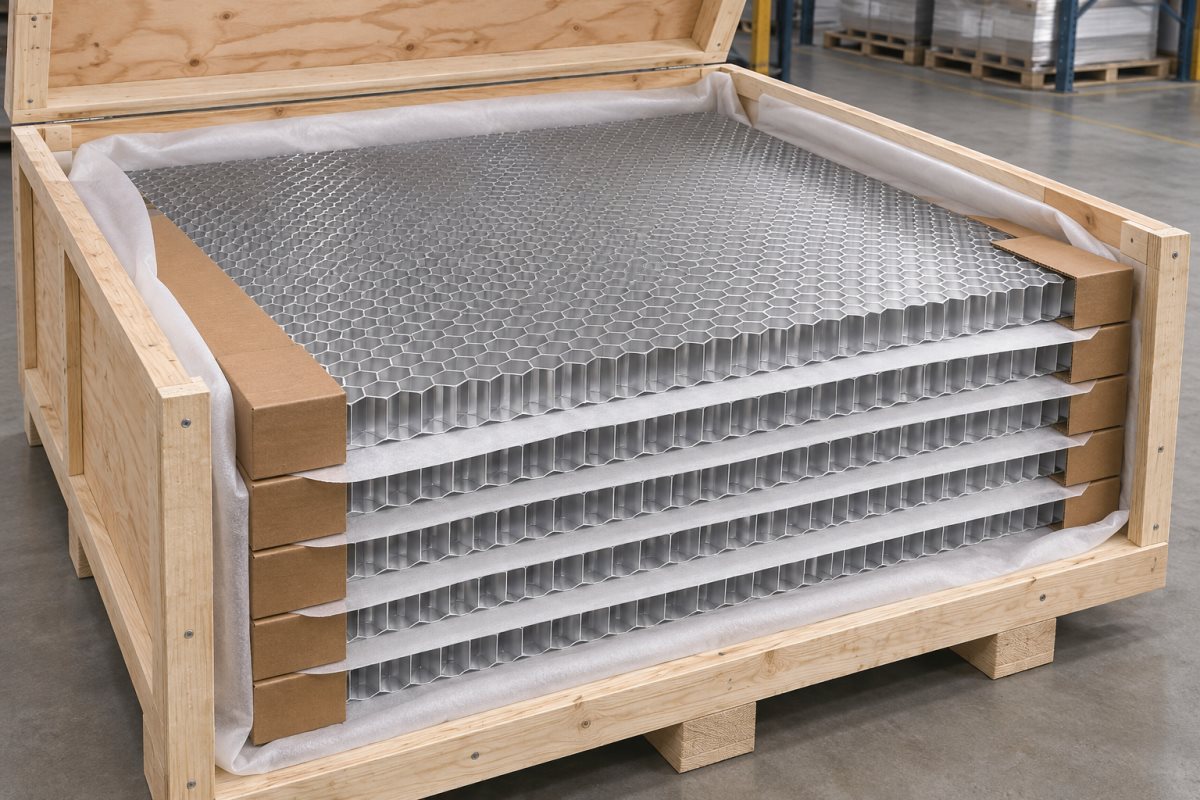
Honeycomb core needs protection against crushing, edge damage, contamination, and moisture exposure during handling. Agree on suitable supports, protective wrapping, corner protection, and outer packaging for the route and shipment size. Ask for packing photographs showing the material before closing the package and the finished shipping marks. Confirm unloading requirements with your receiving team.
On arrival, photograph the package condition before opening it. Match labels and quantities to the packing list, then inspect representative pieces against the approved specification. Keep damaged packaging and batch identification available while any discrepancy is investigated. Early documentation helps distinguish transportation damage from a specification or production issue.
What affects a custom honeycomb core quotation?
A quotation may change with alloy, construction, dimensions, order volume, cutting requirements, supply form, packaging, and delivery terms. Ask for the currency, unit basis, quotation validity, and named delivery location. Material cost per square meter is difficult to compare if the thickness or construction differs. Freight and import costs should also be considered when comparing delivered offers.
For related background, read our aluminum honeycomb core specifications guide and alloy comparison. Use these resources to prepare questions, then confirm the final selection against your own application. A clear RFQ saves time because the supplier can respond with a defined product instead of repeatedly requesting missing information.
Send a complete RFQ to WORTHWILL
Ready to discuss a custom aluminum honeycomb core order? Send your application, drawing revision, dimensions, proposed construction, quantity, destination, and required delivery date. Mention whether you need an evaluation sample and what it must demonstrate. Contact WORTHWILL to review your request and discuss available options. Ask for written confirmation of the offered specification, sample arrangements, current lead time, and quotation terms before placing an order.