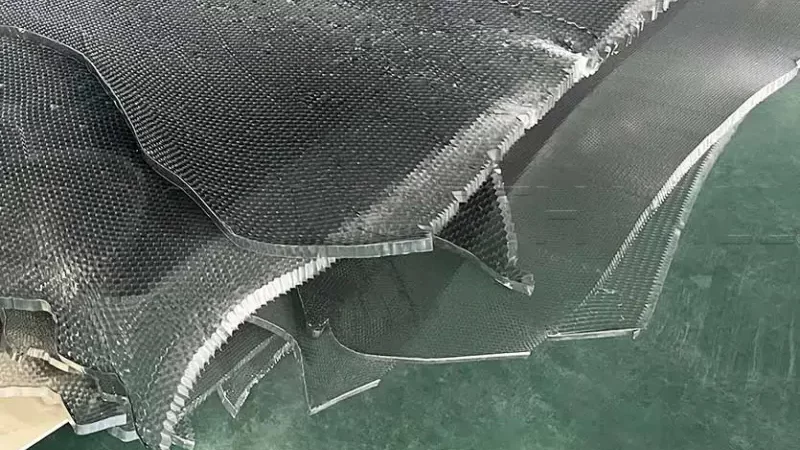
Aluminum honeycomb panels are famous for being light and strong. They are used in planes, ships, and high-end buildings. However, a common problem can happen: aluminum honeycomb core delaminating.
Delamination is when the outer skin separates from the inner honeycomb core. When this happens, the panel loses its strength and can fail.
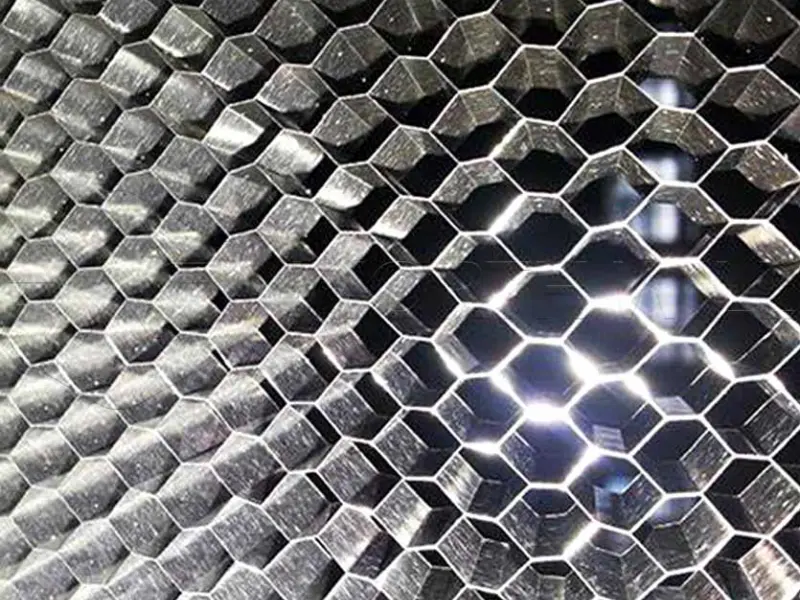
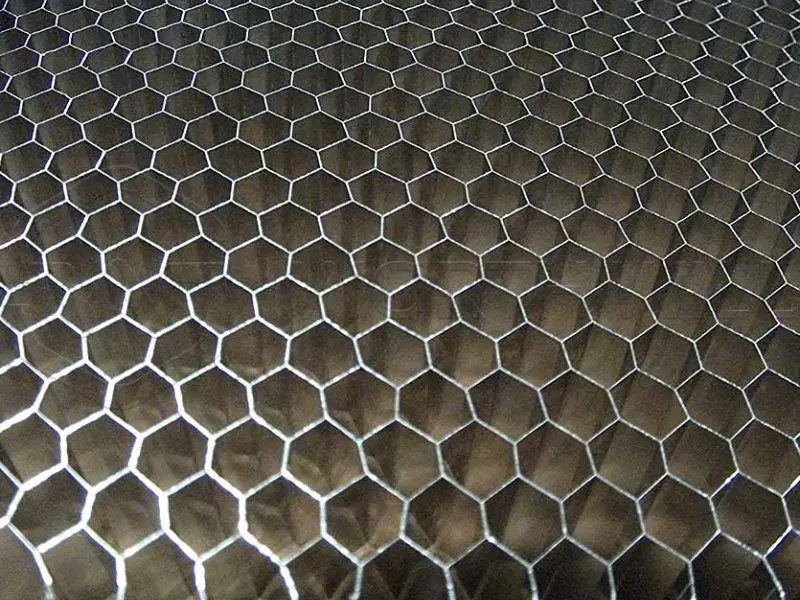
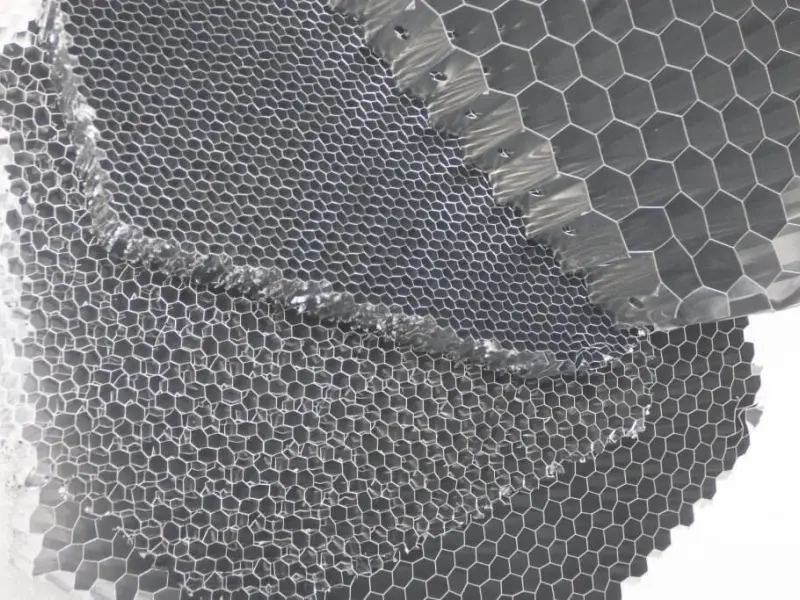
Understanding the Basics of Aluminum Honeycomb
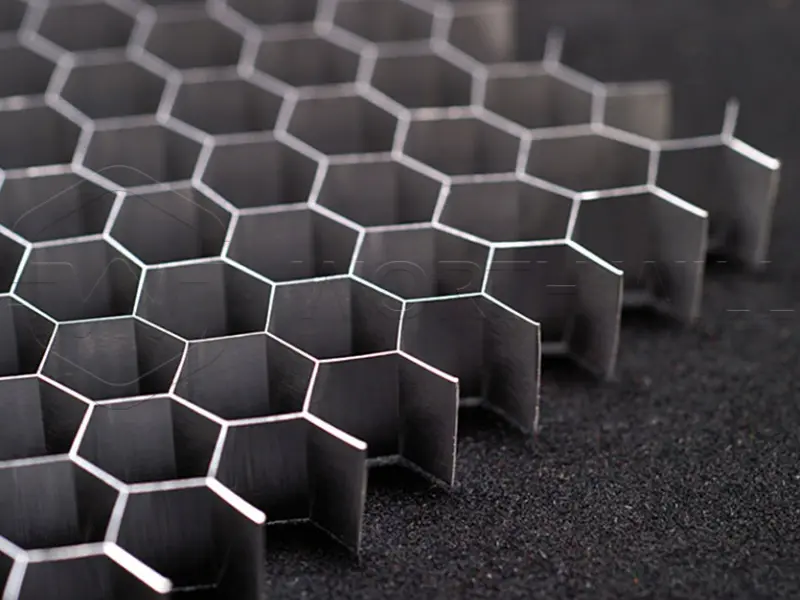
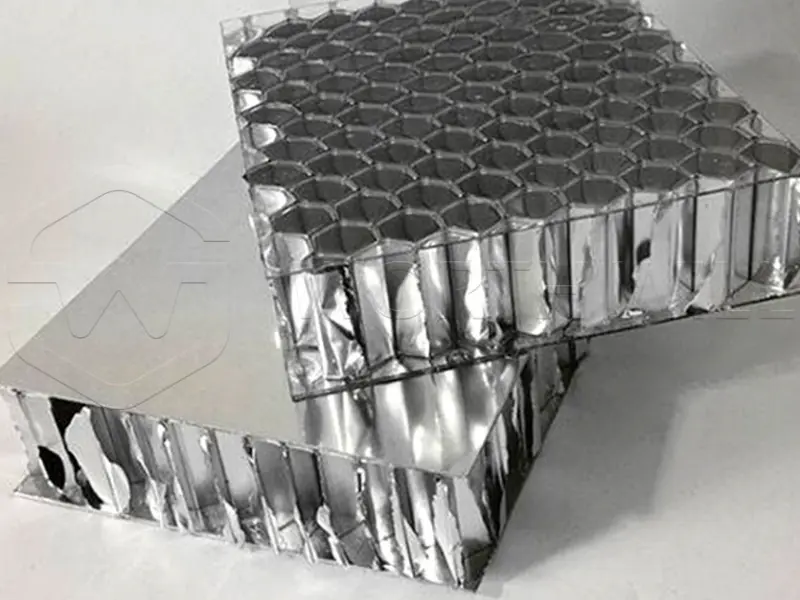
Before we look at the problems, let us look at the materials. A honeycomb panel has three parts: the top skin, the honeycomb core, and the bottom skin. These are held together by a strong adhesive (glue).
Alloy Types and Material States
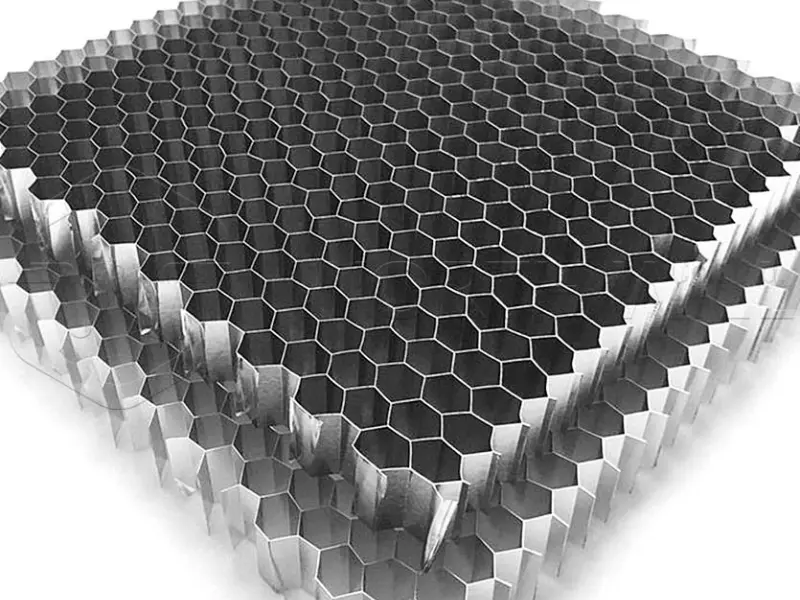
The quality of the core depends on the aluminum alloy used. Most manufacturers use two main types.
| Alloy Type | Features | Common Applications |
|---|---|---|
| Alloy 3003 | Standard strength, good corrosion resistance. | Architecture, ceilings, and furniture. |
| Alloy 5052 | High strength, excellent for marine use. | Aerospace, high-speed trains, and boats. |
The “state” or temper of the aluminum is also important. Most honeycomb cores use the H19 state. This state makes the aluminum foil very hard and thin, which provides the best structural support.
Main Causes of Aluminum Honeycomb Core Delaminating
Why does the bond fail? It is usually not the aluminum itself. The problem lies in the bonding process or the environment.
1. Poor Surface Preparation
Aluminum naturally has a thin layer of oil or oxide. If the skins or the core are not cleaned properly, the glue cannot “grip” the metal. Any dust, grease, or moisture will lead to delamination later.
2. Wrong Adhesive Selection
Not all glues work for all jobs. Some adhesives become brittle in the cold. Others melt in the heat. If the glue does not match the environment, the panel will fall apart.
3. Incomplete Curing Process
Adhesives need the right temperature and pressure to set. If the factory uses too much pressure, they might squeeze out all the glue. If the temperature is too low, the glue never reaches full strength.
4. Thermal Expansion Issues
Aluminum expands when it gets hot and shrinks when it gets cold. If the panel is very large and the glue is too rigid, the movement will snap the bond. This is a common cause in outdoor building facades.
5. Moisture and Corrosion
If water gets inside the panel, it can cause “node bond failure.” This is where the honeycomb cells themselves pull apart because the water corrodes the adhesive lines between the foil layers.
Technical Specifications of Honeycomb Cores
Choosing the right size of honeycomb can prevent stress issues. We offer different “cell sizes” for different needs.
| Cell Size (Metric) | Foil Thickness | Strength Level |
|---|---|---|
| 3.2mm (1/8″) | 0.04mm | Very High (Aerospace) |
| 6.4mm (1/4″) | 0.05mm | High (Transport) |
| 10mm | 0.06mm | Medium (Construction) |
| 19mm (3/4″) | 0.08mm | Low (Interior Design) |
Different Types of Aluminum Honeycomb Products
We provide many types of honeycomb to suit your specific project. Each type has a different purpose.
Standard Industrial Honeycomb
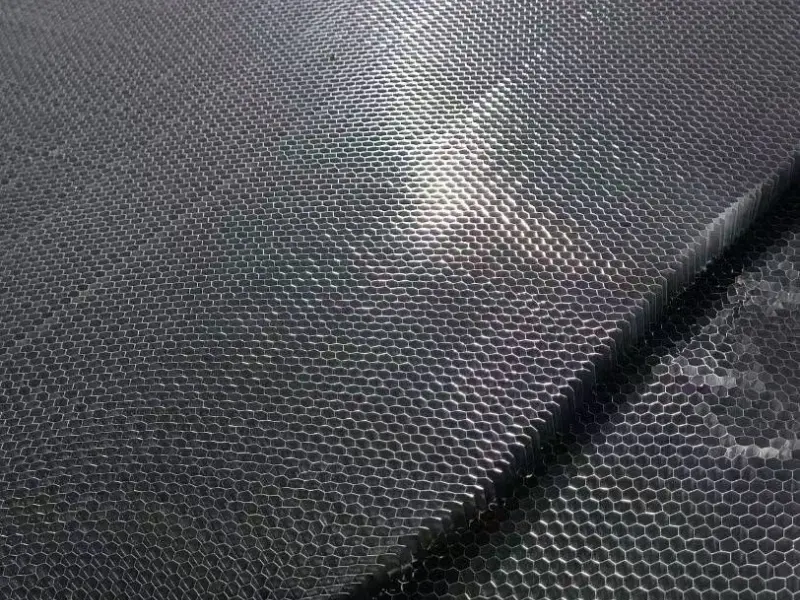
This is the most common type. It is used for general structural panels. It is affordable and very effective for flat surfaces.
Micro-Cell Honeycomb
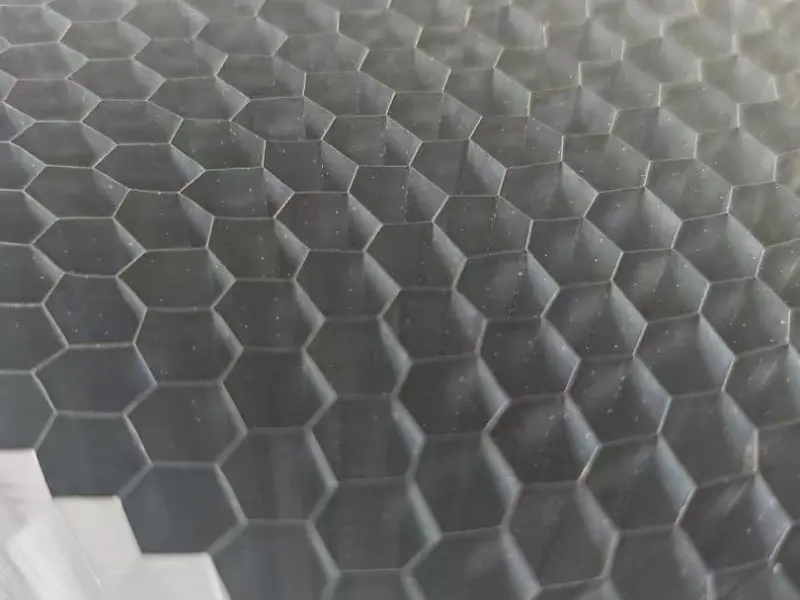
These have very tiny holes (less than 3mm). They are used for electronic shielding or to straighten the flow of air in wind tunnels.
Perforated Honeycomb Core
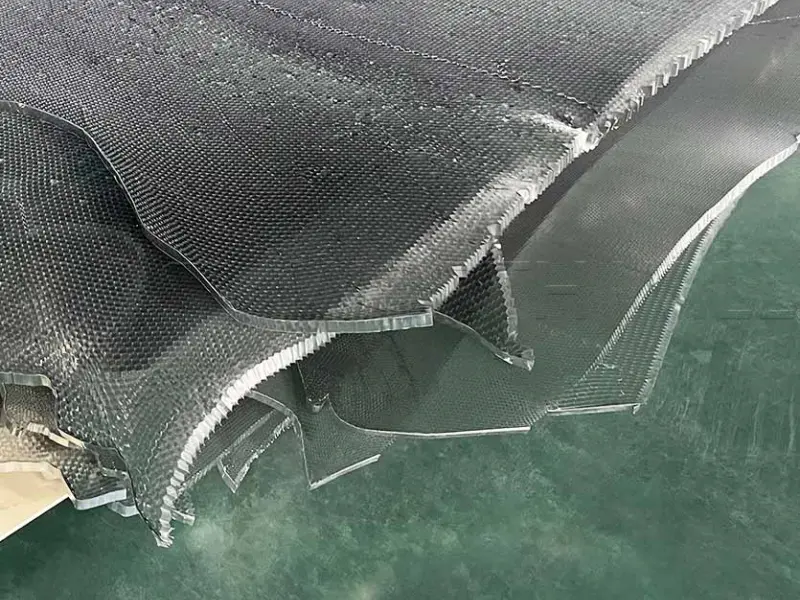
In this type, the foil has tiny holes. This allows air to move between cells. It is used in vacuum tables or acoustic panels to absorb sound.
Slanted or Angled Honeycomb
The cells are not vertical. They are tilted at an angle. This is used for “louvers” to block sunlight while letting air pass through.
Drilled Honeycomb
For very thick panels, we can drill larger holes through the core. This has uses for resin infusion processes in boat building.
Effective Solutions to Prevent Delamination
How do we stop aluminum honeycomb core delaminating? Here are the industry best practices.
Better Cleaning Methods
Use a chemical treatment like “chromate conversion” or “silane” on the aluminum skins. This creates a surface that loves to bond with glue.
Use High-Quality Epoxy Films
Instead of liquid glue, many professionals use “adhesive films.” These are thin sheets of glue that melt evenly. They provide a perfect, uniform layer that reduces the risk of weak spots.
Controlled Manufacturing Environment
Panels should be made in a “clean room” with controlled humidity. This prevents moisture from being trapped inside the panel during the bonding process.
Testing and Quality Control
Factories should use a “Peel Test.” This test measures how much force is needed to pull the skin off the core. If the panel passes the peel test, it is unlikely to delaminate in the field.
Applications: Where Strong Honeycomb Matters
If a panel delaminates in these areas, it can be dangerous. That is why high-quality bonding is essential.
- Aerospace Industry:
- Airplane wings and flooring.
- Satellite structures.
- Helicopter rotor blades.
- Marine and Shipbuilding:
- Interior bulkheads (walls) for yachts.
- Lightweight furniture for cruise ships.
- Deck structures.
- Modern Architecture:
- Exterior curtain walls for skyscrapers.
- Cleanroom wall panels for medicine.
- Decorative elevator interiors.
- Transportation:
- Floors for high-speed trains.
- Truck body panels.
- Racing car chassis components.
Comparison: Honeycomb vs. Other Core Materials
Is aluminum honeycomb always the best? Let’s compare.
| Feature | Aluminum Honeycomb | Foam Core (PVC/PET) | Balsa Wood |
|---|---|---|---|
| Strength-to-Weight | Best | Good | Fair |
| Fire Resistance | Excellent (A1 Grade) | Poor | Medium |
| Durability | High | High | Low (can rot) |
| Recyclability | 100% | Low | 100% |
| Cost | Medium/High | Low/Medium | Medium |
Frequently Asked Questions (FAQ)
Can I repair a delaminated panel?
It is very difficult. You can try to inject epoxy resin into the gap, but it will never be as strong as the original bond. Usually, the panel must be replaced.
Does heat cause delamination?
Yes. If the panel can be temperatures above the glue’s limit (usually 80∘C to 120∘C), the bond will soften and fail.
How long should a honeycomb panel last?
A well-made aluminum honeycomb panel should last over 20 years if it is installed correctly and protected from extreme chemicals.
Why Is Aluminum Honeycomb Core Delaminating?
Understanding why aluminum honeycomb core delaminating occurs is the first step to building better products. Most issues come down to surface cleanliness and choosing the right adhesive. By using high-quality alloys like 5052 and following strict manufacturing steps, you can create panels that are incredibly strong and long-lasting.
If you are looking for a reliable supplier of aluminum honeycomb, always ask about their bonding process and peel test results. Quality materials are the foundation of every successful project.