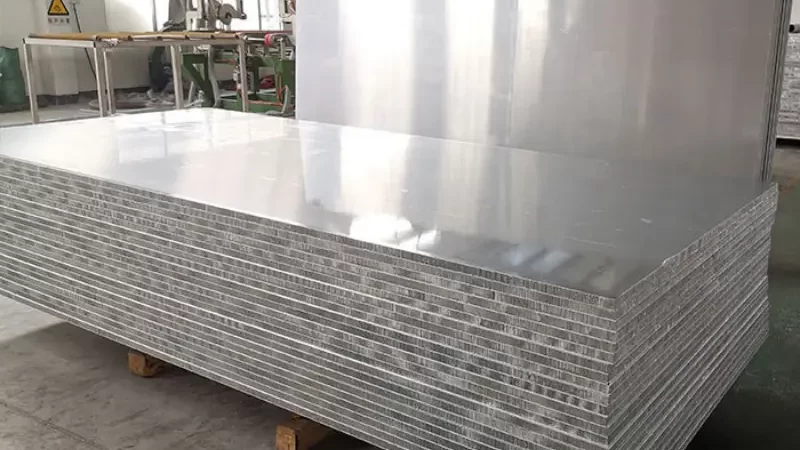
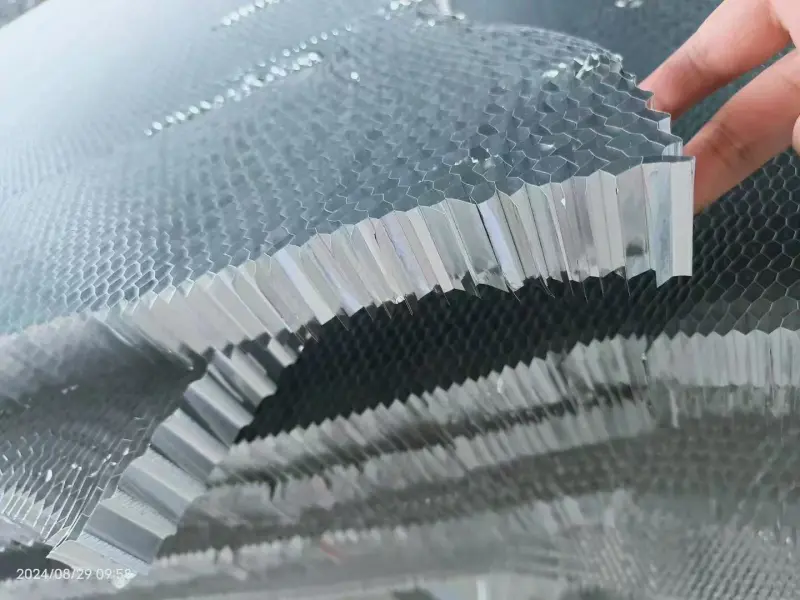
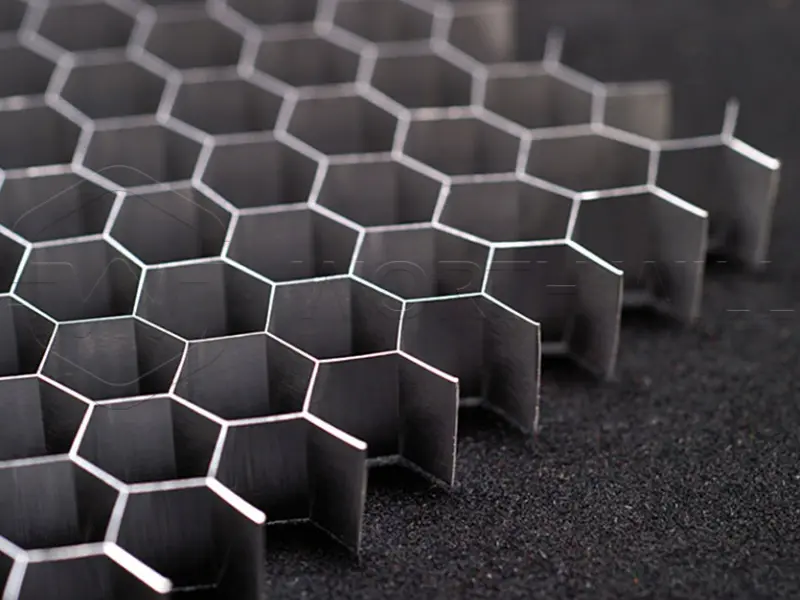
An Aluminum Honeycomb Core for Sandwich Panels is the secret behind many modern, lightweight, and strong structures. This material uses a hexagonal design, much like a beehive. It offers a very high strength-to-weight ratio. When placed between two “skins,” it creates a sandwich panel that is incredibly rigid.
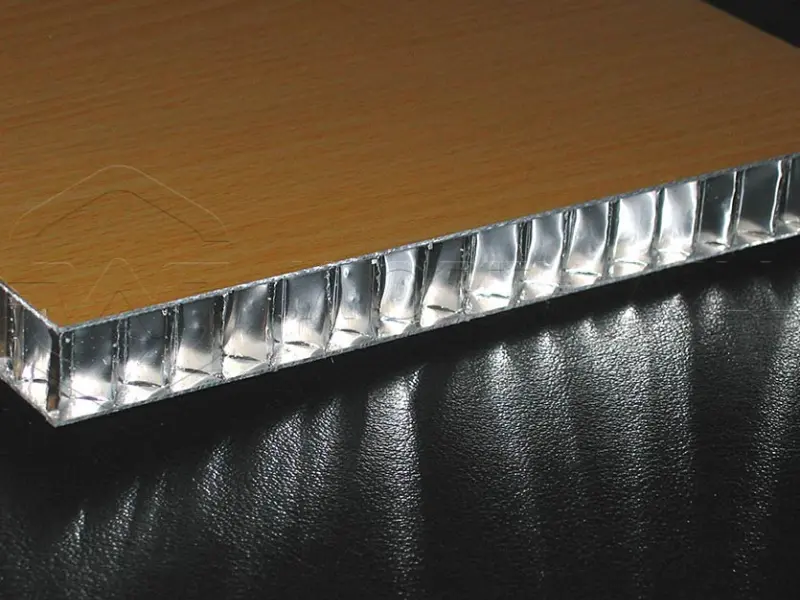
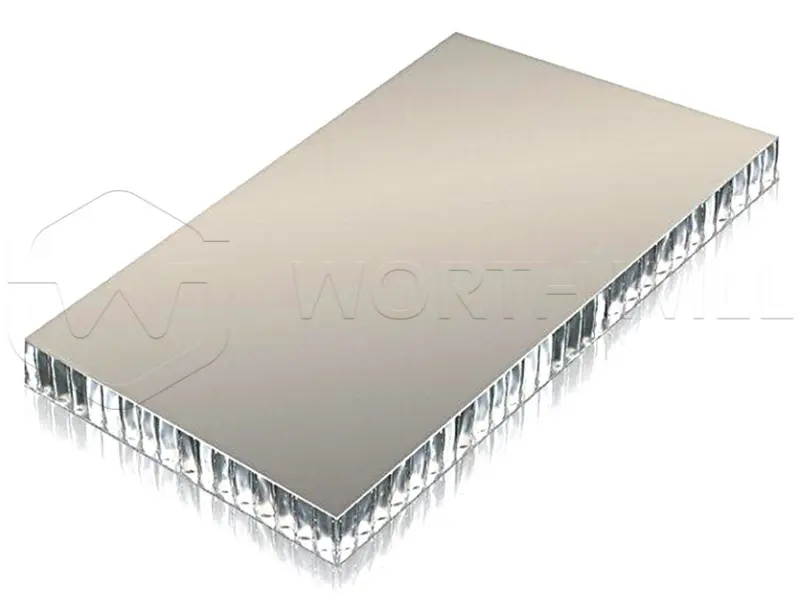
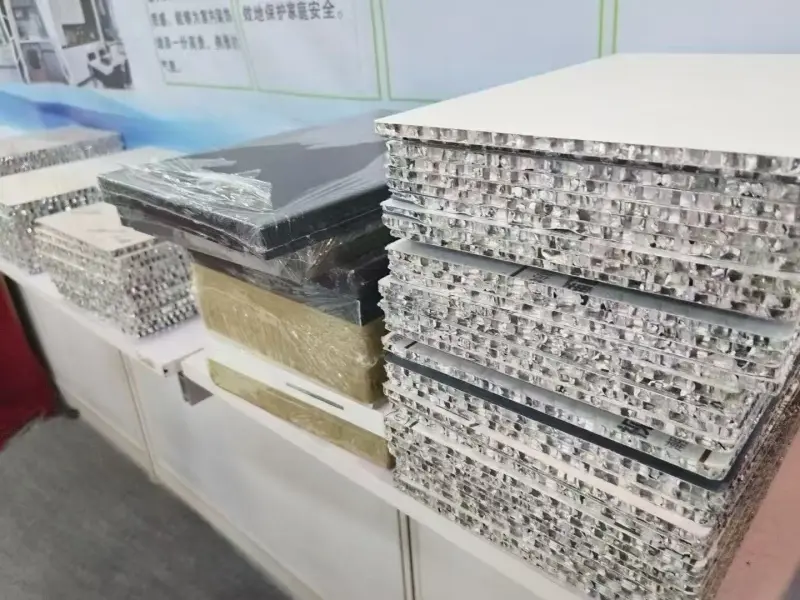
What is an Aluminum Honeycomb Sandwich Panel?
A sandwich panel is a composite structure. It consists of three main parts:
- Top Skin: Usually made of aluminum, stainless steel, or carbon fiber.
- The Core: The Aluminum Honeycomb Core for Sandwich Panels acts as the middle layer.
- Bottom Skin: Usually the same material as the top skin.
The core keeps the skins apart. This increases the “moment of inertia,” making the panel very hard to bend without adding much weight.
Technical Specifications and Alloys
To get the best performance, you must choose the right alloy and cell size. Most manufacturers use the 3000 or 5000 series aluminum.
Alloy Types and Tempers
| Alloy Type | Common State (Temper) | Main Advantage |
|---|---|---|
| Alloy 3003 | $$H18$$ / $$H19$$ | Most popular for general construction. Good cost balance. |
| Alloy 5052 | $$H19$$ | Higher strength. Better for marine and aerospace use. |
Core Dimension Data
The following table shows the standard digital specifications for the honeycomb core.
| Specification | Range in Inches | Range in Millimeters |
|---|---|---|
| Cell Size | $$1/16$$ to $$1$$ | $$1.6$$ to $$25.4$$ |
| Foil Thickness | $$0.001$$ to $$0.006$$ | $$0.03$$ to $$0.15$$ |
| Core Height (Thickness) | $$0.125$$ to $$20$$ | $$3$$ to $$500$$ |
| Density | $$1.0$$ to $$12.0$$ lb/ft³ | $$16$$ to $$192$$ kg/m³ |
Different Types of Aluminum Honeycomb Cores
There are several ways this product is sold and used. Depending on your manufacturing process, you might choose one of these types.
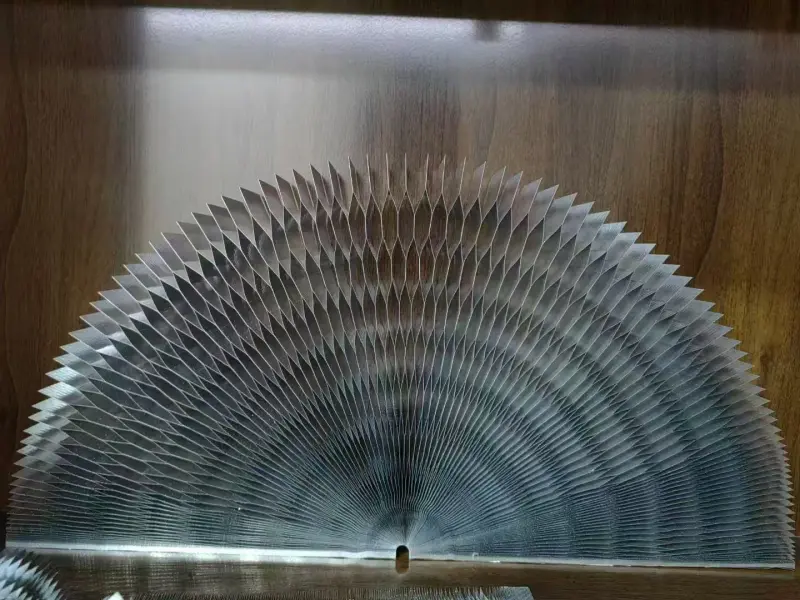
1. Expanded Aluminum Honeycomb
This is the most common type. The core is already stretched into its hexagonal shape. It is ready for immediate bonding in an Aluminum Honeycomb Core for Sandwich Panels project.
2. Unexpanded Blocks (Nodepack)
The core is shipped in tight, solid blocks. You must pull it to expand it.
- Pros: It takes up very little space during shipping.
- Cons: You need a special table or machine to expand it correctly.
3. Perforated Honeycomb
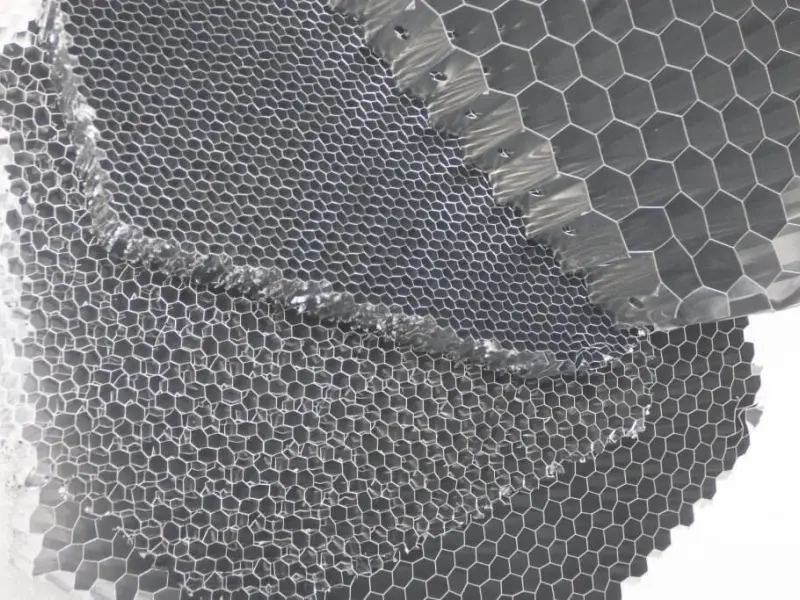
The aluminum foil has tiny holes. These holes allow air to flow between the cells.
- Application: This is used in vacuum-bonding or high-heat processes. It prevents air pressure from building up inside the panel and causing bubbles.
4. Non-Perforated Honeycomb
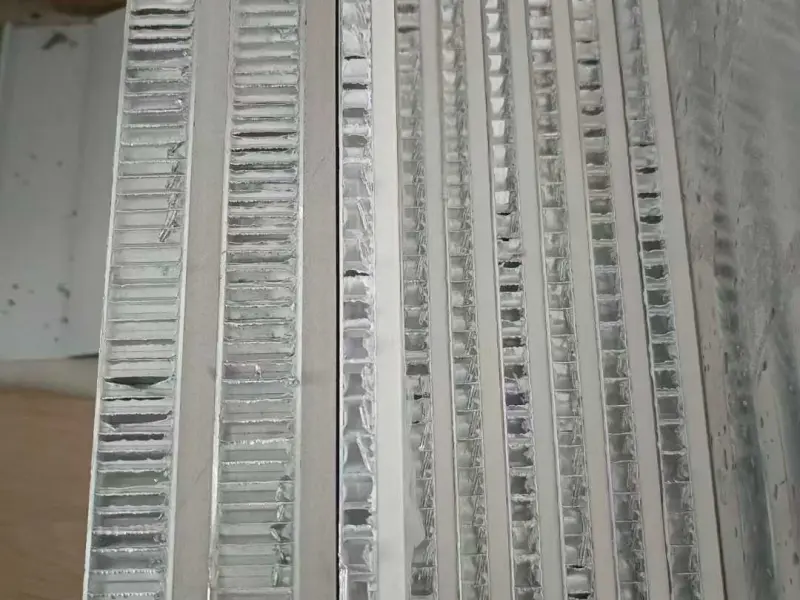
The cells are completely sealed.
- Application: This is great for panels that need to be completely airtight or watertight.
Wide Applications of Aluminum Honeycomb Core
The real value of an Aluminum Honeycomb Core for Sandwich Panels is seen in its many applications. It is used in almost every industry today.
1. Architecture and Building Facades

Architects use honeycomb sandwich panels for the exterior of buildings.
- Curtain Walls: Large panels stay perfectly flat and do not warp in the sun.
- Interior Partitions: Lightweight walls that are easy to move in office buildings.
- Ceiling Systems: Large-format ceiling tiles that are safe and fire-resistant.
- Roofing: Providing insulation and strength for large-span roofs.
2. Transportation and Rail
Modern trains and buses must be light to save energy and move faster.
- Train Floors: Strong enough for hundreds of passengers but very light.
- Doors and Ramps: Easy to open and close due to low weight.
- Ceiling Panels: Helping to lower the center of gravity of the vehicle.
3. Marine and Yacht Industry
In the water, weight is the enemy of speed.
- Hulls and Decks: Creating stiff, lightweight structures for racing boats.
- Bulkheads: Interior walls that do not add unnecessary weight to the ship.
- Furniture: Luxury yachts use honeycomb cores inside wood-veneer cabinets to keep the boat light.
4. Aerospace and Aviation
This was the first industry to use this material.
- Floor Panels: Used in almost every commercial airplane.
- Wing Components: Helping to create the aerodynamic shape of wings and tails.
- Galleys and Closets: Reducing the weight of the airplane interior.
5. Industrial and Machinery
- Laser Cutting Beds: The honeycomb supports the metal but allows the laser to pass through.
- Cleanroom Panels: Used in microchip factories because it does not create dust.
- Print Tables: Providing a perfectly flat surface for large-format industrial printers.
6. Specialized Equipment
- Air Flow Straighteners: Used in wind tunnels to make air move in a straight line.
- EMI Shielding: Protecting sensitive electronics from radio waves.
- Energy Absorbers: The core is used in car bumpers or under elevators to absorb impact during a crash.
Why Use Aluminum Honeycomb for Sandwich Panels?
There are many core materials, such as foam or balsa wood. However, aluminum honeycomb offers specific benefits:
- Flatness: It provides a very high level of surface flatness over large areas.
- Fire Safety: Aluminum is a non-combustible material. It is much safer than plastic foams.
- Recyclability: Aluminum is $$100$$ percent recyclable, making it an eco-friendly choice.
- Moisture Resistance: It does not rot, mold, or absorb water like wood or some foams.
- Precision: The hexagonal cells are made with high accuracy, ensuring consistent strength.
How to Manufacture a Honeycomb Sandwich Panel
Using an Aluminum Honeycomb Core for Sandwich Panels involves a bonding process.
Step 1: Surface Preparation
The skins must be clean. Any oil or dust will prevent the glue from sticking. Often, the aluminum skins are chemically treated to improve bonding.
Step 2: Adhesive Application
A thin layer of epoxy or polyurethane glue is applied to the skins. Some manufacturers use a “film adhesive” for a cleaner process.
Step 3: Layup
The honeycomb core is placed on the bottom skin. Then, the top skin is placed on the core.
Step 4: Pressing
This ensures the glue makes contact with the edges of every honeycomb cell. Some use a vacuum press, while others use a heated press (autoclave) to speed up the curing time.
Strength and Density Table
| Cell Size (in) | Foil Thickness (in) | Density (lb/ft³) | Compressive Strength (psi) |
|---|---|---|---|
| $$1/8$$ | 0.002 | 8.1 | 1150 |
| $$3/16$$ | 0.002 | 5.7 | 650 |
| $$1/4$$ | 0.002 | 4.3 | 450 |
| $$3/8$$ | 0.003 | 4.4 | 420 |
Note: These values are typical for 3003 alloy core. Higher strengths are available with 5052 alloy.
Frequently Asked Questions
Is aluminum honeycomb core expensive?
The cost depends on the cell size and foil thickness. Smaller cells use more aluminum and cost more. However, the savings in weight and installation time often make it a cheaper solution overall.
How do I cut the honeycomb core?
You can cut it with a sharp knife, a band saw, or a CNC router.
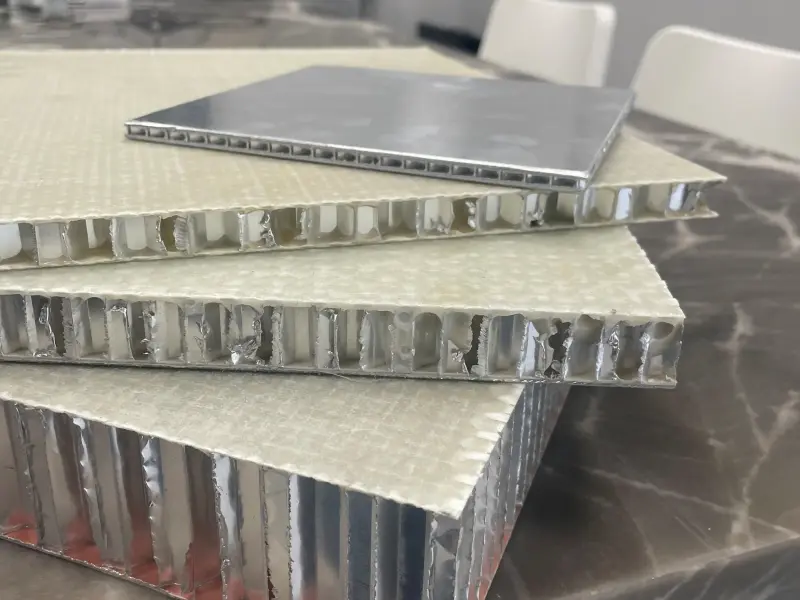
Can I use different skins?
Yes. You can bond aluminum, steel, fiberglass, or even thin stone veneers to the Aluminum Honeycomb Core for Sandwich Panels.
Aluminum Honeycomb Core for Sandwich Panels
The Aluminum Honeycomb Core for Sandwich Panels is a versatile and high-performance material. It allows engineers and architects to build bigger, lighter, and stronger structures. Whether you are working on a high-speed train or a decorative wall for a lobby, this material provides the perfect balance of strength and weight. Always choose the right alloy and cell size to match your specific application needs.