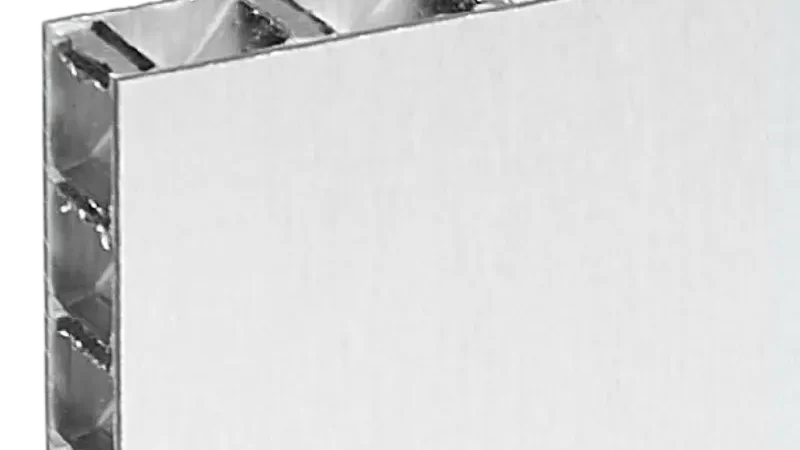
Aluminum honeycomb, a material known for its exceptional strength-to-weight ratio, has revolutionized various industries. But what if you need that strength in a curved form? Enter flexible aluminum honeycomb, a truly innovative solution that allows designers and engineers to create complex, non-planar structures without sacrificing performance.
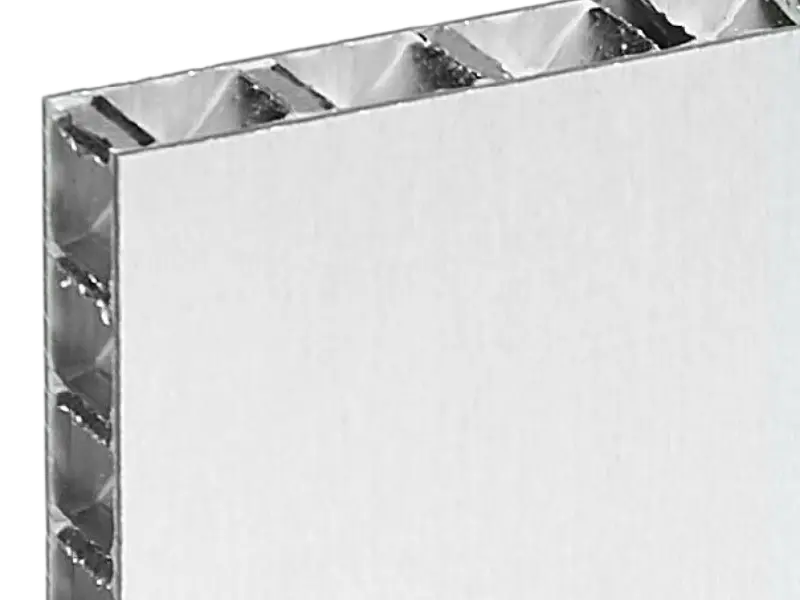
The Advantages of Flexible Aluminum Honeycomb
The unique ability of flexible aluminum honeycomb to be shaped brings a host of benefits, making it a preferred choice for many demanding applications.
- Exceptional Strength-to-Weight Ratio: This is a hallmark of all honeycomb structures.
- Design Freedom: This is arguably the most significant advantage.
- Energy Absorption: Like all honeycomb structures, flexible aluminum honeycomb exhibits excellent energy absorption properties.
- Vibration Damping: The cellular structure also helps to damp vibrations, contributing to a quieter and more stable environment.
- Corrosion Resistance: Made from aluminum, this material inherently offers good resistance to corrosion, especially when using specific aluminum alloys like 3003 or 5052, which are common in flexible aluminum honeycomb production.
- Thermal and Acoustic Insulation: The trapped air within the honeycomb cells provides a degree of thermal and acoustic insulation.
- Ease of Fabrication (for curved forms): While general honeycomb fabrication requires specific techniques.
Specifications
Flexible aluminum honeycomb comes in various specifications, allowing it to be tailored to specific project requirements. These specifications typically include cell size, foil thickness, and material alloy. The choice of these parameters depends heavily on the intended application and the required balance of strength, weight, and flexibility.
Let’s look at some common specifications. Note that actual values can vary greatly between manufacturers.
| Specification Feature | Common Ranges | Impact on Performance |
|---|---|---|
| Cell Size | 3.2mm – 19mm | Smaller cells generally mean higher density and strength, but can reduce flexibility. |
| Foil Thickness | 0.04mm – 0.12mm | Thicker foil increases strength and rigidity. Thinner foil enhances flexibility. |
| Alloy Type | 3003, 5052 | 3003 is common for general purposes; 5052 offers better corrosion resistance and strength. |
| Panel Thickness | 6mm – 300mm | Dictates the overall structural depth and rigidity of the final panel. |
Example Flexible Aluminum Honeycomb Types (Illustrative)
Here are a few illustrative examples of how different specifications might be grouped into “types” for various applications. These are not standard industry classifications but rather demonstrate the customization possible with flexible aluminium honeycomb.
| Type Designation | Cell Size (mm) | Foil Thickness (mm) | Alloy | Key Characteristics | Ideal Application |
|---|---|---|---|---|---|
| Light Curve | 6.4 | 0.05 | 3003 | High flexibility, very lightweight, moderate strength. | Interior architectural features, non-load bearing curves. |
| Medium Strength | 4.8 | 0.07 | 5052 | Balanced flexibility and strength, good corrosion. | Automotive interiors, marine panels with gentle curves. |
| Heavy Duty Flex | 3.2 | 0.10 | 5052 | Lower flexibility but higher strength for structural curves. | Aerospace components, high-stress curved surfaces. |
| Ultra Thin Flex | 9.5 | 0.04 | 3003 | Maximum flexibility, lowest weight, minimal strength. | Decorative elements, prototyping complex forms. |
These tables highlight how the interplay of cell size, foil thickness, and alloy type allows manufacturers to produce a range of flexible aluminum honeycombs products tailored to specific performance requirements.
Applications
The versatility of flexible aluminum honeycomb has led to its adoption across a wide array of industries. Its ability to form intricate shapes while maintaining high performance makes it invaluable for modern engineering and design challenges.
Here are some key application areas:
- Automotive Industry:
- Interior panels and trim with curved designs.
- Aerodynamic body components.
- Lightweight chassis parts.
- Energy-absorbing crash structures.
- Aerospace:
- Curved fuselage panels.
- Wing leading edges and fairings.
- Interior cabin components for weight reduction.
- Satellite structures requiring complex geometries.
- Architecture and Construction:
- Unique façade elements and building envelopes.
- Interior design features such as curved ceilings, walls, and partitions.
- Lightweight and decorative panels for modern structures.
- Exhibition stands and displays with flowing designs.
- Marine Industry:
- Lightweight hull and deck structures for yachts and boats.
- Interior bulkheads and cabinetry.
- Components requiring corrosion resistance and complex shapes.
- Rail Transportation:
- Interior wall and ceiling panels in train carriages.
- Exterior cladding with aerodynamic curves.
- Structural components where weight saving is crucial.
- Sporting Goods:
- Advanced composite structures for skis, snowboards, and surfboards.
- Lightweight components in bicycles and racing equipment.
- Industrial Design and Prototyping:
- Creating complex prototypes and mock-ups.
- Specialized machinery components requiring custom shapes.
- Custom enclosures and covers.
The ability to create lightweight, strong, and aesthetically pleasing curved structures makes flexible aluminum honeycomb a go-to material for innovation in these fields and beyond.
Flexible aluminum honeycomb for sale
Flexible aluminum honeycomb represents a significant advancement in material science, offering an unprecedented combination of strength, lightness, and adaptability. As industries continue to demand more efficient, lightweight, and customizable solutions, flexible aluminum honeycomb will undoubtedly play an even more critical role in the innovations of tomorrow.