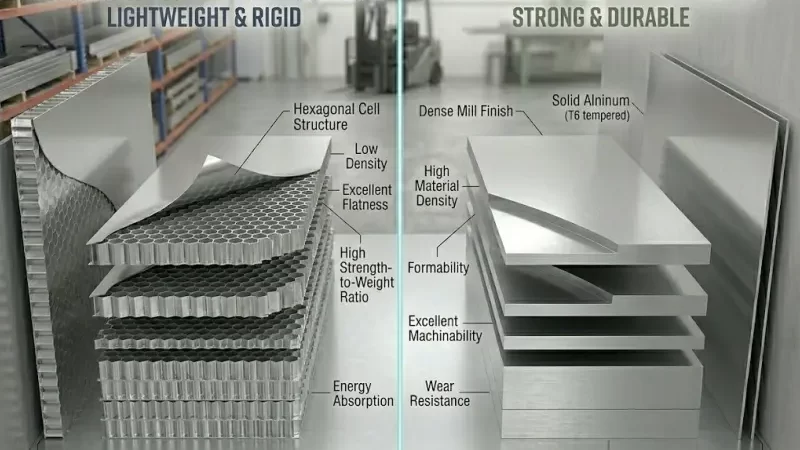
Aluminum Honeycomb Core vs Solid Aluminum When choosing materials for construction, transport, or design, aluminum is a top candidate. However, you must often decide between two different forms: Aluminum Honeycomb Core (usually as part of a sandwich panel) and Solid Aluminum sheets.
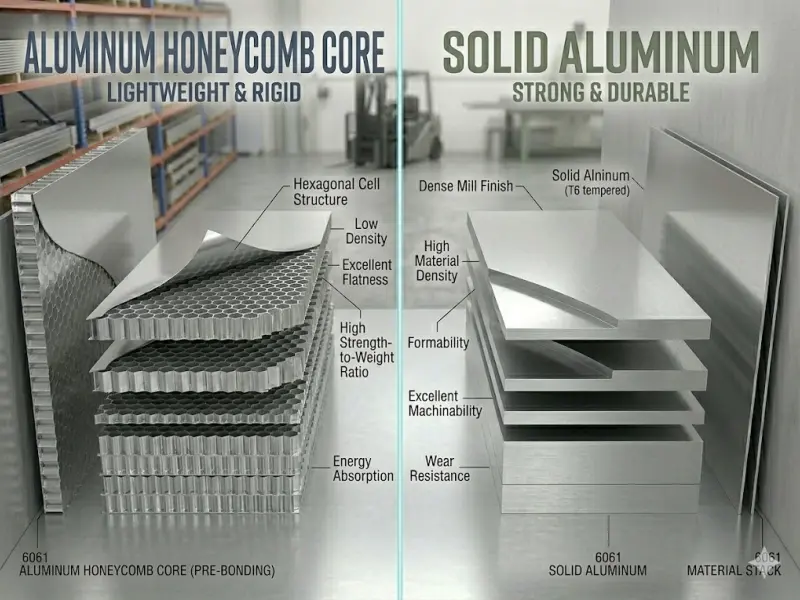
Both materials have unique strengths. One is famous for being incredibly light, while the other is known for its ruggedness and ease of fabrication.

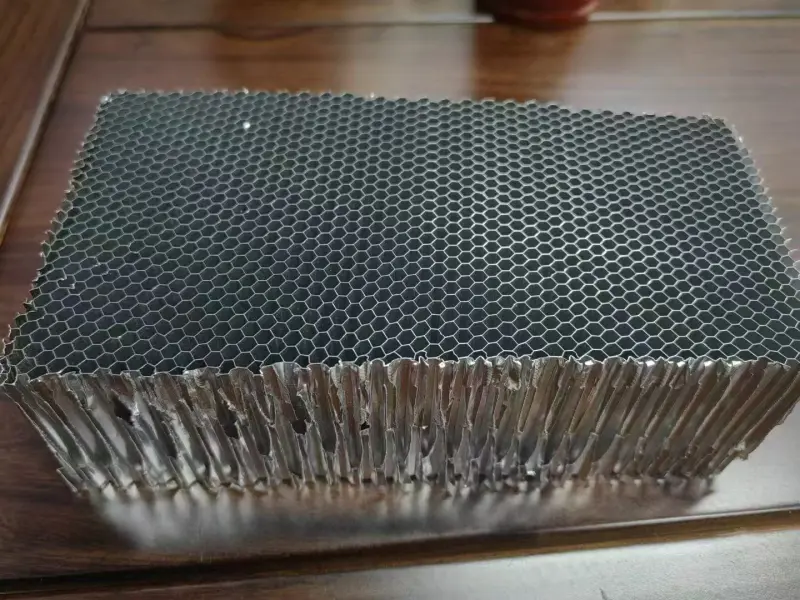
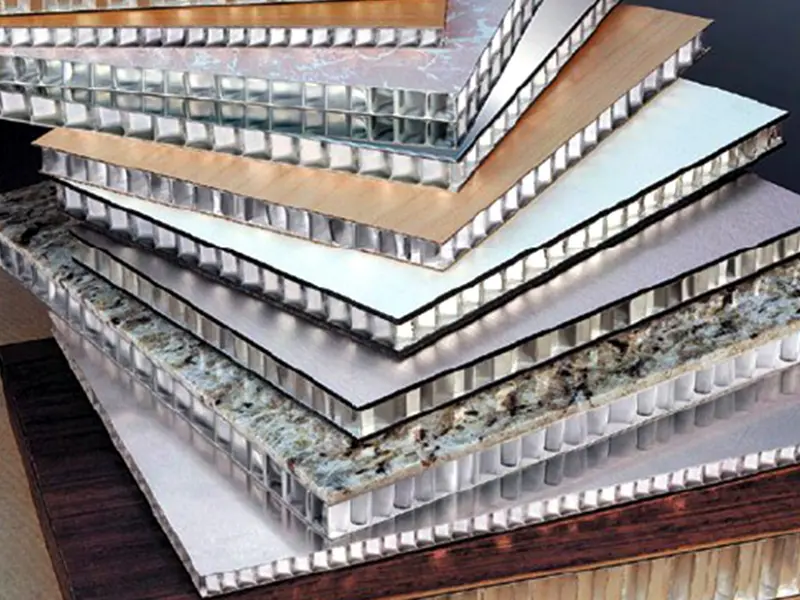
What is Aluminum Honeycomb Core?
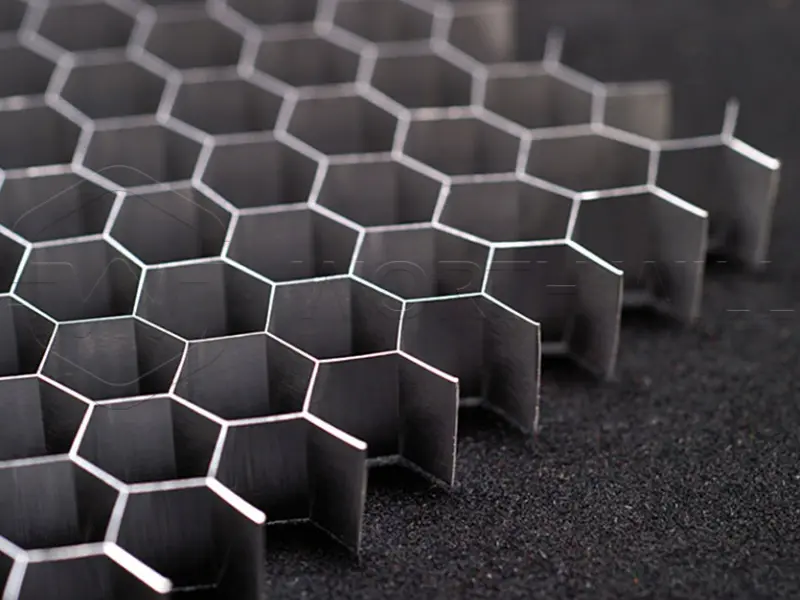
An aluminum honeycomb core is a structure made of thin aluminum foils bonded together to form hexagonal cells. When placed between two aluminum skins, it creates a “sandwich panel.” This structure mimics a natural beehive. It provides the highest strength-to-weight ratio of any structural configuration.
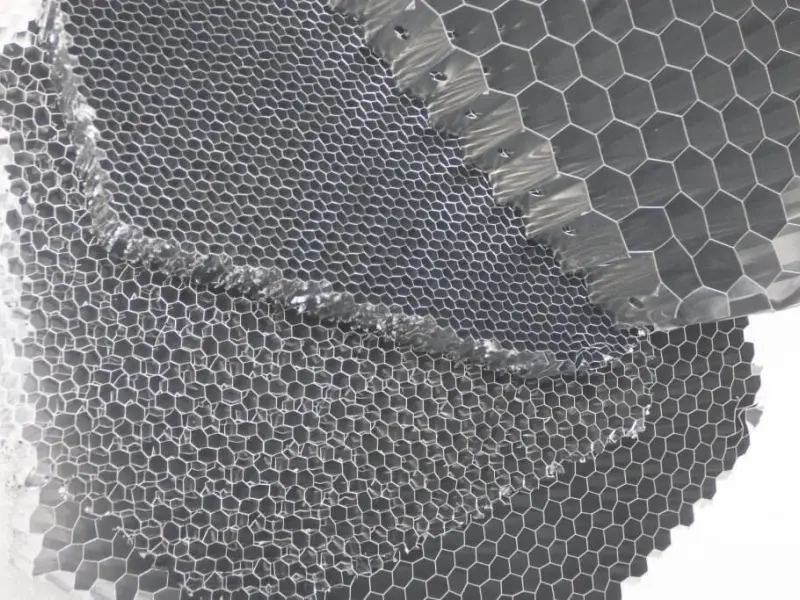
What is Solid Aluminum?
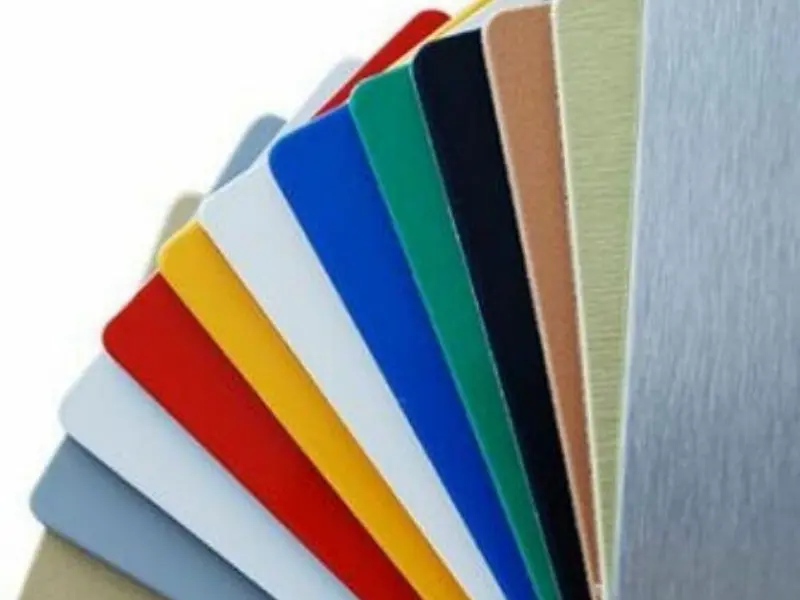
Solid aluminum refers to a flat, solid sheet or plate of aluminum alloy. It has a uniform thickness and density throughout. It is the traditional choice for many industrial applications because it is easy to cut, weld, and bend.
Technical Specifications: Alloys and Tempers
The performance of both materials depends on the chemistry of the metal. Most industrial aluminum uses specific alloys to improve hardness and corrosion resistance.
Common Aluminum Alloys
| Alloy Type | Honeycomb Core Use | Solid Aluminum Use | Features |
|---|---|---|---|
| Alloy 3003 | Very Common | Common | Good corrosion resistance and workability. |
| Alloy 5052 | High-end/Marine | Popular | High strength and excellent marine-grade quality. |
| Alloy 1100 | Rarely used | Decorative | High purity, very soft, good for spinning. |
| Alloy 6061 | Not used for core | Heavy Plates | Structural grade; used for frames and parts. |
State and Temper (Hardness)
- H19 (Extra Hard): This is the standard state for aluminum honeycomb core foils. It makes the thin walls very rigid.
- H14 / H24 (Half Hard): These are common for solid aluminum sheets. They offer a balance between strength and the ability to bend without cracking.
Direct Comparison: Head-to-Head
To understand Aluminum Honeycomb Core vs Solid Aluminum, we need to look at how they perform in real-world scenarios.
| Feature | Aluminum Honeycomb Panel | Solid Aluminum Sheet |
|---|---|---|
| Weight | Extremely Light | Heavy (at same thickness) |
| Rigidity | Superior (does not bend) | Flexes easily |
| Flatness | Stays perfectly flat | Can warp or “oil-can” |
| Impact Resistance | Good (absorbs energy) | Excellent (very tough) |
| Fabrication | Requires special edges | Very easy to cut/weld |
| Cost | Higher per square meter | Lower per kilogram |
| Fire Rating | Class A1 (Non-combustible) | Class A1 (Non-combustible) |
Different Product Types and Varieties
There are many versions of these materials available on the market.
Types of Aluminum Honeycomb Products
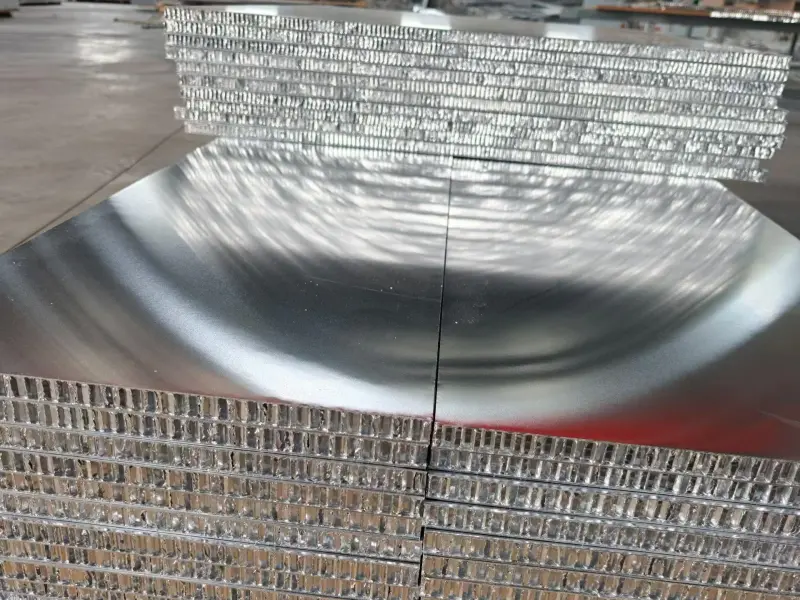
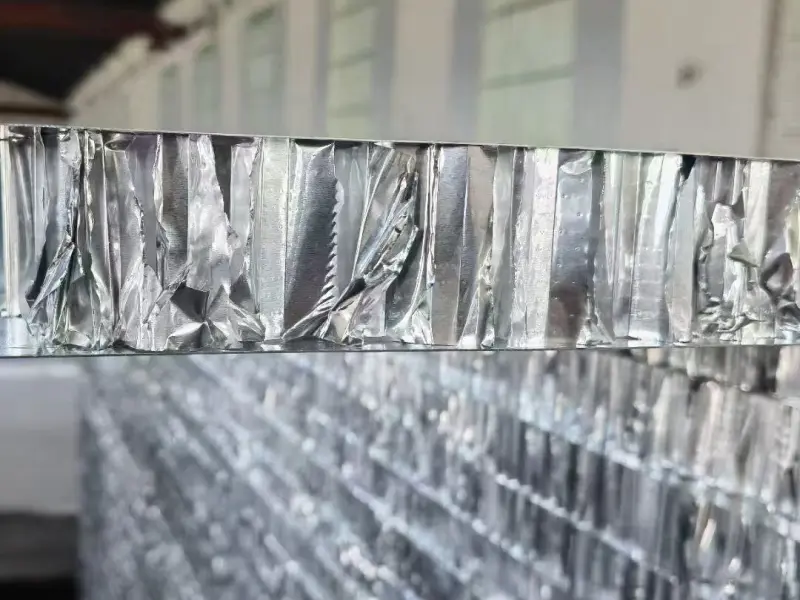
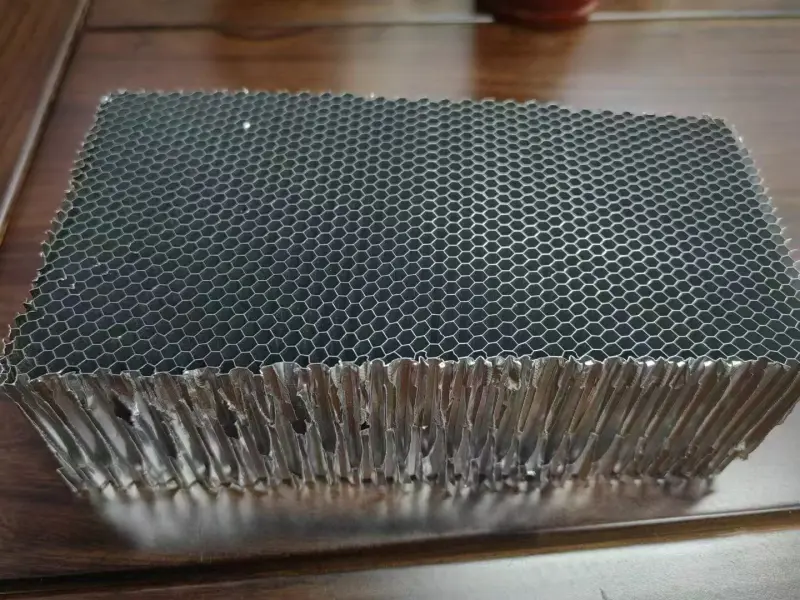
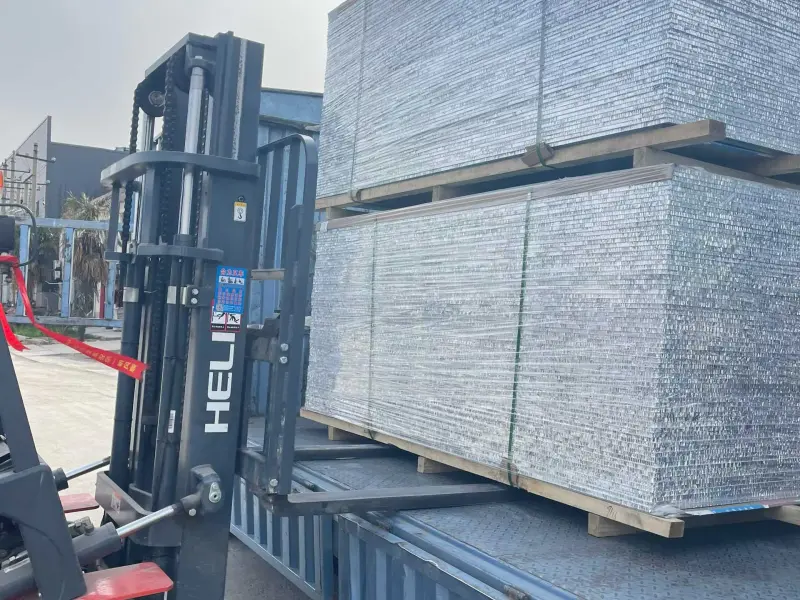
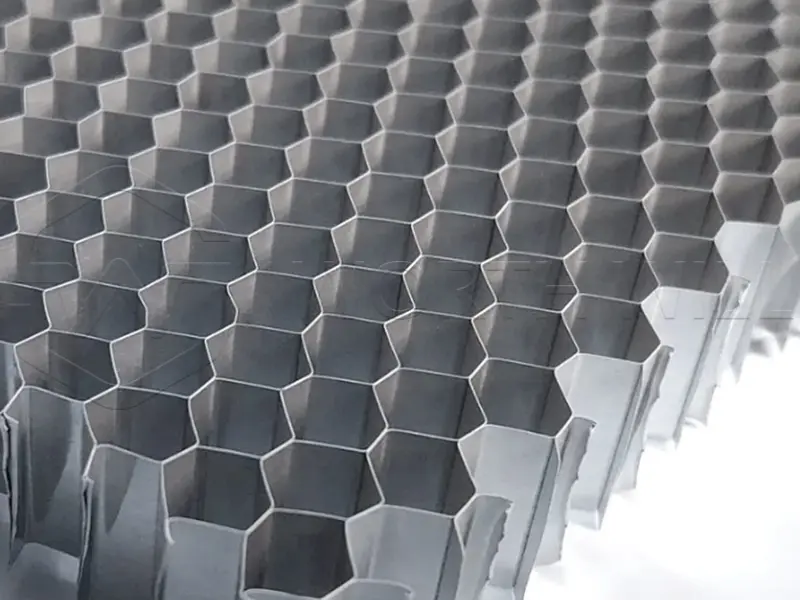
- Standard Hexagonal Core: The most efficient shape for general strength.
- Micro-Cell Honeycomb: Very small cells (below 3.2mm) for high-precision air filtration.
- Perforated Core: Small holes in the cell walls to allow air to flow between cells.
- Angled Honeycomb: Cells are cut at an angle to act as a sunshield or “louver.”
Types of Solid Aluminum Products
- Mill Finish: Raw aluminum with no coating.
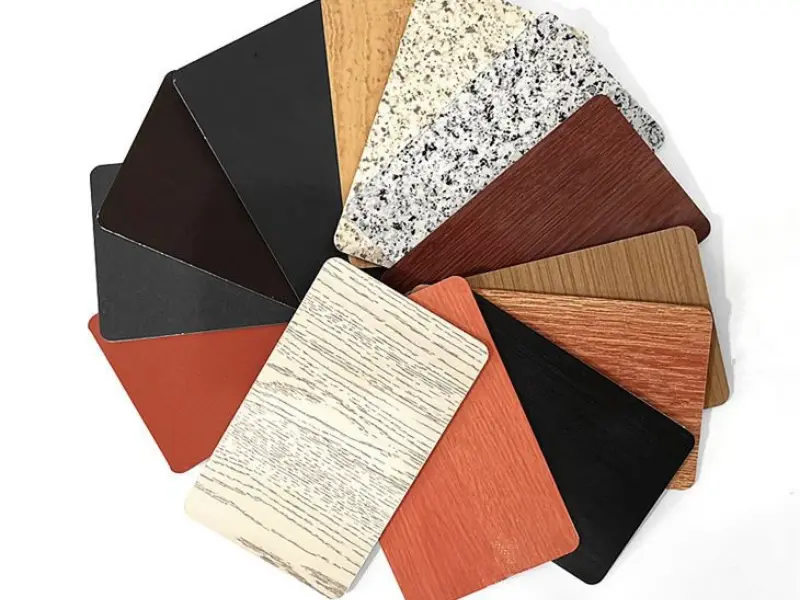
- Anodized Sheet: A hard, protective oxide layer that adds color and scratch resistance.
- Powder Coated: Painted with a durable plastic-like finish in any color.
- Tread Plate (Chequer): Features a raised pattern for non-slip flooring.
Digital Specifications: Sizes and Thickness
We provide both materials in various sizes to meet project requirements.
Honeycomb Core Dimensions
| Parameter | Specification |
|---|---|
| Cell Size | 3.2mm to 25mm |
| Foil Thickness | 0.03mm to 0.1mm |
| Core Height | 3mm to 300mm |
| Standard Sheet Size | 1220×2440mm |
Solid Aluminum Dimensions
| Parameter | Specification |
|---|---|
| Sheet Thickness | 0.5mm to 10mm |
| Plate Thickness | 12mm to 100mm |
| Standard Width | 1000mm, 1250mm, 1500mm |
| Max Length | Up to 6000mm |
Application Areas: Which One Where?
Where you use the material depends on your specific goals.
Use Aluminum Honeycomb Panel If:
- Weight is critical: Used in airplane interiors, high-speed trains, and yacht furniture.
- You need large flat surfaces: Perfect for massive building facades where solid metal would buckle or look wavy.
- Acoustics and Insulation: The air trapped in the cells provides better sound dampening than solid metal.
- Cleanrooms: Used for walls and ceilings because the panels are light and perfectly straight.
Use Solid Aluminum If:
- Heavy fabrication is needed: If you need to weld many parts together or make complex curves.
- Impact is a concern: For truck flooring or industrial machinery guards that might get hit by heavy objects.
- Small, detailed parts: For making brackets, small signs, or precision-machined components.
- Budget is tight: For small projects where the high technology of honeycomb is not necessary.
Pros and Cons Summary
Aluminum Honeycomb
- Pros: Incredible stiffness, lightweight, eco-friendly, energy-absorbent.
- Cons: Harder to join/weld, more expensive, requires “edge closing” to hide the core.
Solid Aluminum
- Pros: Easy to buy and work with, very durable, widely understood by all workshops.
- Cons: Heavy, can vibrate/noise (drumming effect), can bend under its own weight if the sheet is large.
Frequently Asked Questions (FAQ)
Is aluminum honeycomb fireproof?
Yes. Since it is made entirely of metal (aluminum foil), it is non-combustible. It is often used in high-rise buildings because it meets strict fire safety codes.
Can you weld solid aluminum to a honeycomb panel?
You can weld to the skins of a honeycomb panel, but you must be careful not to melt the glue that holds the core inside. Usually, mechanical fasteners (rivets/bolts) are better for honeycomb panels.
Why is honeycomb better for “flatness”?
Solid aluminum has internal stresses from the rolling process. When it gets hot, it can expand and “bulge.” Honeycomb panels have a core that acts like a bridge, holding the skins flat in all directions.
Which Is Better?
There is no single winner in the battle of Aluminum Honeycomb Core vs Solid Aluminum.
- Choose Aluminum Honeycomb if you are building something large that must be light and perfectly flat, such as a modern building facade or the interior of a ship.
- Choose Solid Aluminum if you are building smaller parts, need high impact resistance, or are working with a limited budget and standard tools.
Both materials offer the great benefits of aluminum: they are 100% recyclable, rust-resistant, and look great. By understanding the mechanical differences, you can ensure your project is built to last.