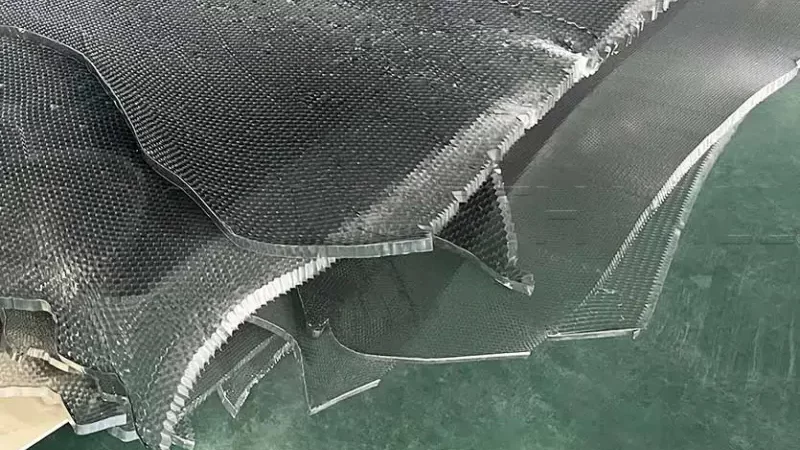
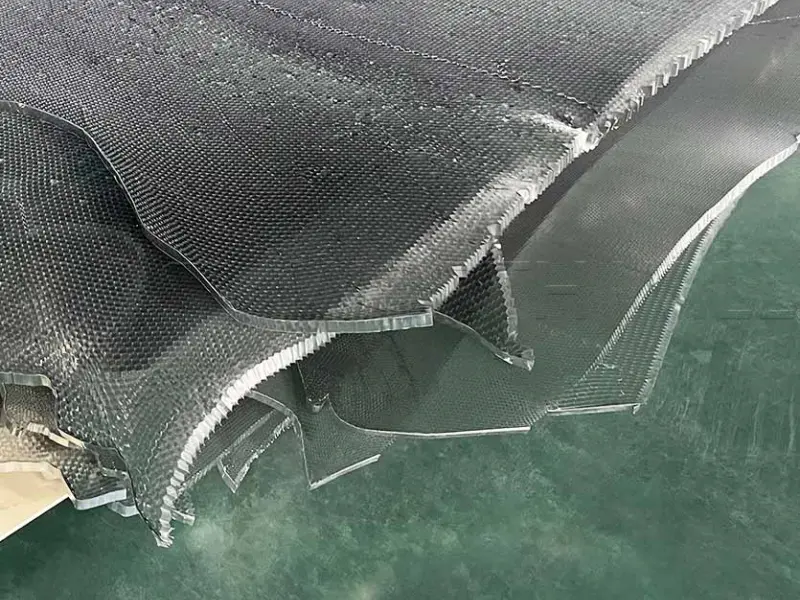
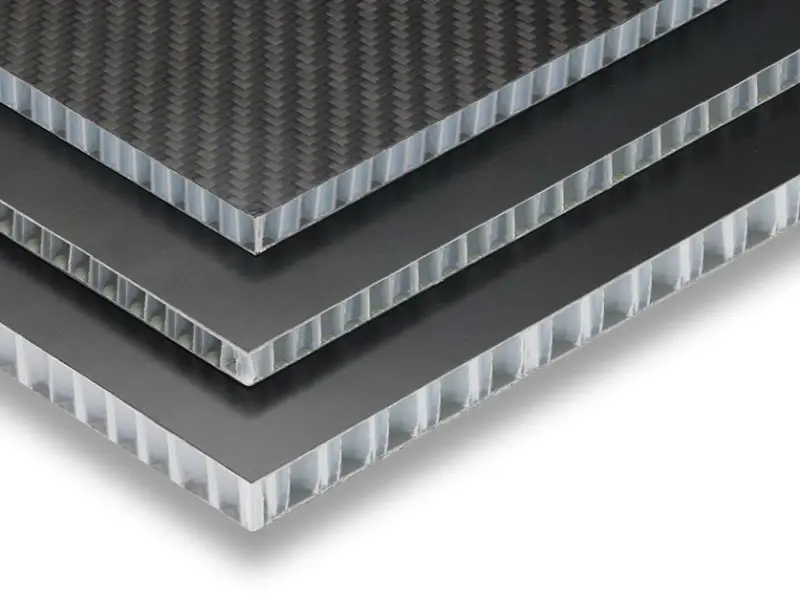
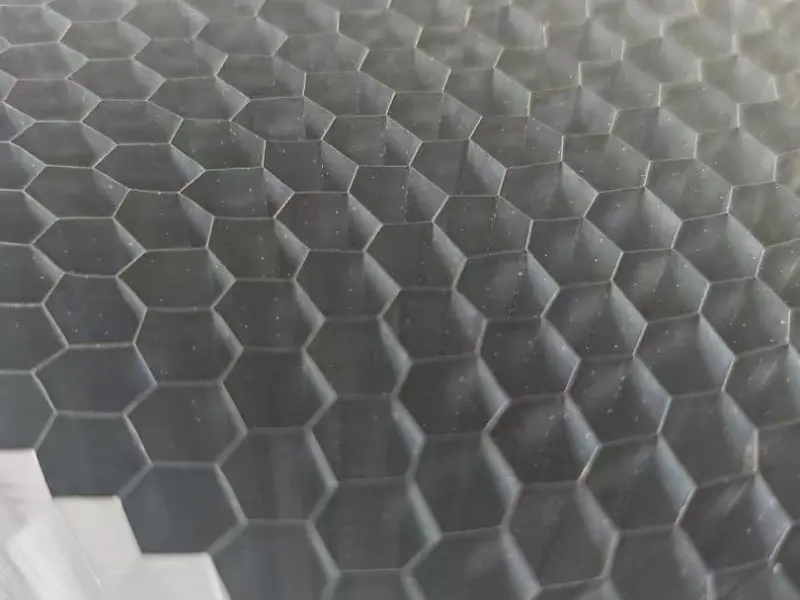
4×8 Aluminum Honeycomb Core Price is a top choice for industries that need lightweight but strong materials. Its structure mimics the natural honeycomb of bees. This design provides a very high strength-to-weight ratio.
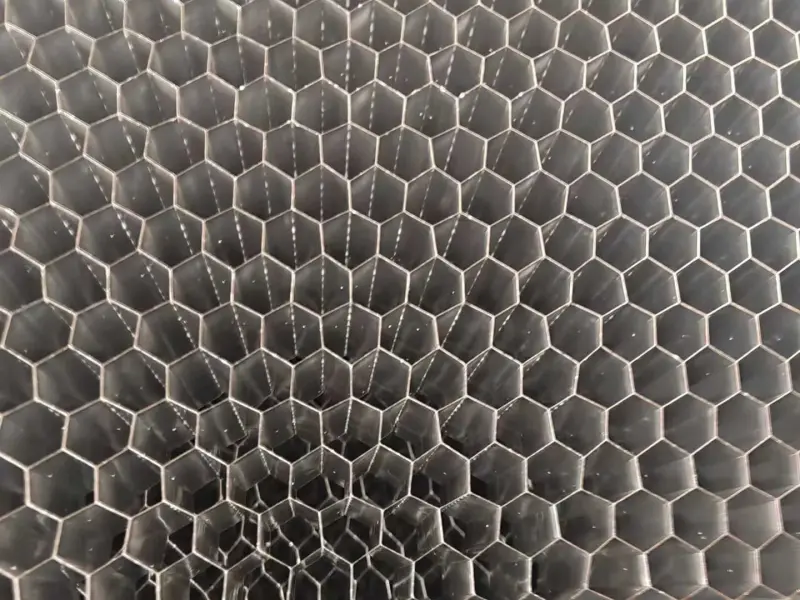
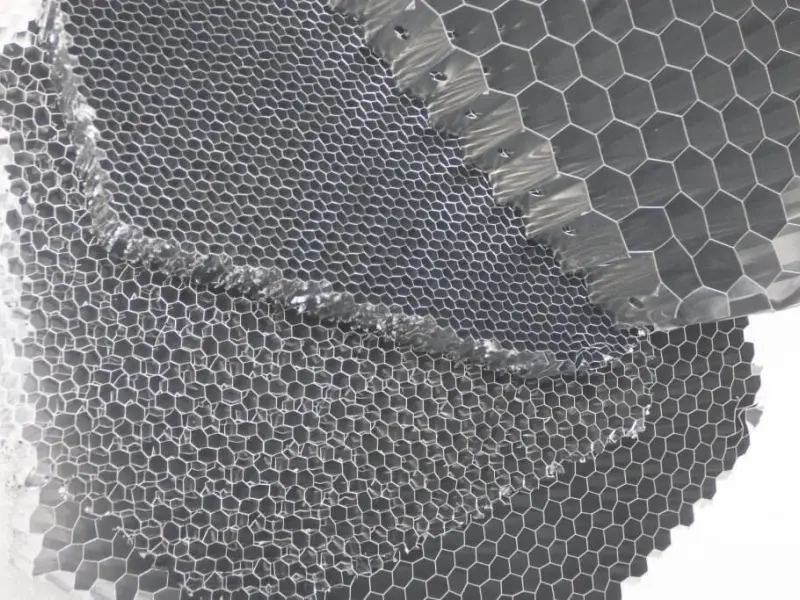
Technical Specifications
When choosing a honeycomb core, you must look at the cell size, foil thickness, and alloy type. These factors determine the performance of the panel.
Core Geometry Specifications
| Feature | Common Range (inches/mm) |
|---|---|
| Standard Sheet Size | 4 feet x 8 feet (1220 mm x 2440 mm) |
| Cell Size (Diameter) | 1/8 inch, 1/4 inch, 3/8 inch, 1/2 inch, 3/4 inch |
| Foil Thickness | 0.0015 inch to 0.006 inch (0.04 mm to 0.15 mm) |
| Core Thickness (Height) | 0.2 inch to 20 inches (5 mm to 500 mm) |
Alloy Types and States
The type of aluminum alloy used changes the strength and the 4×8 Aluminum Honeycomb Core Price.
3003 Aluminum Alloy
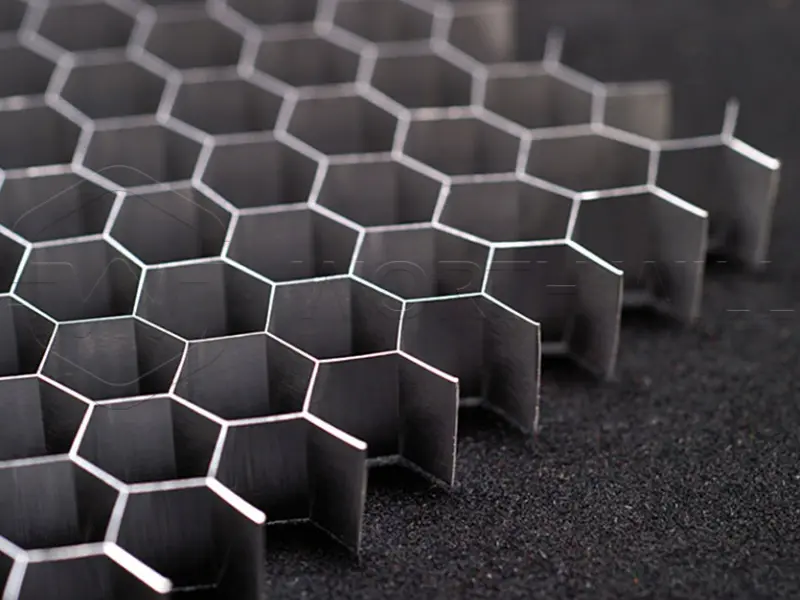
This is the most common alloy for commercial use. It contains manganese, which makes it strong and easy to work with. It is used for standard wall panels and furniture.
5052 Aluminum Alloy
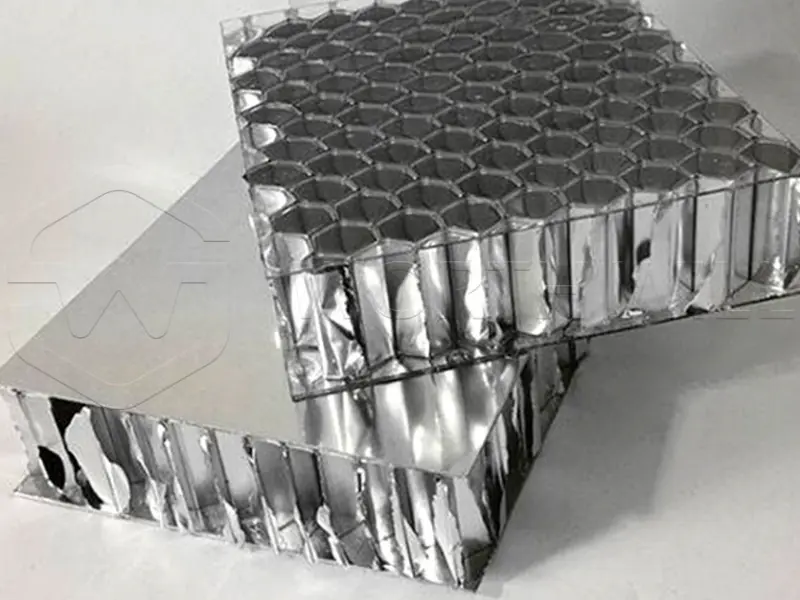
This is a high-strength alloy. It contains magnesium. It is much stronger than 3003 and offers better resistance to salt water and the best choice for aerospace and marine projects.
Temper and State
Most honeycomb cores are supplied in the H18 or H19 state. These are “extra hard” tempers. They ensure the cell walls stay crisp and do not collapse easily during the bonding process.
Different Types of Aluminum Honeycomb Cores
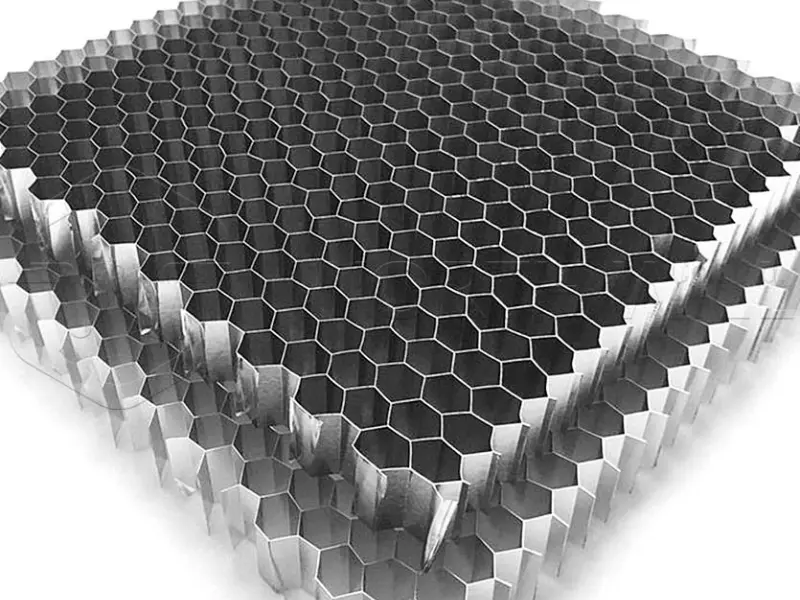
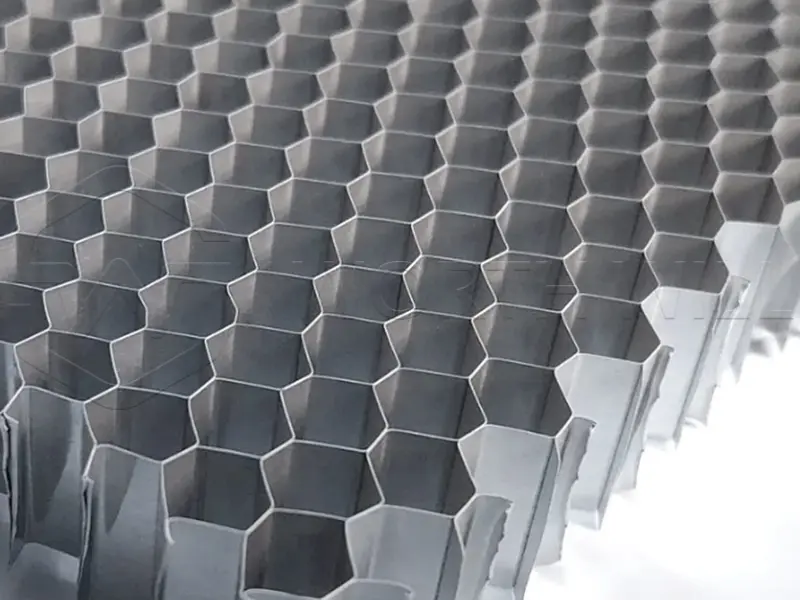
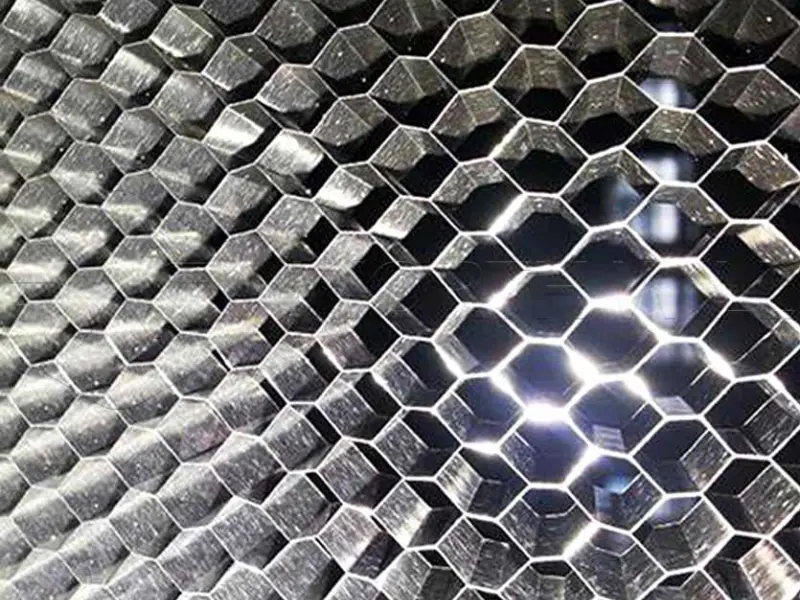
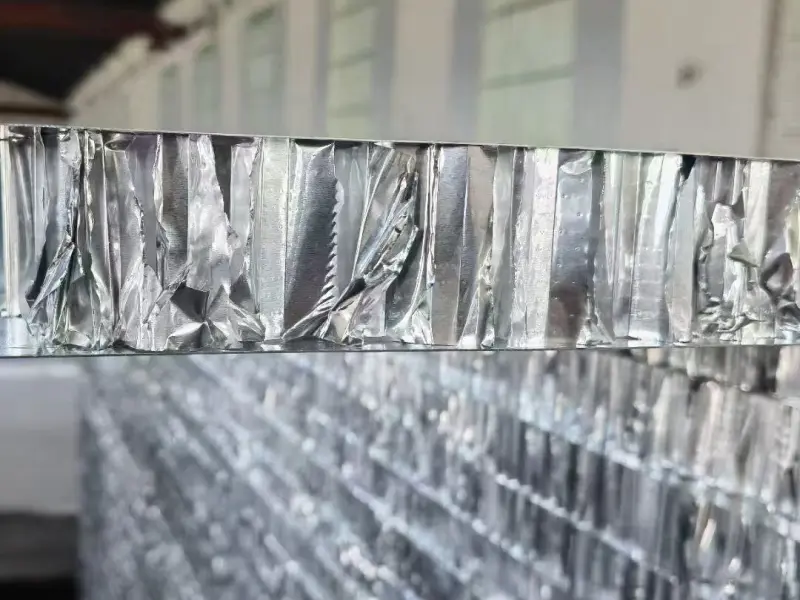
Not all honeycomb cores are the same. They are categorized by their cell size and how they are delivered to the customer.
1. Expanded vs. Unexpanded
- Unexpanded (Block) Form: The core is shipped as a tight block of aluminum. This saves space and reduces shipping costs. The customer must pull the material to expand it.
- Expanded Form: The core is already pulled into its hexagonal shape. It is ready for immediate use in a 4×8 Aluminum Honeycomb panel.
2. Micro-Cell Honeycomb
These cores have very small cell sizes, such as $$1/8$$ inch or smaller. They provide a very smooth surface for thin skins. They are often used in high-end electronics and specialized filters.
3. Macro-Cell Honeycomb
These have larger cells, like 3/4 inch or 1 inch. They are cheaper and lighter. They are perfect for thick architectural panels where weight is more important than surface precision.
4. Perforated Honeycomb Core
In some cases, the cell walls have tiny holes. This allows air to move between cells. It is useful in environments with changing pressure or temperature to prevent the panel from “blowing up” or sucking in.
Applications of 4×8 Aluminum Honeycomb Core
The applications for this material are growing every year. Because a 4×8 sheet is easy to handle, it is used in many fields.
Aerospace and Transportation
- Aircraft Interiors: Used for flooring, partitions, and galley walls to save fuel.
- Railroad Cars: Interior doors and ceilings for high-speed trains.
- Marine Bulkheads: Lightweight walls for yachts and commercial ships that resist moisture.
Architecture and Construction
- Curtain Walls: Large exterior building panels that stay flat without heavy steel support.
- Cleanroom Panels: Used in pharmaceutical and microchip factories because it does not shed particles.
- Elevator Cabins: Reducing the weight of the elevator car allows for faster movement and less energy use.
Industrial Equipment
- Laser Cutting Beds: The honeycomb structure supports the material but lets the laser beam and smoke pass through.
- Air Flow Straighteners: Used in wind tunnels or large vents to make air move in a straight line.
- EMI Shielding: Protecting sensitive electronics from electromagnetic interference.
Furniture and Design
- Large Tables: Creating very long conference tables that do not sag in the middle.
- Art Installations: Lightweight structures for galleries and public spaces.
4×8 Aluminum Honeycomb Core Price Factors
If you are looking for the 4×8 Aluminum Honeycomb Core Price, you will notice it varies. Here is what affects the cost:
- Cell Size: Smaller cells mean more aluminum foil is used. This increases the weight and the cost.
- Foil Thickness: Thicker foil ($$0.003$$ vs $$0.002$$) makes the core stronger but more expensive.
- Alloy Choice: $$5052$$ alloy is generally more expensive than $$3003$$ alloy.
- Quantity: Buying a single sheet is much more expensive than buying in bulk from honeycomb core manufacturers.
- Surface Treatment: Some cores are coated with a chemical conversion coating (like chromate) to increase bonding strength and corrosion resistance.
Price Comparison Overview
| Configuration | Relative Price Level | Best For |
|---|---|---|
| $$3003$$ Alloy / $$3/4$$” Cell | Low | Interior walls, simple furniture |
| $$3003$$ Alloy / $$1/4$$” Cell | Medium | Standard architectural panels |
| $$5052$$ Alloy / $$1/8$$” Cell | High | Aerospace, racing, high-load tools |
Why Buy 4×8 Sheets?
Buying in the 4×8 format is the industry standard for a reason. Most “skins” like aluminum sheets, plywood, or HPL also come in 4×8 sizes. This makes the “sandwich” bonding process much easier.
- Less Waste: It matches the standard sizes of CNC machines and presses.
- Easy Shipping: Standard pallets are built to hold 4×8 materials.
- Versatility: You can cut multiple smaller parts from one large 4×8 sheet.
How to Work with Aluminum Honeycomb Core
If you buy an aluminum honeycomb sheets price deal, you need to know how to use it.
- Expansion: If you buy unexpanded blocks, use a specialized expansion table to pull the core evenly.
- Cutting: You can cut the core using a band saw, a sharp knife, or a CNC router.
- Bonding: Use epoxy or polyurethane adhesives to attach skins (like aluminum or carbon fiber) to the core. This creates a “sandwich panel.”
- Edge Closing: Since the edges are open cells, you can use “C-channels” or “filling compounds” to seal the sides for a finished look.
Technical Data: Strength vs. Density
| Cell Size (in) | Foil Thickness (in) | Density (lb/ft³) | Compressive Strength (psi) |
|---|---|---|---|
| 1/8 | 0.002 | 8.1 | 1150 |
| 1/4 | 0.002 | 4.3 | 450 |
| 3/8 | 0.002 | 3.0 | 240 |
| 1/2 | 0.003 | 3.1 | 270 |
Note: These values are estimates for $$3003$$ alloy. Actual values depend on the manufacturer.
What is a 4×8 Aluminum Honeycomb Core?
A 4×8 sheet refers to the standard size of 48 inches by 96 inches. This size is very popular in construction and manufacturing. The core consists of thin aluminum foils bonded together. When expanded, they form hexagonal cells.
Key Material Features
- High Rigidity: It resists bending even under heavy loads.
- Lightweight: It is much lighter than solid aluminum sheets.
- Fire Resistance: Aluminum does not burn and is safe for buildings.
- Corrosion Resistance: Specially treated alloys last a long time in wet environments.
Frequently Asked Questions
Can I get custom sizes instead of 4×8?
Yes. While 4×8 is standard, honeycomb core manufacturers can often provide widths up to $$5$$ feet and lengths up to $$10$$ or $$12$$ feet.
Is the honeycomb core waterproof?
Aluminum itself does not absorb water. However, if water gets inside the cells and stays there, it can lead to corrosion over many years. Using $$5052$$ alloy or perforated cells helps manage moisture.
What is the difference between a core and a panel?
The honeycomb core is just the “inside” material (the hexagonal cells). A honeycomb panel is the finished product with top and bottom skins glued to the core.
4×8 Aluminum Honeycomb Core For Sale
The 4×8 Aluminum Honeycomb Core is a revolutionary material for modern engineering. It offers the perfect balance of low weight and high durability. When checking the 4×8 Aluminum Honeycomb Core Price and Specifications, always consider your specific needs for alloy type and cell size. Whether you are building a high-speed train, a modern skyscraper, or a lightweight racing boat, this material provides the strength you need without the weight you don’t.