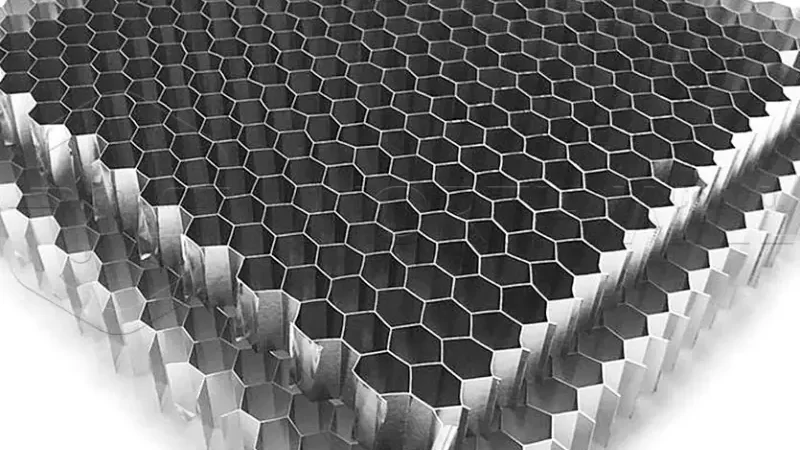
Welcome to our comprehensive guide on aluminum honeycomb core specifications. If you are looking for a lightweight, high-strength material for aerospace, marine, or architectural projects, understanding these specifications is the first step toward success.
An aluminum honeycomb core is a structural material inspired by nature’s hexagonal beehive design. It offers an incredible strength-to-weight ratio. However, not all cores are the same. In this article, we will break down the technical details, including cell sizes, foil thicknesses, and alloy types, to help you make an informed decision.
What is an Aluminum Honeycomb Core?
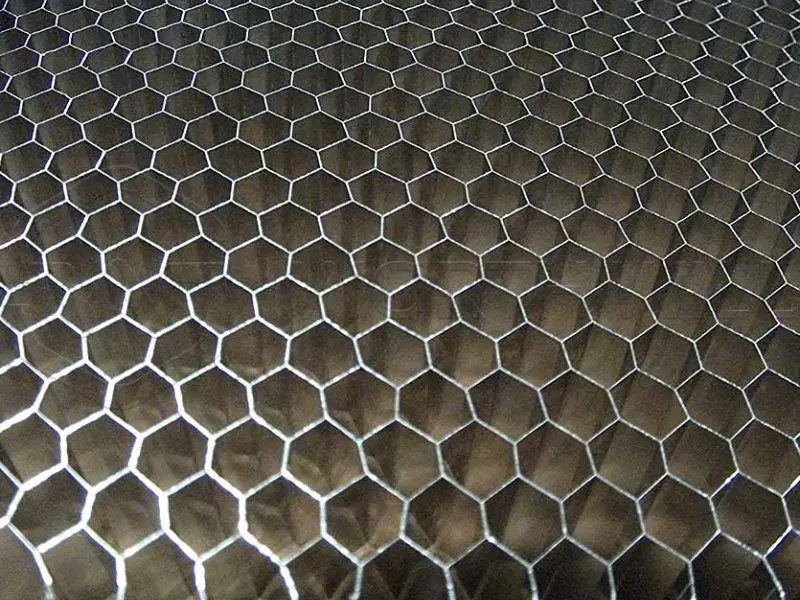
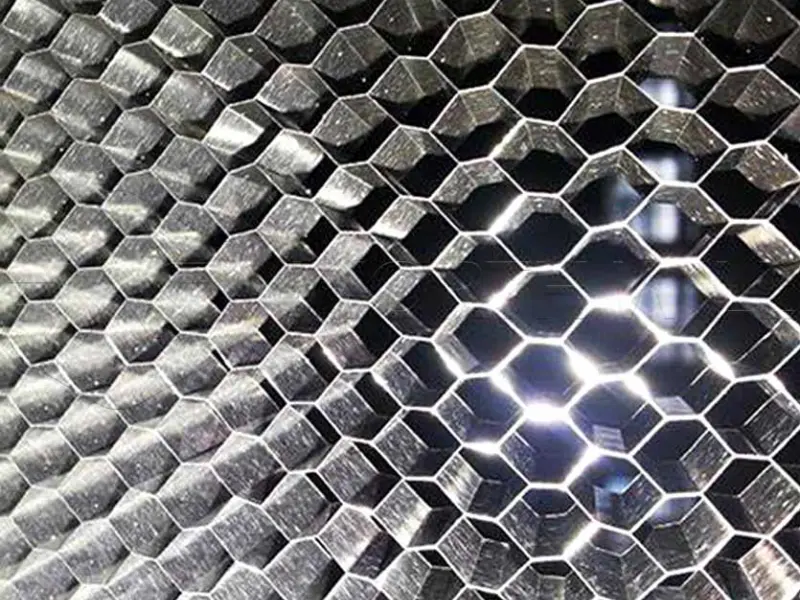
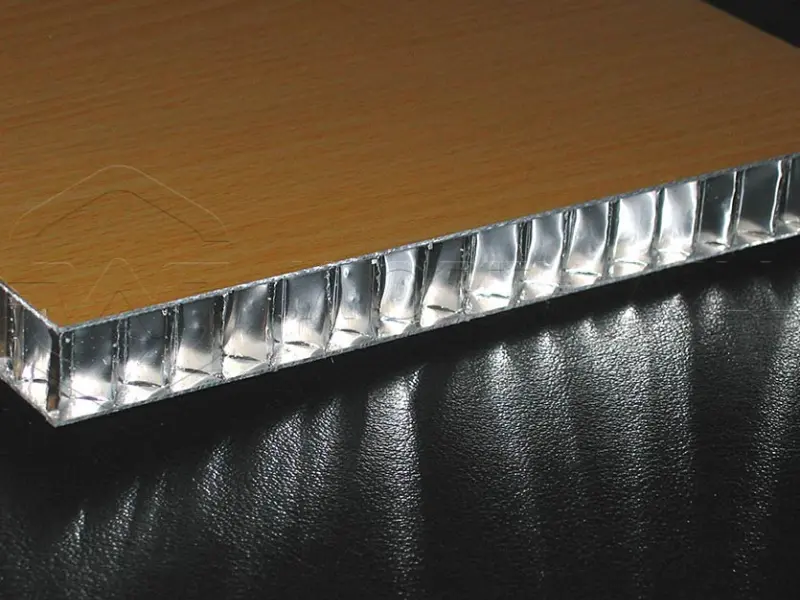
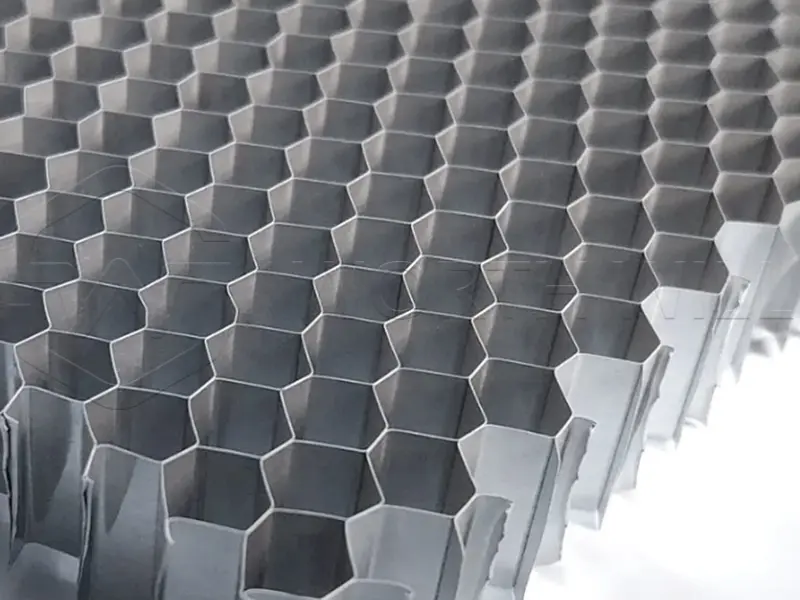
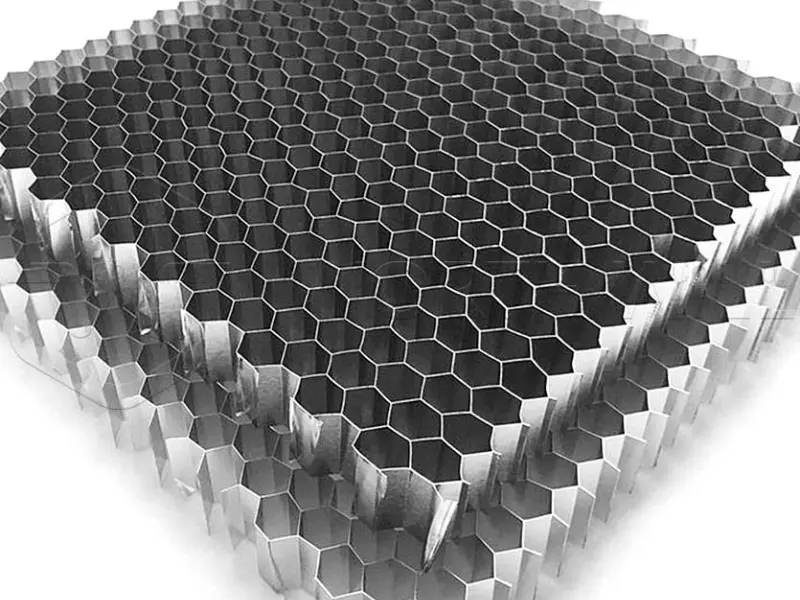
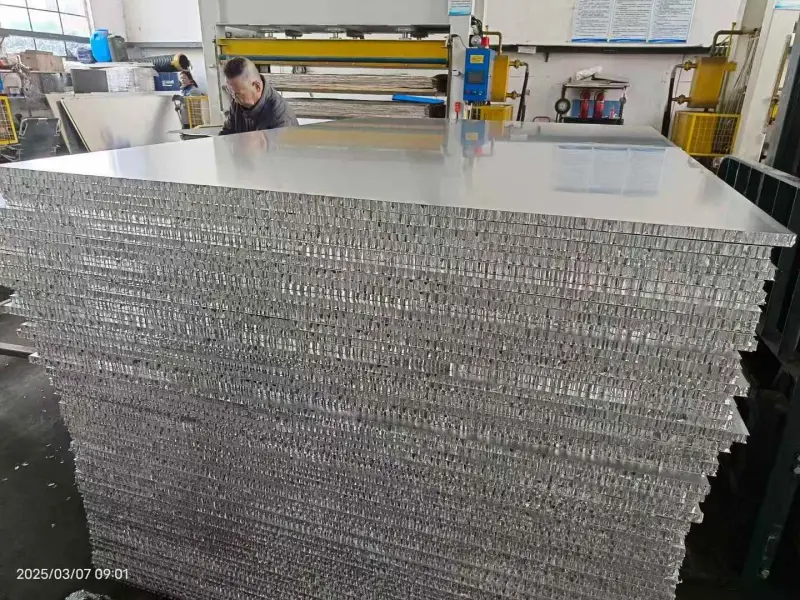
Before diving into the aluminum honeycomb core specifications, it is important to understand what this material is. It consists of thin aluminum foils bonded together in a series of hexagonal cells. When sandwiched between two skins (like aluminum or carbon fiber), it creates a panel that is extremely rigid but very light.
At our facility, we focus on precision manufacturing to ensure that every aluminum honeycomb core specification meets international standards for safety and performance.
Key Material Grades: Alloy 3003 vs. Alloy 5052
The first part of any aluminum honeycomb core specification is the alloy used. The choice of alloy determines the core’s corrosion resistance and mechanical strength.
Table 1: Alloy Grade Comparison
| Feature | Alloy 3003 | Alloy 5052 |
|---|---|---|
| Category | Commercial / Industrial Grade | Aerospace / Marine Grade |
| Main Element | Manganese (Mn) | Magnesium (Mg) |
| Strength | Medium | High |
| Corrosion Resistance | Good | Excellent (Saltwater resistant) |
| Common Uses | Architecture, HVAC, Furniture | Aircraft, High-speed trains, Boats |
| Cost | More Economical | Premium |
Detailed Geometric Specifications
The geometry of the core is defined by two main factors: the cell size (d) and the foil thickness (t). These two numbers define the density and strength of the final product.
Table 2: Standard Cell Sizes and Foil Thicknesses
| Cell Size (Inches) | Cell Size (mm) | Foil Thickness (mm) | Typical Density (kg/m3) |
|---|---|---|---|
| 1/30″ | 0.8 mm | 0.03 to 0.04 | 140−200 |
| 1/8″ | 3.2 mm | 0.04 to 0.06 | 80−130 |
| 3/16″ | 4.8 mm | 0.04 to 0.08 | 50−90 |
| 1/4″ | 6.4 mm | 0.05 to 0.10 | 40−80 |
| 3/8″ | 9.5 mm | 0.06 to 0.12 | 30−60 |
| 1/2″ | 12.7 mm | 0.07 to 0.15 | 25−50 |
| 3/4″ | 19.0 mm | 0.08 to 0.20 | 20−40 |
Mechanical Properties: Strength and Compression
When engineers review aluminum honeycomb core specifications, they look closely at mechanical performance. The smaller the cell size and the thicker the foil, the higher the compression strength.
Table 3: Mechanical Performance Estimates (Alloy 3003)
| Cell Size (mm) | Foil Thickness (mm) | Bare Compressive Strength (MPa) | Shear Strength (MPa) |
|---|---|---|---|
| 3.2 | 0.04 | 3.5−4.2 | 1.5−2.0 |
| 4.8 | 0.05 | 2.8−3.5 | 1.2−1.6 |
| 6.4 | 0.06 | 1.8−2.5 | 0.8−1.2 |
| 9.5 | 0.08 | 1.2−1.8 | 0.5−0.9 |
Note: These values are approximate. Actual performance depends on the bonding adhesive and production quality.
Understanding Delivery Forms: Expanded vs. Unexpanded
Table 4: Delivery Form Specifications
| Form Type | Description | Pros | Cons |
|---|---|---|---|
| Unexpanded (Slice) | A solid block of compressed aluminum foils. | Low shipping cost; easy to store. | Requires an expansion machine to use. |
| Expanded (Sheet) | Fully opened hexagonal cells. | Ready for immediate bonding/use. | High shipping volume; prone to damage. |
Applications of Aluminum Honeycomb Core
Because of the diverse aluminum honeycomb core specifications available, this material is found in many industries.
Industrial and Commercial Applications:
- Aerospace: Used in aircraft wings, floors, and interior partitions for weight reduction.
- Marine Industry: Building lightweight boat hulls, decks, and cabin walls.
- Architecture: External wall cladding, cleanroom ceilings, and decorative partitions.
- Transportation: Floors and doors for high-speed trains, buses, and RVs.
- Industrial Equipment: Laser cutting beds, wind tunnel air straighteners, and EMI shielding.
- Electronics: Heat sinks and ventilation grilles for high-power machinery.
Surface Treatment and Micro-perforations
In professional aluminum honeycomb core specifications, surface finish and air pressure management are critical.
- Micro-perforations: Small holes in the cell walls allow air to move between cells. This is vital for vacuum bonding processes and preventing “ballooning” during high-altitude transport.
- Chemical Conversion Coating: Often called “Chromate” or “Non-chromate” coating. This treatment improves the adhesion of the glue and prevents the aluminum from oxidizing over time.
Table 5: Surface Treatment Options
| Treatment Type | Benefit | Best For |
|---|---|---|
| Degreased | Removes rolling oils for basic bonding. | Low-cost furniture |
| Chemical Coating | Maximum bond strength and rust protection. | Aerospace & Marine |
| Perforated | Allows air/gas flow between cells. | Vacuum pressing/Curved panels |
Dimensional Tolerances
In precision engineering, aluminum honeycomb core specifications must include strict tolerances. Small errors in thickness can lead to bonding failures in sandwich panels.
Table 6: Standard Manufacturing Tolerances
| Dimension | Tolerance Range |
|---|---|
| Thickness (T) | +/−0.1 mm to +/−0.2 mm |
| Length (L) | +10 mm/−0 mm |
| Width (W) | +10 mm/−0 mm |
| Cell Size (d) | +/−5% |
| Foil Thickness (t) | +/−0.005 mm |
How to Choose the Right Specifications
Selecting the correct aluminum honeycomb core specification involves balancing weight, strength, and budget.
- Identify the Load: If the panel will face heavy pressure (like a floor), choose a smaller cell size (3.2 mm or 4.8 mm).
- Determine the Environment: For outdoor or maritime use, always specify Alloy 5052 with a corrosion-resistant coating.
- Check the Total Thickness: Ensure the core height plus the two skin thicknesses match your architectural requirements.
- Consider Shipping: If you have the equipment, buying “Unexpanded Slices” is the most cost-effective way to source large quantities.
Thermal and Acoustic Specifications
While primarily structural, the aluminum honeycomb core specifications also impact insulation and soundproofing.
- Thermal Conductivity: Aluminum is a conductor, but because the core is mostly air, it has moderate thermal resistance.
- Sound Insulation: The hexagonal structure helps dissipate sound waves, especially when combined with acoustic foam or specific skins.
Table 7: Thermal Properties (Typical)
| Property | Value |
|---|---|
| Thermal Conductivity | 0.04−0.06 W/m\cdotpK (Perpendicular) |
| Operating Temperature | −55∘C to +175∘C |
| Melting Point | Approximately 660∘C |
Frequently Asked Questions (FAQ)
Q1: What is the most common cell size in the market?
The most popular aluminum honeycomb core specification for general construction is the 1/4″ (6.4 mm) cell size. It offers a perfect balance of strength and affordability.
Q2: Can the honeycomb core be curved?
Yes. By using specific “flex-core” configurations or very small cell sizes, the core can be bent to follow curved surfaces like aircraft cockpits or modern architectural pillars.
Q3: Is the honeycomb core fireproof?
Yes. Since it is made of aluminum, it is non-combustible. It meets most international fire safety standards (like Class A fire ratings).
Q4: What adhesive is used to bond the foils?
High-strength epoxy or modified phenolic resins are typically used to ensure the nodes do not separate under stress.
Why Specifications Matter
Mastering aluminum honeycomb core specifications is essential for any high-tech manufacturing project. By choosing the right alloy, cell size, and foil thickness, you ensure that your product is not only lightweight but also durable and safe.
Whether you are designing a high-speed train or a modern building facade, the right aluminum honeycomb core specifications will provide the structural integrity you need. Always work with a manufacturer that provides detailed test reports and adheres to strict quality tolerances.
For more information on custom sizes or specific alloy requests, contact our engineering team today. We are here to help you find the perfect core for your next innovation.