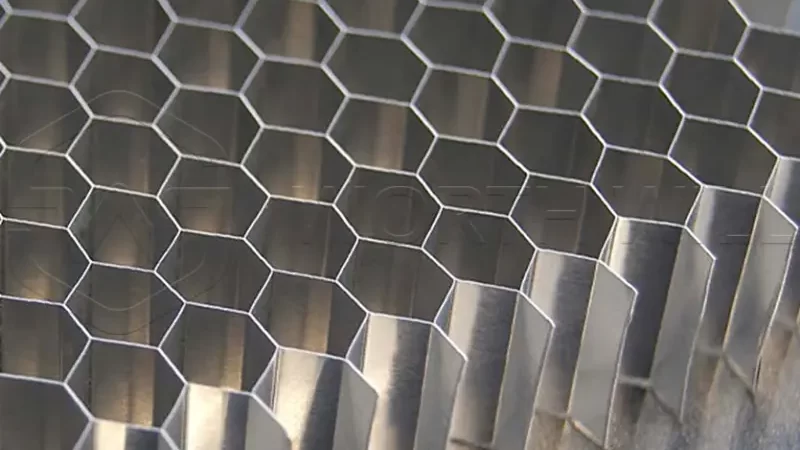
Selecting the right aluminum honeycomb core supplier is a critical step for your project. Whether you are building high-speed trains, cleanrooms, or lightweight furniture, the quality of the core determines the strength of the final panel.
A good supplier does more than just ship a product. They provide technical data, consistent quality, and reliable delivery times.
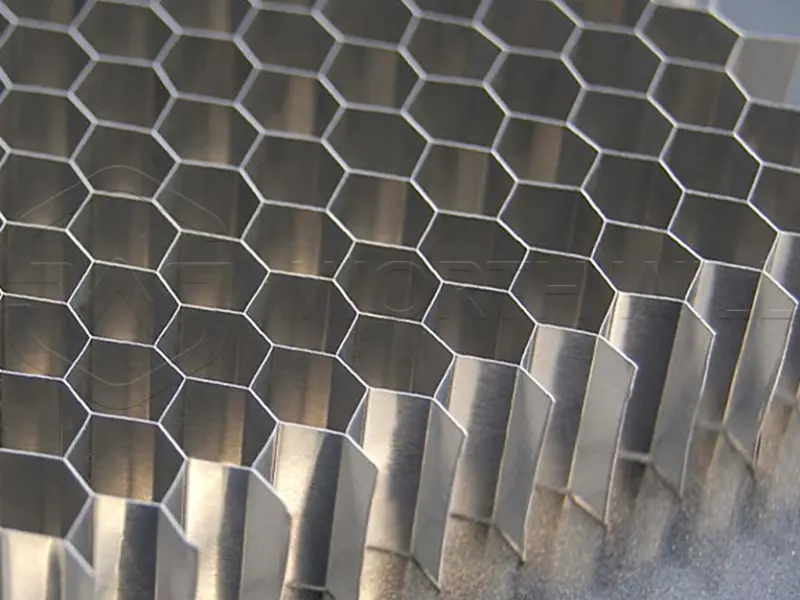
What is an Aluminum Honeycomb Core?
An aluminum honeycomb core is a lightweight structural material. It is made by bonding layers of aluminum foil and then expanding them into a hexagonal shape. This design mimics the natural beehive. It provides the highest strength-to-weight ratio of any structural geometry.
Engineers use these cores because they are rigid but very light. When you sandwich this core between two skins, you get a “honeycomb panel.”
- Check the Material Grades and Alloys
The first thing to ask a supplier is what type of aluminum they use. Not all aluminum is the same. The alloy determines how the core will behave under pressure or in corrosive environments.
Common Aluminum Alloys Used
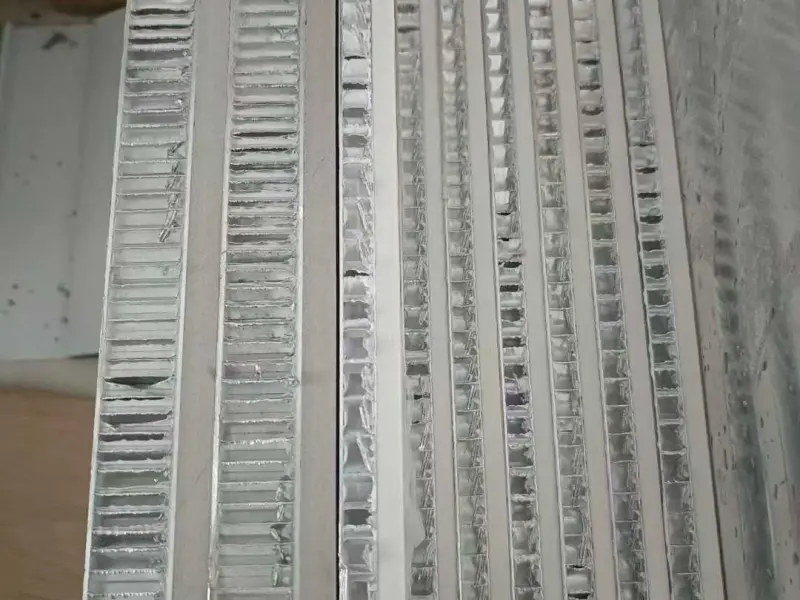
- Alloy 3003: This is the commercial grade. It is most common for architectural use, ceilings, and general industrial applications. It offers good strength and is cost-effective.
- Alloy 5052: This is the high-performance grade. It has higher strength and better resistance to corrosion. It is the top choice for marine and aerospace projects.
Material Properties Table
| Feature | Alloy 3003 | Alloy 5052 |
|---|---|---|
| Strength | Medium | High |
| Corrosion Resistance | Good | Excellent |
| Common Temper | H18/H19 | H19 |
| Price Point | Economical | Premium |
2. Evaluate Technical Specifications
A professional aluminum honeycomb core manufacturer should offer a wide range of specifications. You need to know if they can produce the exact cell size and foil thickness your engineering team requires.
Understanding the Dimensions
The performance of the core is defined by three main numbers:
- Cell Size (C): The distance between the parallel sides of the hexagon.
- Foil Thickness (t): The thickness of the aluminum sheet used to make the walls.
- Density (D): How much the core weighs per cubic meter.
Standard Specification Range
| Property | Typical Range |
|---|---|
| Cell Size (C) | 3mm to 25mm |
| Foil Thickness (t) | 0.03mm to 0.15mm |
| Core Height (h) | 3mm to 300mm |
| Supplied State | Expanded or Unexpanded (Block) |
3. Identify the Product Types Offered
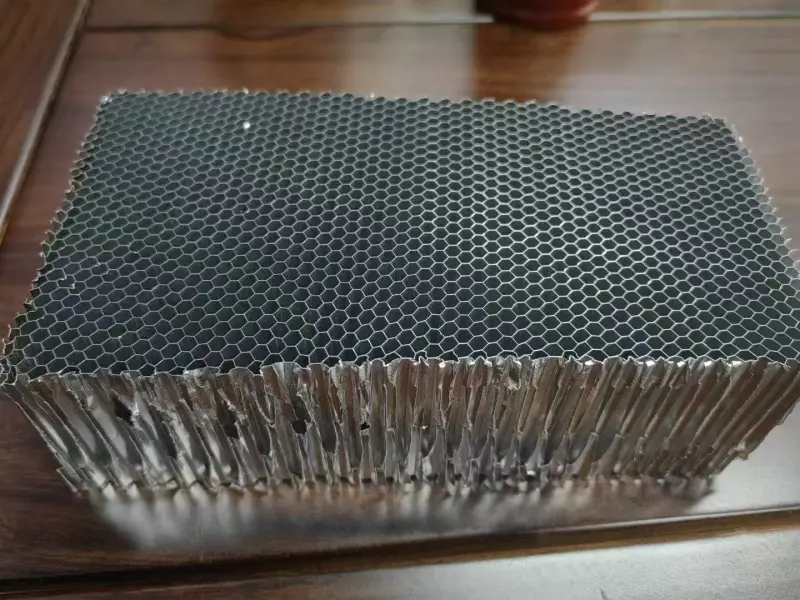
Suppliers usually offer different versions of the honeycomb core. A top-tier supplier should have variety to meet different industry needs.
Expanded vs. Unexpanded (Block)
Most international shipping is done in unexpanded blocks. This saves a lot of space and reduces shipping costs (S). The customer then uses an expansion machine to open the core. However, for smaller projects, you might want the supplier to provide pre-expanded sheets.
Perforated vs. Non-Perforated
- Non-Perforated: The cell walls are solid. This is used for standard structural panels.
- Perforated: Small holes are punched in the cell walls. This allows air to flow between cells. It is essential for “sandwich” panels that undergo heat treatment or vacuum bonding to prevent air pressure (P) from bursting the panel.
Micro-Cell Honeycomb
Some suppliers specialize in micro-cell cores. These have very small cell sizes (around 1mm to 2mm). They are often used for light diffusion, air grilles, or high-precision electronic shielding.
4. Why the Manufacturing Process Matters
When choosing a supplier, ask about their “node adhesive.” This is the glue that holds the aluminum layers together.
The Importance of the Glue
If the adhesive is weak, the honeycomb will pull apart. High-quality suppliers use high-temperature curing epoxy resins. These resins ensure that the bond strength (B) is higher than the strength of the aluminum itself.
Surface Treatment
Check if the supplier offers “Chromated” or “Chemical Conversion Coating” on the foil. This treatment protects the aluminum from oxidation and helps the glue stick better to the surface.
5. Industrial Applications: Where is it Used?
A reliable supplier should have experience in your specific industry. Different industries have different certification requirements.
- Transportation: Used in floors, ceilings, and partitions for high-speed trains (300km/h+) and buses.
- Marine Industry: Building hulls, decks, and interior furniture for yachts to keep weight low.
- Architecture: Exterior wall cladding, cleanroom partitions, and decorative ceilings.
- Aerospace: Energy absorbers and internal structures for aircraft.
- Industrial Equipment: Laser cutting beds, air flow straighteners, and electronic shielding.
6. How to Evaluate a Supplier’s Quality Control
You should not only look at the price. A cheap core that fails will cost you more in the long run. Use this checklist to evaluate your potential honeycomb core supplier:
Certification and Standards
Does the supplier follow international standards? Look for:
- ISO 9001: For general quality management.
- FR Grades: Flame retardant certifications if the core is used in public buildings or transport.
Testing Capabilities
Ask if the supplier can provide a test report for:
- Compressive Strength: How much weight the core can take from the top.
- Shear Strength: How the core handles sliding forces.
- Bonding Strength: Ensuring the glue lines are permanent.
7. Logistics and Packaging
Aluminum honeycomb is fragile, especially in its expanded form. A good supplier will have professional packaging methods.
- Unexpanded Blocks: Wrapped in moisture-proof film and packed in strong wooden crates.
- Expanded Sheets: Placed between thick cardboard or plywood layers to prevent “crushing” of the cell edges.
If you are importing from overseas, calculate the volume (V) carefully. Shipping unexpanded blocks is much more efficient for sea freight.
8. Summary Checklist for Choosing a Supplier
To make your final decision, compare your top three suppliers using these points:
- Alloy Choice: Do they offer both 3003 and 5052?
- Customization: Can they produce custom cell sizes like 4.8mm or 6.3mm?
- Sample Policy: Will they provide a sample for testing before a large order?
- Lead Time: Can they meet your production schedule?
- Technical Support: Do they understand your engineering requirements?
How to Choose the Best Aluminum Honeycomb Core Supplier
Choosing the right aluminum honeycomb core supplier requires looking past the surface. You need to verify the alloy type, the precision of the specifications, and the strength of the adhesive bond.
By selecting a manufacturer that uses high-grade alloys like 5052 and provides detailed technical data, you ensure your project is safe, durable, and efficient. High-quality honeycomb is an investment in the structural integrity of your product.
If you need a core that offers a perfect balance of weight (w) and stiffness (k), always prioritize a supplier with a proven track record in your specific industry.